Middle East
Iran Fires Missiles at Ships in Strait of Hormuz, Testing Fragile Truce
At least two missiles struck commercial vessels overnight, setting a Qatari gas tanker ablaze in the world's most important oil chokepoint, US officials and Western maritime authorities say.
By Camille Reuter · · 5 min read
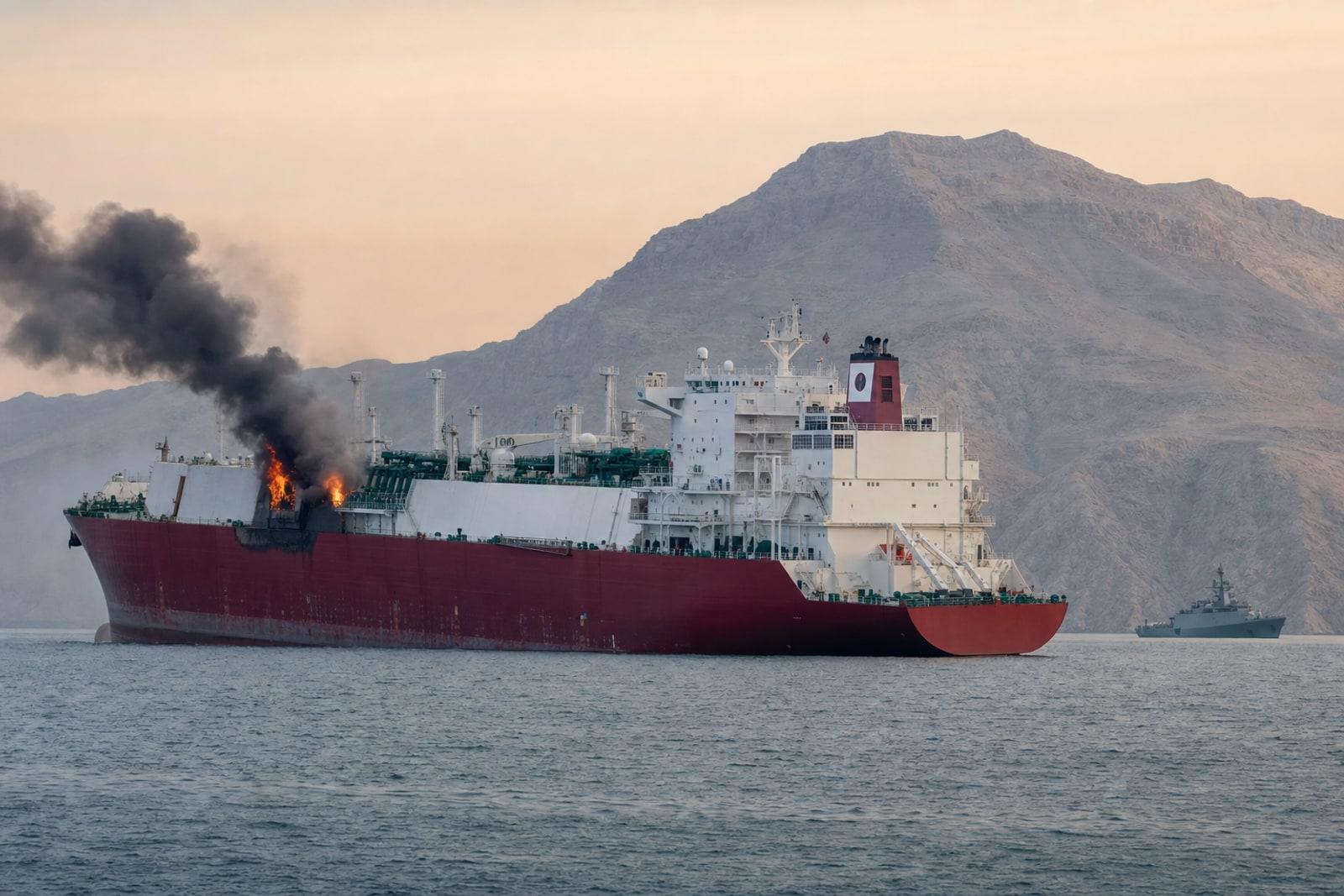
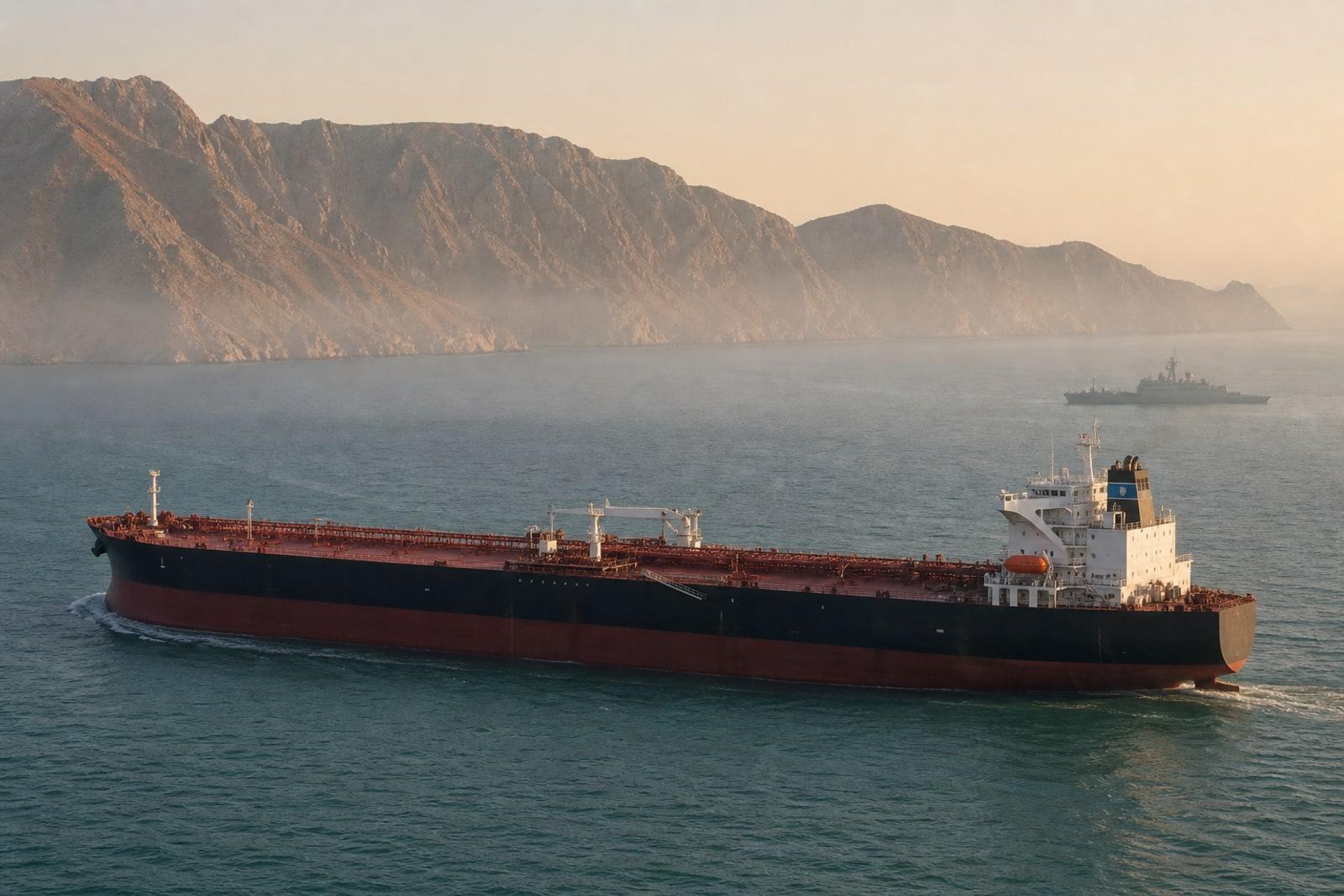
Iran fired at least two missiles at commercial ships crossing the Strait of Hormuz overnight into Tuesday, striking a Qatari liquefied natural gas tanker and setting it ablaze, according to US officials and Western maritime authorities. The strikes were the first in the world's most important oil chokepoint since a fragile US-Iran truce took hold last month, and they pushed crude prices higher as European governments watched a corridor that carries roughly a fifth of the world's oil and gas.
Two commercial vessels suffered significant damage but no casualties were reported, the news site Axios said, citing two US officials. The account was corroborated by Bloomberg, Reuters and other outlets. US and Iranian sources alike attributed the missiles to Iran's Islamic Revolutionary Guard Corps, or IRGC.
What was struck
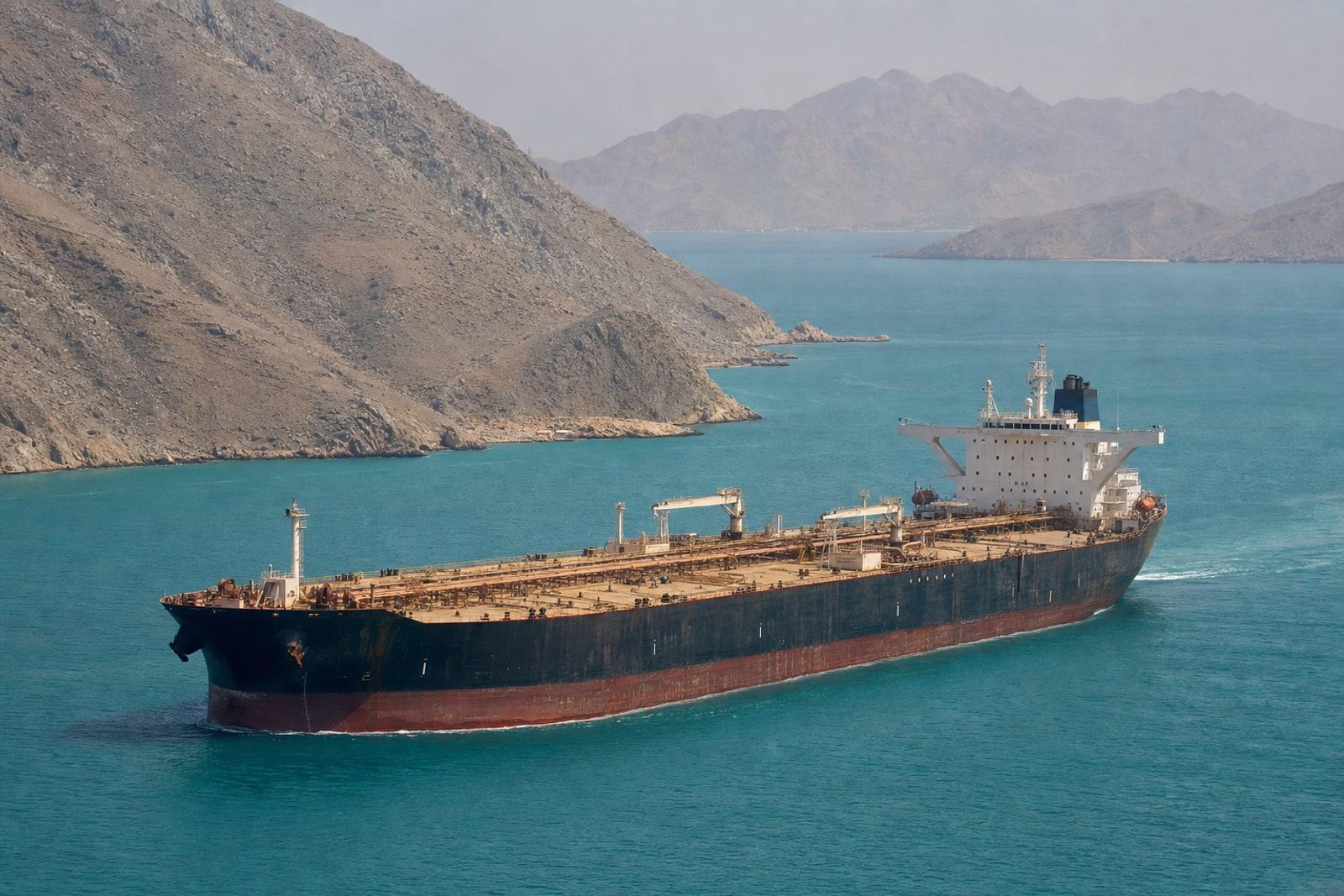
One of the vessels is the Al Rekayyat, a laden LNG carrier owned and managed by Nakilat, the Qatar Gas Transport Company that ships much of the Gulf state's gas. The tanker was hit on the port side at the top of the engine room, touching off a fire, according to reporting by The National and NPR.
The United Kingdom Maritime Trade Operations agency, a Royal Navy body that logs shipping incidents, said a tanker had been struck by an unknown projectile while travelling southbound about eight nautical miles — some 15 kilometres — east of Limah, on Oman's Musandam peninsula.
Engine room fire and full of smoke. Unable to assess further damage. All crew are safe and mustered on the starboard side.
That radio transmission from the Al Rekayyat, first reported by The Wall Street Journal, captured the moments after the strike. The UKMTO reported no casualties or environmental damage. A second commercial vessel was also hit, according to US officials cited by Axios.
Iranian state television said the gas tanker had been attacked after ignoring repeated warnings while trying to cross via a route close to the Omani shore, allegedly with US Navy support. Tehran maintains that only its approved lane through the strait is safe. Over the weekend, the IRGC had warned ships by maritime radio that "our missiles and drones are ready to fire at you."
A truce under strain
The attacks threaten an interim understanding signed on 17 June by President Donald Trump and his Iranian counterpart, Masoud Pezeshkian, that was meant to halt attacks and reopen the waterway. Under that deal, ships were to pass without charge for 60 days while both sides refrained from the threat or use of force. Iran has continued to insist it must control the routing of vessels and eventually levy "service fees" for passage — a demand the United States and Gulf Arab states reject as a break with decades of practice.
Speaking at the White House on Tuesday, Trump warned Tehran to "make a deal or we're going to finish the job," according to The Hill. He framed the threat in terms of Iran's civilian population and energy grid: "I'd rather make a deal, because I don't want to affect 91 million people."
The exchange underscored how quickly the June truce could unravel. That agreement followed months of open conflict: the United States and Israel launched an air war against Iran on 28 February, after which Iran declared the strait "closed" and its forces attacked merchant ships, boarded vessels and laid sea mines. Over the course of the crisis, according to a Wikipedia summary drawing on contemporaneous reporting, at least 14 seafarers and one port worker were killed and dozens of ships were targeted.
Why Europe watches the price
The Strait of Hormuz is the single most important valve in the global energy system. Roughly 20 percent of the world's oil trade and about a fifth of its LNG normally pass through the narrow channel between Iran and Oman; some estimates put the seaborne oil share as high as 25 percent. Any credible threat to close it ripples straight into European markets.
The immediate market reaction was contained but clear. Brent crude rose toward $73 a barrel and West Texas Intermediate climbed above $69, having traded below $72 on Monday near their lowest levels since February, according to The National. Prices had fallen by about 30 percent as the June ceasefire took hold, so Tuesday's move partly reversed that relief.
Europe's deeper exposure is to gas. The strait carries the bulk of Qatar's LNG, which supplies an estimated 12 to 14 percent of the European Union's imported gas. At the height of the crisis in March, after Qatar's Ras Laffan plant — the world's largest liquefaction facility — was knocked offline, Dutch Title Transfer Facility gas prices, Europe's benchmark, spiked by as much as 45 percent, Euronews reported. Even in mid-June, TTF stood about 35 percent above pre-war levels.
For now, analysts and officials were focused on whether the strikes are an isolated breach or the start of a fresh campaign. The stakes for the wider region — and for the European households and industries that depend on Gulf energy — turn on that answer:
- Whether Iran's leadership sanctioned the strikes or a local commander acted, a distinction that shapes the diplomatic response.
- Whether shipowners and their war-risk insurers again pull back from the strait, thinning traffic and lifting freight costs.
- Whether Washington retaliates militarily, as it has after previous attacks on commercial vessels during the crisis.
Qatar's government and Nakilat had not issued detailed public statements on the Al Rekayyat by Tuesday. The vessel's crew, the UKMTO said, were safe.
Frequently asked
- What happened in the Strait of Hormuz?
- Overnight into 7 July 2026, Iran's Revolutionary Guard fired at least two missiles at commercial ships crossing the Strait of Hormuz, striking the Qatari LNG carrier Al Rekayyat and a second vessel. Both were significantly damaged and the tanker caught fire, but no casualties were reported, according to US officials and the UK Maritime Trade Operations agency.
- Why does the Strait of Hormuz matter for oil and gas prices?
- Roughly 20 percent of the world's oil trade and about a fifth of its LNG normally pass through the strait, so any threat to it moves global prices. After the attack Brent crude rose toward $73 a barrel, and Europe is particularly exposed because much of Qatar's gas — an estimated 12-14 percent of EU LNG imports — transits the waterway.
- How does this affect the US-Iran truce?
- The strikes are the first in the strait since a 17 June memorandum of understanding between Presidents Trump and Pezeshkian that halted attacks and let ships pass without charge for 60 days. The attacks threaten that deal; Trump warned Iran to reach an agreement or the US would 'finish the job,' while Iran continues to insist it must control routing through the strait.
Sources(9)
- 1Iran resumes attacks in Strait of Hormuz after lull, U.S. officials sayAxios · axios.com
- 2Iran Missiles Hit Ships in Strait, Axios Says, Testing US TalksBloomberg · bloomberg.com
- 3Iran Fires Missiles at Commercial Ships in Strait of Hormuz, Axios ReportsU.S. News & World Report / Reuters · usnews.com
- 4Iran fires missiles at two commercial ships in Strait of HormuzThe National · thenationalnews.com
- 5Tanker set ablaze after being struck by projectile in the Strait of HormuzNPR · npr.org
- 6Donald Trump: Strait of Hormuz in 'great shape' after ships targetedThe Hill · thehill.com
- 7Iran Fires Two Missiles at Commercial Ships in Strait of Hormuz, Axios ReportAsharq Al-Awsat · english.aawsat.com
- 82026 Strait of Hormuz crisisWikipedia · en.wikipedia.org
- 9European gas prices jump by as much as 45% as Qatar stops LNG productionEuronews · euronews.com
Related by topic