Israel
Netanyahu government declares it will defy Israel's Supreme Court, deepening constitutional crisis
In a first for the country, the cabinet voted unanimously to reject a High Court ruling on the broadcast regulator, drawing warnings from the president, the attorney general and the opposition.
By Léa Hoffmann · · 4 min read
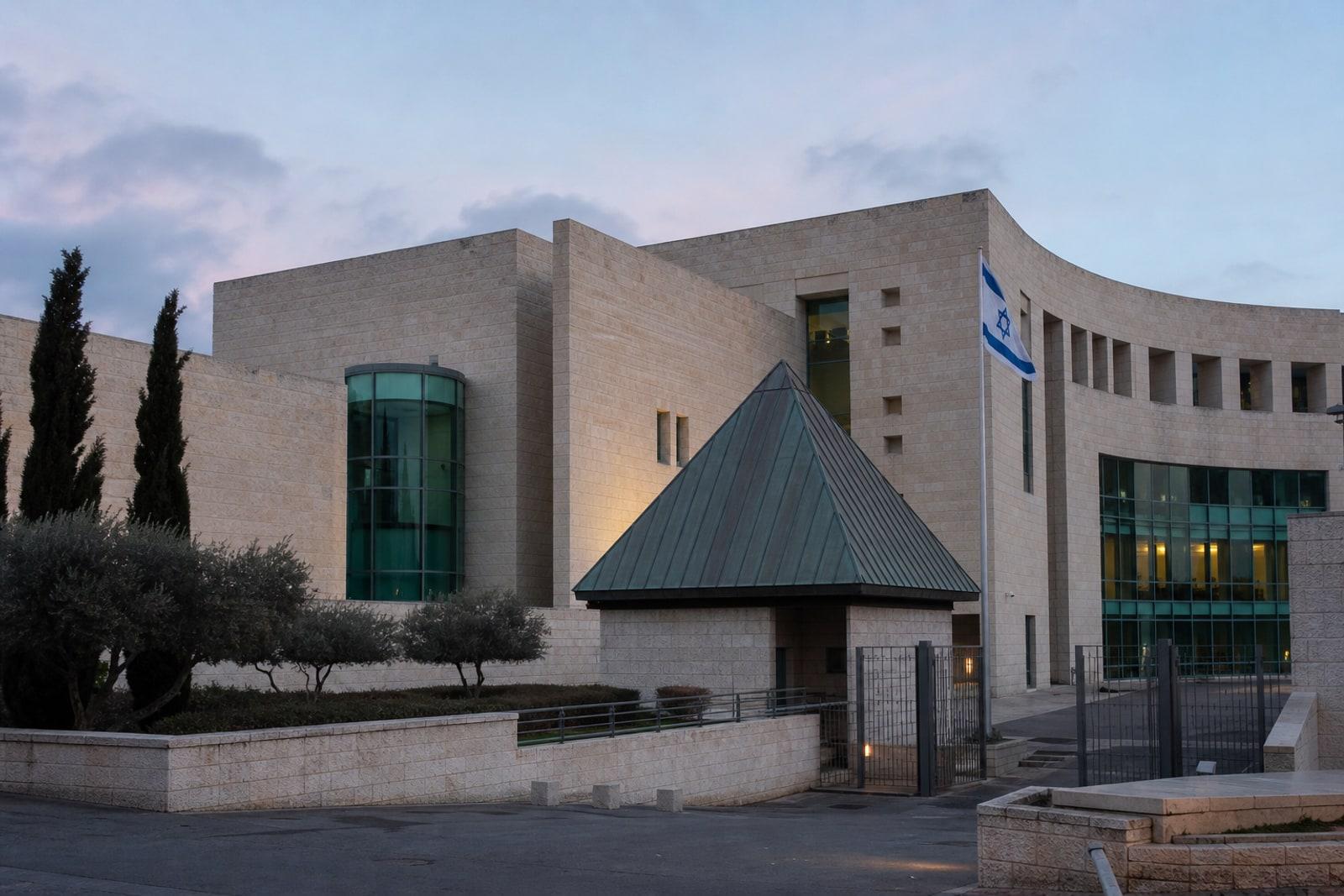
Israel's cabinet did something on Sunday that no government had done in the country's 77-year history: it voted unanimously to declare that it would not obey a ruling of the Supreme Court. The decision, over control of the state's commercial broadcast regulator, has thrust the long-running battle between Prime Minister Benjamin Netanyahu's coalition and the judiciary into openly uncharted territory.
Successive Israeli governments have at times quietly failed to implement court orders. None had ever formally announced that it would refuse to comply. By crossing that line, the cabinet turned a technical dispute over a media watchdog into what the opposition, the head of state and the country's chief legal officer all described as an assault on the rule of law.
The resolution, brought jointly by Justice Minister Yariv Levin — the principal architect of the government's 2023 judicial overhaul — and Communications Minister Shlomo Karhi, said the government would act through every legal means at its disposal to nullify the ruling and would treat any decisions taken under it as void.
What the court actually ordered
The dispute centres on the Second Authority for Television and Radio, which licenses and oversees Israel's commercial broadcasters. In March, the government moved to install a new council at the authority, a step tied to Karhi's contested communications reform. Journalists' organisations, media bodies and public-interest groups petitioned the High Court of Justice, arguing that the appointments had been rushed through, were politically motivated and threatened press freedom.
On 17 June, a panel headed by Supreme Court President Isaac Amit, sitting with Justices Alex Stein and Ruth Ronen, issued an interim order. It froze the government's move to seat the new council and directed the outgoing council to keep functioning until the court could rule on the five petitions in full.
The government casts that order as judicial overreach. It argues that the existing council falls below the minimum membership the law requires, and that by keeping it in place the court has forced an under-strength body to operate in defiance of the statute. Ministers say the judges have effectively rewritten the law to suit themselves.
"This is the most serious constitutional crisis in Israel's history. It's the destruction of the foundations of our democracy."
That warning came from opposition leader Yair Lapid, the head of Yesh Atid. Communications Minister Karhi, by contrast, framed the vote as "a historic step to return the Jewish and democratic State of the Jews to its owners – the people," while Levin argued that when parliament legislates, the court is bound to apply the law rather than override it.
A chorus of alarm
The reaction from across Israel's institutions was swift and unusually blunt. President Isaac Herzog, whose office is largely ceremonial but carries significant moral weight, warned against the move in stark terms.
- President Herzog said disobedience to a court ruling was "a red line that must not be crossed under any circumstances."
- Attorney General Gali Baharav-Miara warned that the decision undermines "the fundamental principles of the rule of law."
- All living former presidents of the Supreme Court condemned the vote, warning it would mark the end of Israeli democracy.
- Former prime minister Naftali Bennett cautioned that refusing to honour court rulings "leads to anarchy in the streets."
Some in Netanyahu's Likud party sought to lower the temperature. Minister Miki Zohar insisted the prime minister would ultimately heed the court's order and was not trying to engineer a constitutional rupture — an attempt to cast the cabinet declaration as a negotiating position rather than a final refusal.
Why it matters beyond the regulator
The immediate stakes — the composition of a broadcast council — are narrow. The precedent is not. For critics, the danger is that a government which reserves the right to decide which rulings it will obey has stopped being bound by the courts at all. Several opposition figures pointed to the coming election, which must be held by October, warning that a coalition prepared to ignore an inconvenient ruling now might be tempted to reject an inconvenient result later.
The clash is the sharpest escalation yet in a confrontation that began with the government's 2023 drive to curb the powers of the judiciary, which brought hundreds of thousands of protesters onto the streets before the war in Gaza pushed it from the headlines. Israel has no single written constitution; the balance between the executive, the Knesset and the courts rests on Basic Laws and long-standing convention. That is precisely what makes an open refusal to comply so consequential: there is no higher arbiter to enforce a ruling the government has resolved to ignore.
What happens next depends on whether the cabinet follows through. The court could issue a definitive order; the attorney general, who is already at odds with the government, could decline to defend its position; and the confrontation could yet be defused, as figures within Likud have suggested. For now, Israel is testing a question most democracies never have to ask out loud — what happens when a government simply says no to its highest court.
Frequently asked
- What ruling did Netanyahu's government refuse to obey?
- A 17 June 2026 interim order by the High Court of Justice that froze the government's move to install a new council at the Second Authority for Television and Radio, the commercial broadcast regulator, and directed the outgoing council to keep operating pending a final ruling on petitions challenging the appointments.
- Why is this considered a constitutional crisis?
- It is the first time in Israel's 77-year history that a government has formally declared it will not comply with a Supreme Court ruling. Israel has no single written constitution, so the balance between the executive and the courts rests on Basic Laws and convention, and there is no higher body to enforce a ruling the government refuses to obey.
- How did Israeli institutions respond?
- President Isaac Herzog called disobeying a court ruling a red line; Attorney General Gali Baharav-Miara said it undermines the rule of law; opposition leader Yair Lapid called it the most serious constitutional crisis in Israel's history; and all living former Supreme Court presidents condemned it.
Sources(8)
- 1Israel government says it will defy Supreme Court ruling on media regulatorReuters (via Arab News) · arabnews.com
- 2Explainer: Netanyahu Government Challenge to Supreme Court Reignites Judicial DisputeReuters (via U.S. News & World Report) · usnews.com
- 3Israel government says it will defy Supreme Court ruling on media regulatorThe Spokesman-Review · spokesman.com
- 4Israeli government's vow to defy Supreme Court ruling causes alarmThe National · thenationalnews.com
- 5In First, Netanyahu Government Says It Will Defy High Court Ruling on Media RegulatorHaaretz · haaretz.com
- 6Israel spirals into unprecedented constitutional crisis as government votes to defy High CourtYnetnews · ynetnews.com
- 7Israeli gov't to ignore Supreme Court freeze on media regulator in legal clashThe Jerusalem Post · jpost.com
- 8Miki Zohar says PM 'will heed high court order,' despite gov't declarationThe Jerusalem Post · jpost.com
Related by topic