European industry
Volkswagen weighs doubling its job cuts to 100,000 as Europe's car squeeze deepens
Reports say CEO Oliver Blume could axe up to 100,000 jobs and shut four German plants — twice the cuts set in March — exposing an auto supply chain that reaches the Greater Region.
By Jonas Thill · · 4 min read
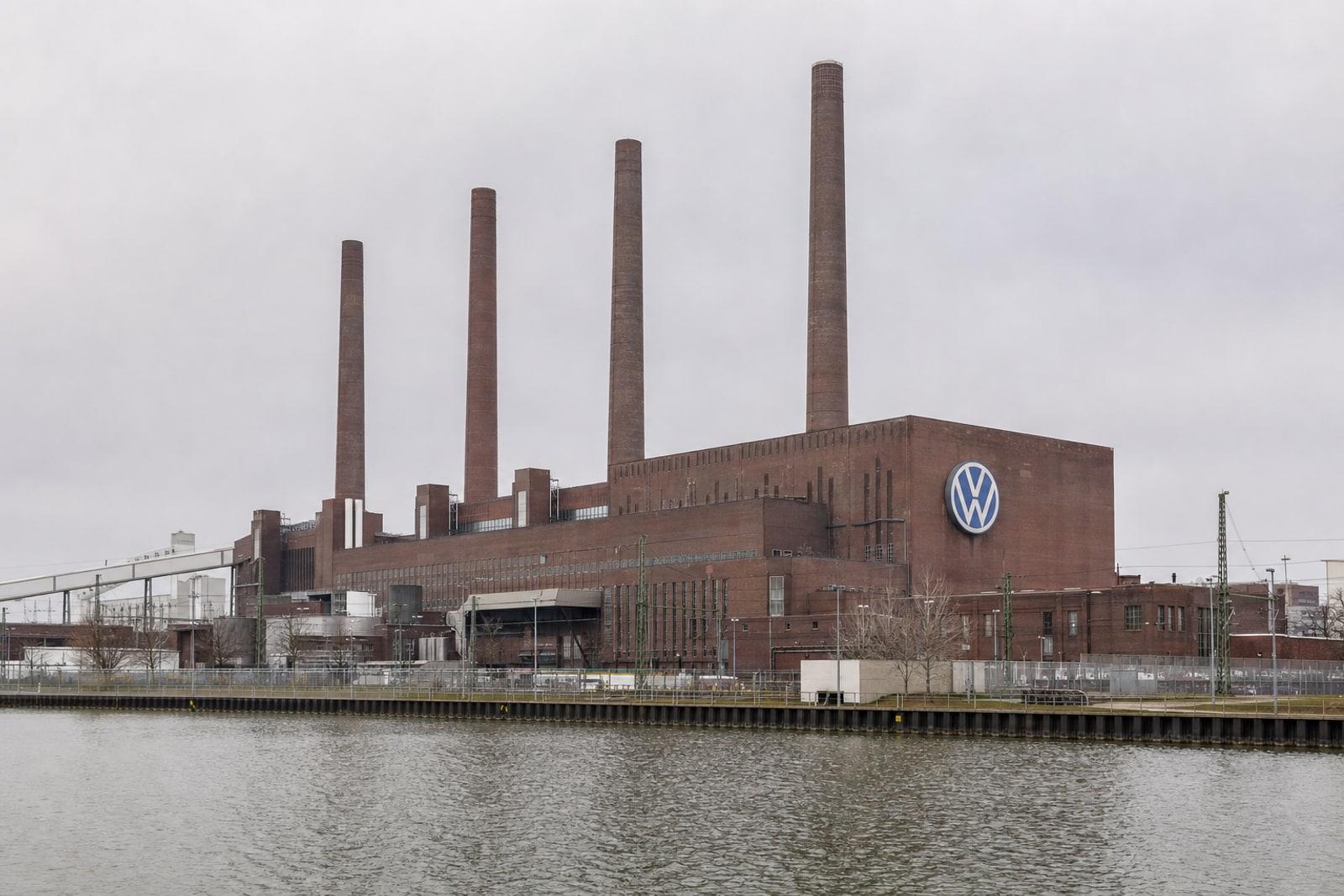
Volkswagen, Europe's largest carmaker, is preparing what would be the most drastic restructuring in its 89-year history, with reports that chief executive Oliver Blume aims to cut up to 100,000 jobs and end production at four German plants. The figure, first reported on 26 June by the German business magazine Manager Magazin and confirmed by Reuters and other outlets, would roughly double the cuts the group set out only in March, when it said it would shed about 50,000 posts in Germany by 2030.
The reported plan amounts to roughly 15 percent of a global workforce of more than 600,000. Volkswagen would also reduce planned investment by about 15 percent, to just over €130 billion over the next five years, and spin off its core VW brand and components operations into separate entities that could eventually be listed, according to the reports. The blueprint is being driven by Mr Blume and chief financial officer Arno Antlitz.
The four sites said to face closure once current models reach the end of their production runs are the Volkswagen plants in Hanover, Zwickau and Emden, plus the Audi factory in Neckarsulm in Baden-Württemberg. Volkswagen's management board discussed the strategy this week; the supervisory board, which holds the final decision, is due to take it up on 9 July.
A reckoning years in the making
The escalation follows a bruising stretch for the Wolfsburg group. Net profit fell 44 percent in 2025 to €6.9 billion — its weakest result since the 2015 diesel-emissions scandal — as operating profit nearly halved and the operating margin sank to 2.8 percent. The pressure has not eased: first-quarter 2026 net profit dropped 28 percent to €1.56 billion, with US import tariffs costing the group an estimated €4 billion a year and Chinese sales down about a fifth.
Those numbers capture the three forces squeezing Europe's car industry at once: stubbornly high costs at home, the expensive and uneven shift to electric vehicles, and intensifying competition from Chinese manufacturers, who accounted for nearly one in ten new vehicle registrations in the European Union in the first five months of the year. Volkswagen has responded with asset sales, including €7.4 billion from offloading its Everllence marine-engines unit to Bain Capital, but cost remains the central problem.
In a statement, Volkswagen declined to confirm the figures, saying only that any decision rested with its governance bodies.
The relevant facts of the matter will be discussed and approved by the relevant bodies. We will not pre-empt this process.
Separately, the company acknowledged the scale of the challenge, saying that "the entire group, including its brands and subsidiaries, must undergo far-reaching change."
Unions vow to fight
The reports collide head-on with commitments Volkswagen made to its own workforce. A 2024 agreement bars closures of German plants this decade, and job guarantees run to the end of 2030 at the VW brand and to the end of 2033 at Audi — leaving it unclear how closures could be carried out under German labour and collective-bargaining law. Worker representatives reacted with fury. In a joint statement, Volkswagen's general works council, chaired by Daniela Cavallo, and the metalworkers' union IG Metall, led by Christiane Benner, warned they would resist.
"Should such plans go ahead, we would do everything in our power to prevent them," they said. Any move to close plants would almost certainly trigger one of the most bitter industrial confrontations Germany has seen in years, with IG Metall holding half the seats on Volkswagen's supervisory board and the state of Lower Saxony — a major shareholder — historically protective of jobs.
Why it reaches the Greater Region
The shock waves from Wolfsburg do not stop at Germany's borders. Volkswagen sits at the apex of a continental supplier pyramid, and Luxembourg is woven into it. The country's investment agency describes Luxembourg as part of an automotive network of more than 300 companies — seven large carmaker plants, more than 20 global suppliers and 15 research bodies — supporting over 220,000 jobs across six regions in Belgium, France, Germany and Luxembourg.
Within that web sit globally significant employers based in the Grand Duchy, whose fortunes track the health of carmakers such as Volkswagen:
- Goodyear, whose research and manufacturing complex around Colmar-Berg, Bissen and Dudelange employs roughly 3,500 people — its largest footprint outside the United States.
- IEE, a sensor specialist supplying safety systems to global vehicle makers.
- Cebi International, BorgWarner and other component and electronics suppliers serving European assembly lines.
The exposure is also human. Luxembourg's economy depends on more than 200,000 cross-border commuters, many from Germany's Saarland and France's Lorraine — both heartlands of the automotive supply chain, where suppliers have already been trimming headcount as carmakers cut orders. A contraction at Europe's biggest manufacturer ripples down to the tier-one and tier-two suppliers that employ those workers, and from there into the regional economy that Luxembourg anchors.
For now, the 100,000 figure remains a reported plan, not a decision; the test comes when Volkswagen's supervisory board meets on 9 July. But the trajectory is unmistakable. In March the question was how deep one carmaker would cut. By June it had become how far Europe's flagship industrial company — and the wider manufacturing economy that leans on it — would have to shrink to survive.
Frequently asked
- How many jobs is Volkswagen reportedly planning to cut?
- According to Manager Magazin and Reuters, CEO Oliver Blume aims to cut up to 100,000 jobs — about 15% of a global workforce of more than 600,000 — roughly doubling the ~50,000 German cuts announced in March 2026. The figure is a reported plan, not yet a board decision.
- Which plants could close?
- Reports name four German sites whose production would end once current models run out: the Volkswagen plants in Hanover, Zwickau and Emden, plus Audi's factory in Neckarsulm. Volkswagen's supervisory board is due to discuss the plan on 9 July.
- Why is Volkswagen cutting so deeply?
- Profit fell 44% in 2025 to €6.9bn and kept sliding in early 2026, squeezed by high costs, the costly EV transition, US import tariffs of about €4bn a year, and intensifying Chinese competition that cut VW's China sales by roughly a fifth.
- How does this affect Luxembourg and the Greater Region?
- Luxembourg anchors an automotive network of 300+ companies and 220,000 jobs across Belgium, France, Germany and Luxembourg, with suppliers such as Goodyear, IEE and Cebi. A contraction at Europe's biggest carmaker ripples to suppliers and to the 200,000+ cross-border workers from Saarland and Lorraine.
Sources(7)
- 1Volkswagen CEO aims to cut 100,000 jobs in major overhaulRTÉ (Reuters) · rte.ie
- 2Up to 100,000 jobs and four plants: Volkswagen reportedly plans radical overhaulEuronews · euronews.com
- 3Volkswagen to axe up to 100,000 jobs in sweeping cost-cutting driveThe Irish Times · irishtimes.com
- 4Volkswagen plans to cut 15% of its workforce and close four German plants, report saysCNBC · cnbc.com
- 5Volkswagen CEO aims to cut up to 100,000 jobs in next years: reportBusiness Standard (Reuters) · business-standard.com
- 6Volkswagen slashes 50,000 jobs after profits collapse by nearly halfEuronews · euronews.com
- 7Automotive sector — Luxembourg Trade & InvestLuxembourg Trade & Invest · luxembourgtradeandinvest.com
Related by topic