Consumer rights
EU keeps three-hour delay rule in new air passenger rights deal
After 13 years of deadlock, EU negotiators have agreed to overhaul flight-compensation rules — keeping the three-hour delay threshold airlines wanted to scrap.
By Camille Reuter · · 5 min read
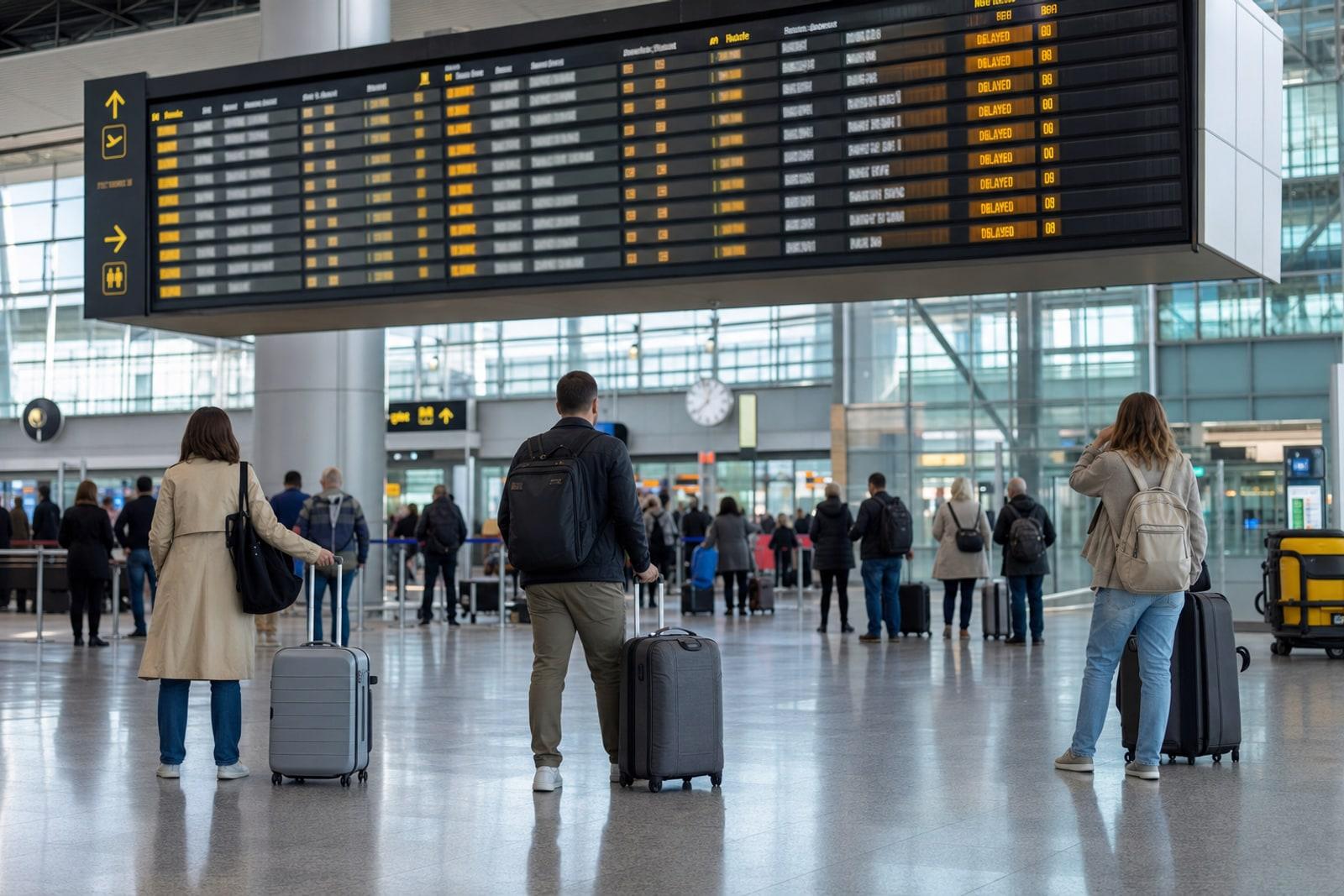
For the more than five million travellers who passed through Luxembourg's Findel airport last year, the rules governing what an airline owes them when a flight is delayed, cancelled or overbooked are about to change — but far less drastically than carriers had hoped. On 15 June, negotiators for the European Parliament and the Council of the EU reached a provisional deal to overhaul Regulation 261/2004, the bloc's two-decade-old air passenger rights law, ending a stalemate that had blocked reform for some 13 years.
The headline outcome is what did not change. The three-hour delay threshold that triggers cash compensation survives. Member states, with backing from airlines, had pushed to raise the bar to four or even six hours depending on distance — a shift consumer groups warned would have stripped compensation rights from a majority of today's eligible passengers. Parliament, which adopted its negotiating position in January, refused. The compromise keeps both the current trigger and the current payouts.
A 13-year deadlock ends
The European Commission first proposed updating Regulation 261 back in 2013, but the file sat frozen amid disputes over how generous the rules should be. The breakthrough came under the Cyprus presidency of the Council, with transport minister Alexis Vafeades calling it a success after more than a decade of talks.
Under the deal, compensation stays tiered by distance: €250 for flights up to 1,500 km, €400 for 1,500–3,500 km, and €600 for journeys over 3,500 km. Passengers can claim after a delay of three hours or more at arrival, a cancellation notified less than two weeks in advance, or denied boarding. For the longest flights, airlines may halve the payout if they re-route passengers so the arrival delay stays within four hours. The familiar "extraordinary circumstances" exemptions — severe weather, air-traffic-control strikes, security threats — remain in place.
"Today's agreement is a major step forward for European passengers and for Europe's aviation sector. It delivers stronger and clearer passenger rights in practice, improves transparency, and brings legal certainty for airlines and authorities. We have found the right balance: preserving Europe's world-leading passenger protection while creating a fair, predictable and workable framework for the aviation industry," said Apostolos Tzitzikostas, the European Commissioner for Sustainable Transport and Tourism.
What changes when your flight is disrupted
While the compensation maths is largely preserved, the package tightens the duties around it — aimed squarely at the gap between rights on paper and money in pockets. The main changes:
- Proactive notification: airlines must tell passengers electronically about their compensation rights and how to claim within 96 hours (four days) of a disruption.
- Faster answers: carriers must acknowledge a claim and respond within 30 days — paying out or giving a justified refusal. Passengers are reported to have nine months to lodge a claim.
- Self-rerouting: if an airline fails to offer an alternative within three hours — including on a rival carrier or by other transport — travellers can arrange their own and claim reimbursement of up to 400% of the ticket price.
- Care during waits: refreshments every two hours, meals after three, and free hotel accommodation with transport for overnight disruptions.
- No-show ban: airlines can no longer cancel a return leg simply because a passenger skipped the outbound flight, and cannot charge to fix minor booking-data errors.
- Families and reduced mobility: free adjacent seating for children under 14 and an accompanying adult, plus stronger assistance guarantees.
On hand luggage — a perennial flashpoint — the deal stops short of what consumer advocates wanted. One personal item that fits under the seat is free, but a larger cabin bag is not guaranteed at no cost; instead, its price must be shown upfront during booking, and airlines may keep selling bag-free fares.
Agustín Reyna, director general of the consumer group BEUC, gave the package a cautious welcome. "Consumers can be happy overall with this reform. The deal consolidates in the law key air passenger rights while thankfully putting an end to unfair practices like preventing passengers from taking their return flight when they have missed the first part of a multi-leg itinerary," he said. He warned that enforcement remains the weak link: "Now, we need to make sure these rights are respected and that consumers have access to redress because only 38% of eligible passengers exercise their rights today."
What it means at Findel and across the Greater Region
The rules matter directly to Luxembourg. Findel handled a record 5,147,854 passengers in 2024, up from 4.79 million the year before, and the regulation applies to every flight departing an EU airport regardless of the carrier, as well as to flights arriving in the EU on EU airlines. That covers Luxair, easyJet, Ryanair and the other carriers serving the Grand Duchy.
It also reaches the Greater Region's heavy population of cross-border commuters, who routinely fly not only from Findel but from nearby Frankfurt, Brussels, Saarbrücken and Paris — all governed by the same EU framework. For them, the clearer notification and claims deadlines could make the difference between an unclaimed disruption and a refund.
None of it is law yet. The provisional agreement still needs legal-linguistic revision and formal sign-off by the Parliament's plenary — a vote expected around July — and by the Council, before publication in the Official Journal. The new rights would then apply 12 months after the rules enter into force, meaning travellers are unlikely to feel the changes before 2027.
Frequently asked
- Does the EU still pay compensation for a three-hour flight delay?
- Yes. The provisional deal reached on 15 June 2026 keeps the three-hour delay threshold and the existing payouts of €250, €400 or €600 depending on flight distance. A proposal to raise the threshold to four or six hours was rejected.
- When do the new air passenger rights take effect?
- Not immediately. The provisional agreement must still be formally adopted by the European Parliament and Council and published in the Official Journal. The rules would then apply 12 months after entry into force — likely in 2027.
- Do the rules apply to flights from Luxembourg's Findel airport?
- Yes. Regulation 261 covers every flight departing an EU airport regardless of the airline, plus flights arriving in the EU on EU carriers. That includes all departures from Findel on Luxair, easyJet, Ryanair and others.
- Will my cabin bag be free under the new rules?
- Only partly. One personal item that fits under the seat is free, but a larger cabin bag is not guaranteed at no charge. Airlines must display the cabin-bag price upfront and may still sell fares without one.
Sources(8)
- 1Commission welcomes landmark agreement on revised air passenger rightsEuropean Commission – Mobility and Transport · transport.ec.europa.eu
- 2Council and Parliament reach landmark agreement on stronger EU air passenger rightsCouncil of the EU (Consilium) · consilium.europa.eu
- 3European Parliament stands behind air passenger rightsEuropean Parliament · europarl.europa.eu
- 4EU lawmakers agree to improve air passenger rights: clearer skies aheadBEUC · beuc.eu
- 5Deal on EU air passenger rights: What changes for travellers?The Brussels Times · brusselstimes.com
- 6What Europe's new deal for airline passenger rights means for youThe Local · thelocal.at
- 7Cyprus helps steer landmark EU air passenger rights dealCyprus Mail · cyprus-mail.com
- 8Luxembourg AirportWikipedia · en.wikipedia.org
Related by topic