Disaster
Venezuela earthquake toll nears 3,000 as families search rubble for their dead
The death toll from the 24 June twin quakes has reached 2,954, with tens of thousands unaccounted for, as an already crisis-stricken nation shifts from rescue to recovery.
By Léa Hoffmann · · 4 min read
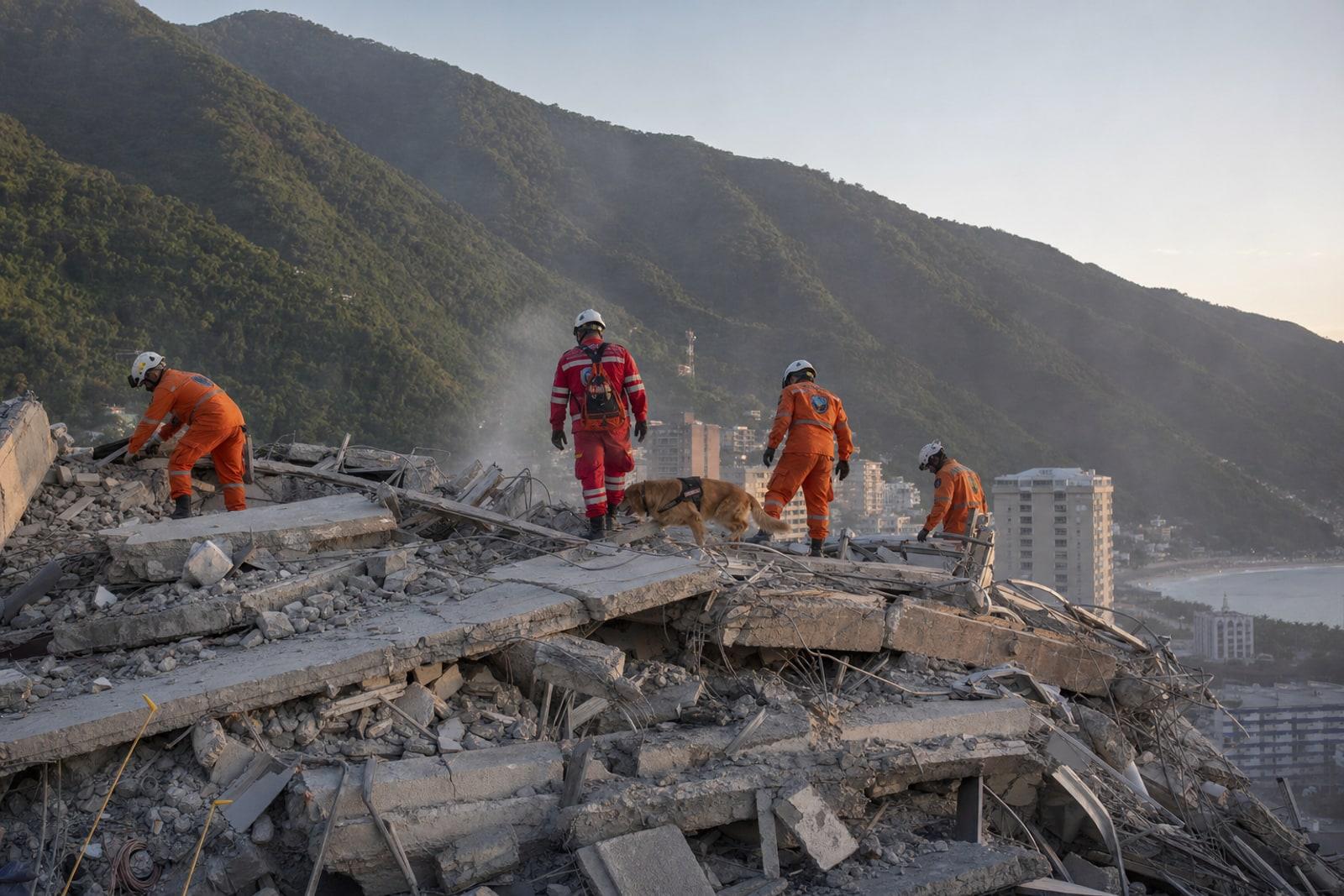
At least 2,954 people are now confirmed dead in Venezuela, where two powerful earthquakes struck the country's densely populated north within seconds of each other on 24 June, according to figures released this weekend by National Assembly President Jorge Rodríguez. Eleven days on, the toll is still climbing — and in the wreckage of La Guaira and Caracas, many families are no longer searching for survivors but for the bodies of the dead.
Venezuelan authorities say more than 12,000 people were injured, with the National Assembly putting the figure above 16,000, and count tens of thousands of homes destroyed or left uninhabitable. International humanitarian agencies, including the International Organization for Migration, estimate that roughly 50,000 people remain unaccounted for, though officials caution that the number blends the missing with residents who fled damaged neighbourhoods and have not yet been traced.
A doublet on a coastal fault
The disaster was what seismologists call an earthquake doublet. At about 6:04 p.m. local time a magnitude-7.2 tremor hit near San Felipe, in Yaracuy state west of the capital; 39 seconds later a magnitude-7.5 mainshock followed at a shallow depth of roughly 10 kilometres, according to the United States Geological Survey. The quakes ruptured the San Sebastián fault system, a strike-slip boundary running along Venezuela's Caribbean coast, and were felt across the country and in neighbouring nations. A brief tsunami advisory for parts of the Caribbean was later rescinded after only minor waves reached Puerto Rico.
They were the strongest earthquakes to strike Venezuela in more than a century. Nearly 900 aftershocks have been recorded since.
Cities reduced to rubble
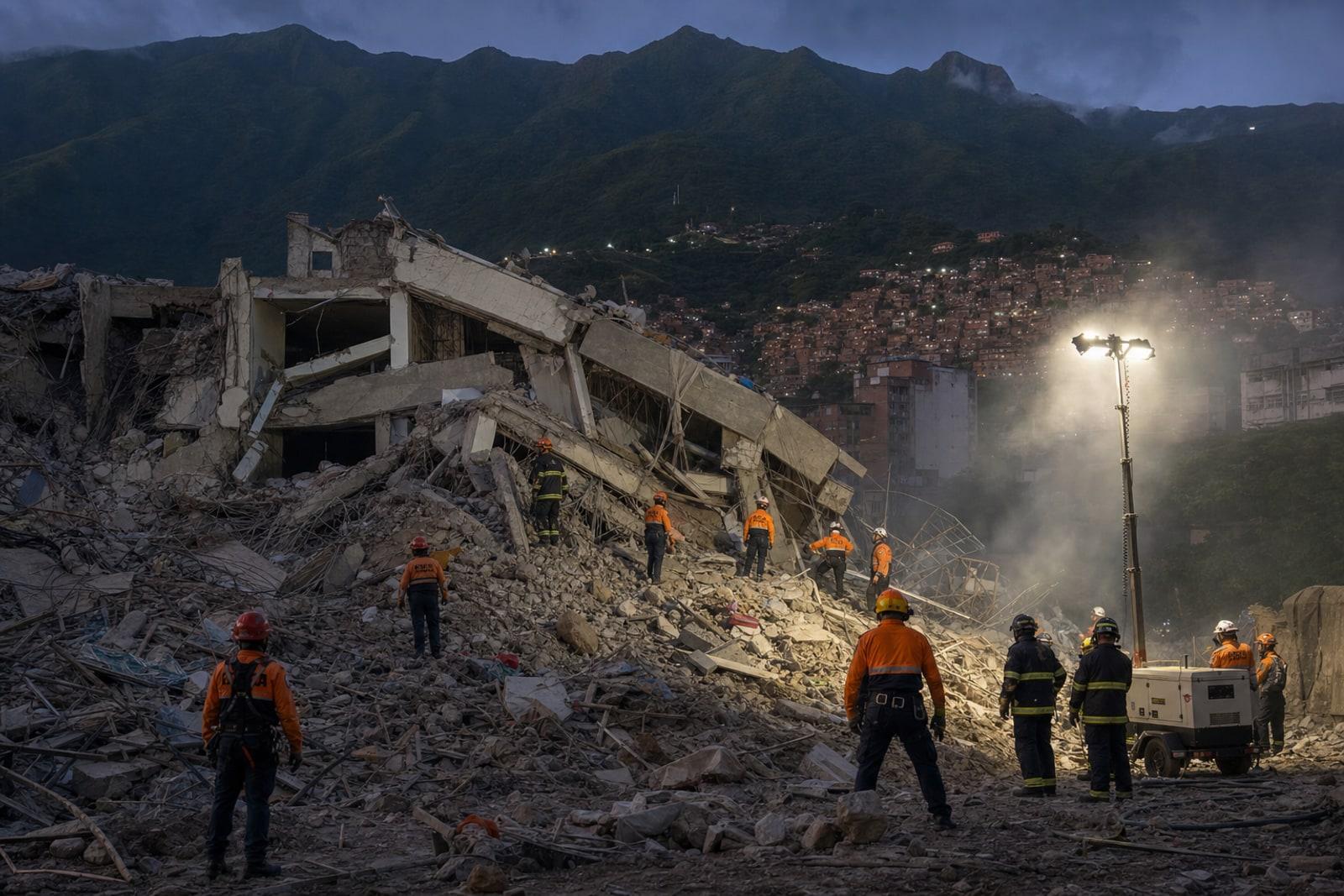
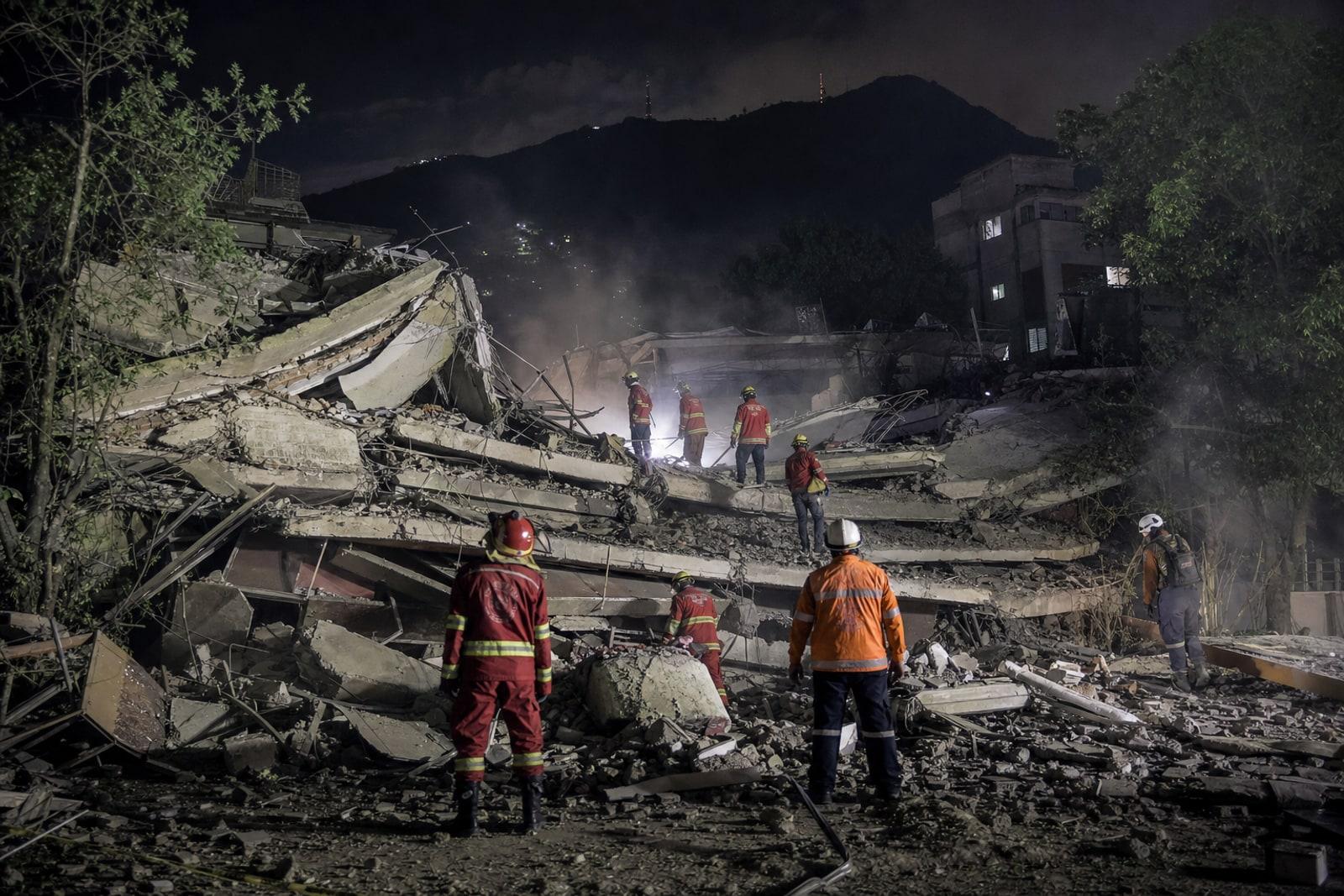
The heaviest destruction fell on the coastal state of La Guaira and on Caracas, where mid-rise apartment blocks pancaked and whole neighbourhoods were flattened. Venezuelan officials say hundreds of buildings collapsed, with more than 1,400 destroyed in La Guaira alone. A satellite analysis by researchers Corey Scher and Jamon Van Den Hoek of Oregon State University estimated that some 58,870 structures were damaged or destroyed. The United Nations Office for Disaster Risk Reduction has put direct physical damage at about US$37 billion, and dozens of hospitals were knocked out of service at the moment the country needed them most.
"We continue to operate in a high-risk environment," said Gianluca Rampolla, the United Nations Resident and Humanitarian Coordinator in Venezuela.
Rescue turns to recovery
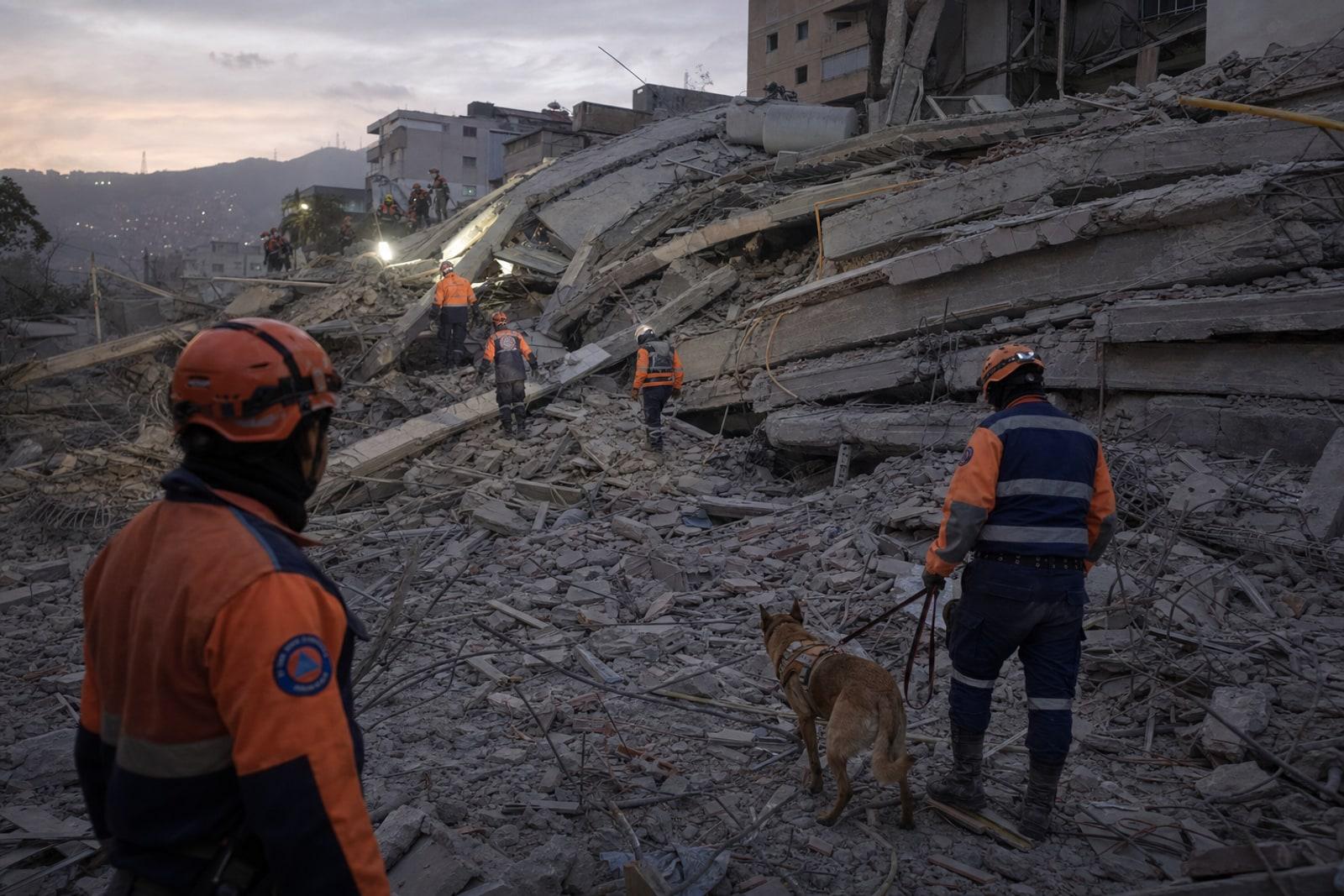
For more than a week, some 30,000 Venezuelan emergency and military personnel laboured alongside more than 3,300 international rescuers from more than two dozen countries, supported by scores of search-and-rescue dogs. Teams from Brazil, France, Chile, Colombia, Germany, the Czech Republic and the United States joined the effort, while the UN and Venezuelan authorities procured 10,000 body bags. More than 6,400 people were pulled alive from the debris, among them a three-year-old boy rescued after six days and a man freed after eight.
By the weekend, however, the operation had shifted decisively from rescue to recovery and reconstruction. The government said it was moving to repair roads, bridges and transport links and announced a rehousing programme it insists will shelter the displaced by year's end. Rescuers have complained of fuel shortages and a shortage of heavy machinery, and aid groups say water and sanitation are now the most pressing needs.
- 2,954 confirmed dead, with the toll still rising
- More than 16,000 injured, per the National Assembly
- ~50,000 unaccounted for, per humanitarian agencies
- ~US$37 billion in estimated direct damage
A disaster on top of a crisis
The earthquakes struck a country already hollowed out by years of economic collapse, hyperinflation and the departure of more than seven million people. Even before the quakes, public hospitals lacked supplies and the power and water networks were fragile — conditions that aid workers say have deepened the emergency. "Today we have recovered people alive and, therefore, operations are not being suspended," acting President Delcy Rodríguez said as crews pressed on. Officials have nonetheless faced criticism for restricting citizen-run aid collection and, in some areas, delaying international rescue teams.
For the survivors, the road ahead is long. "There are people who need a hug," said Vanessa May, who heads the UN humanitarian office in Venezuela, warning that recovery would be measured in years, not weeks. As reconstruction begins, thousands of families are still standing at the edge of the rubble, waiting for word of the missing.
Frequently asked
- How many people died in the 2026 Venezuela earthquakes?
- As of 4 July 2026, Venezuelan authorities confirmed at least 2,954 deaths, with officials warning the toll would continue to rise as recovery teams reach more affected areas.
- How strong were the earthquakes and where did they hit?
- A magnitude-7.2 foreshock was followed 39 seconds later by a magnitude-7.5 mainshock on 24 June 2026, with epicentres near San Felipe in Yaracuy state, west of Caracas. The USGS put the mainshock's depth at about 10 kilometres.
- How many people are still missing?
- Humanitarian agencies, including the International Organization for Migration, estimate roughly 50,000 people remain unaccounted for, though the figure includes residents who fled damaged areas and have not yet been located.
- What is the state of the rescue and recovery effort?
- Some 30,000 Venezuelan personnel and more than 3,300 international rescuers took part, saving over 6,400 people. By early July the operation had shifted from rescue to recovery and reconstruction, hampered by fuel shortages and a lack of heavy equipment.
Sources(8)
- 12026 Venezuela earthquakesWikipedia · en.wikipedia.org
- 2Venezuela quakes death toll rises to 1,719, thousands still missingAl Jazeera · aljazeera.com
- 3Venezuela earthquake death toll passes 1,700 as UN continues to scale up responseUN News · news.un.org
- 4Venezuela earthquakes latest: Death toll climbs as rescuers continue searchingABC News · abcnews.com
- 5Venezuela quake toll climbs to 2,595 as damage estimates mount after strongest tremor in a centuryCNBC · cnbc.com
- 6Venezuela quake death toll rises to 2,954 as recovery shifts to reconstructionAOL · aol.com
- 7Venezuela Quake Death Toll Rises To 2,954 — Official FiguresChannels Television · channelstv.com
- 8Venezuela Earthquake Update: Magnitude 7.5 and 7.2 Quakes, Latest Figures, and Damage AreasMiyamoto International · miyamotointernational.com
Related by topic