Chamber of Deputies
ADR's Tom Weidig given only a party warning over anti-LGBTIQ Facebook 'like'
Luxembourg's parliament condemned hate speech in a unanimous resolution but imposed no sanction of its own; the sole formal penalty came from Weidig's own party — a written warning.
By Léa Hoffmann · · 4 min read
A sitting Luxembourg lawmaker who endorsed a social-media comment calling for LGBTIQ people to be “exterminated” faced no sanction from parliament itself and only a written warning from his own party — an outcome that has reopened the question of how the Chamber of Deputies polices discriminatory speech by its members.
Tom Weidig, a deputy for the national-conservative Alternative Democratic Reform Party (ADR) elected in the Centre constituency in October 2023, drew cross-party condemnation in February 2025 after he “liked” a Facebook comment that read, in German, “Wir müssen auch hier kämpfen und LGBTQ vernichten” — “We must fight here too and destroy LGBTQ.” Days earlier, he had publicly praised US President Donald Trump’s ban on transgender athletes in women’s sport.
What Weidig did
The endorsement, first amplified by other politicians and the press, prompted an immediate backlash. Weidig said the “like” had been accidental and that his actions were misunderstood, and he apologised. Rosa Lëtzebuerg, Luxembourg’s main LGBTIQ+ advocacy organisation, was not satisfied: it filed a criminal complaint against both Weidig and the author of the original comment, and called on the deputy to resign.
The episode landed amid a wider debate in Luxembourg over LGBTIQ rights, including a contested petition campaign against LGBTIQ content in schools that the ADR’s base had championed. For critics, a deputy approving an explicit call to “exterminate” a minority was a line that could not be treated as an online slip.
The Chamber’s response
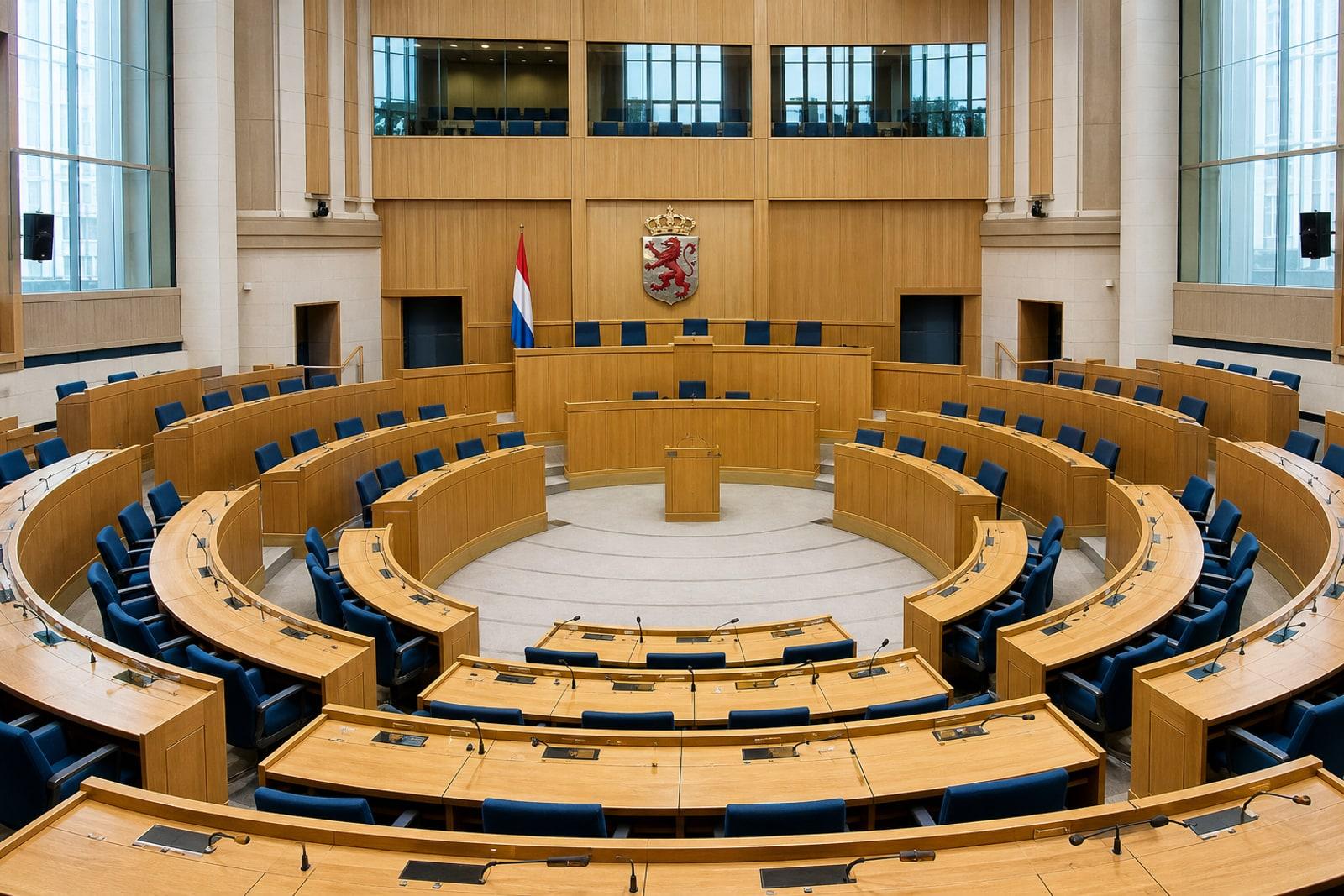
When parliament met on 12 February 2025, six parties — the CSV, the Democratic Party (DP), the LSAP, déi gréng, the Pirate Party and déi Lénk — jointly tabled a resolution “firmly condemning all attacks against human rights, including acts of violence, hate speech and discrimination directed against minorities.” It passed with every deputy voting in favour, the five ADR members included. Weidig sat in silence as colleagues across the spectrum denounced him.
DP deputy Gilles Baum told the chamber it was time to draw a clear boundary. “Ça suffit!” he said — “Enough!” — insisting that “fascist and national-socialist thinking” had no place “either in this Chamber or in society.” déi Lénk’s Marc Baum was blunter still, telling Weidig that by backing a call to exterminate LGBTIQ people, “you are no longer part of democracy,” and that acting “in the heat of the moment” was no excuse.
“Vous êtes une honte pour cette Chambre!” — “You are a disgrace to this Chamber!” — LSAP group leader Taina Bofferding told Weidig, calling his party “toxic for our society.”
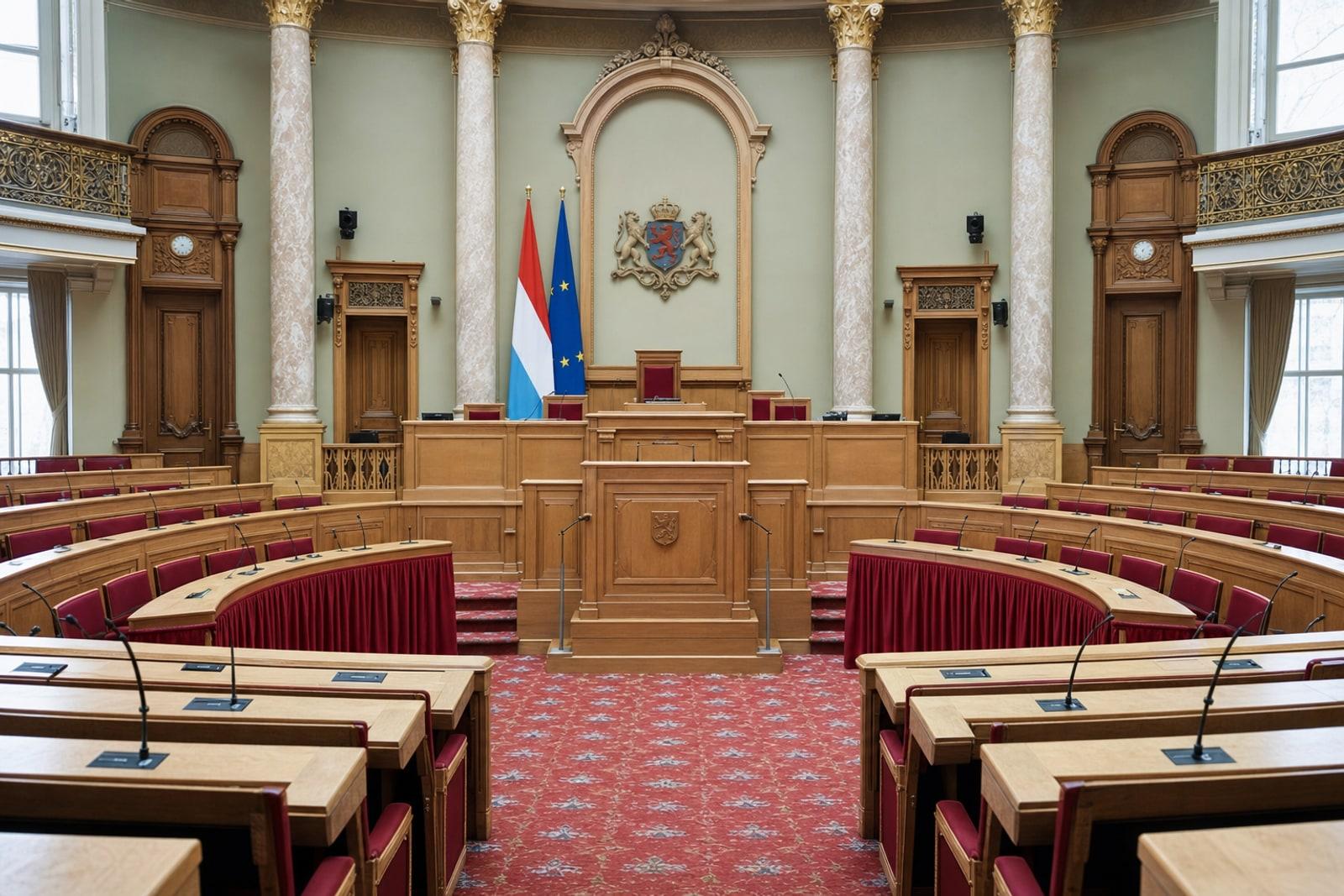
Yet for all the censure, the Chamber’s resolution was a political statement, not a penalty. Parliament imposed no formal sanction on Weidig — no suspension, no fine, no loss of mandate. Its conduct rules principally govern behaviour inside the hemicycle, and the contested act had taken place on social media, outside those walls.
A party warning, not a parliamentary sanction
With parliament declining to act against one of its own, the only disciplinary track left was internal to the ADR. The party opened a procedure, branding the “like” “inacceptable,” and its national committee met on Monday 17 February 2025 to decide. The available penalties ranged widely:
- a simple written warning;
- tougher internal measures; or
- outright expulsion from the party.
Expulsion was not a remote possibility: the ADR had ejected Joe Thein in 2017 after he said then-foreign minister Jean Asselborn should be “shot in the street.” In Weidig’s case, the committee opted for the lightest option on the table — a written warning. It concluded that the deputy “did not want and was not calling to exterminate anyone,” and asked him to clarify his conduct on social media. He kept his seat.
Where Luxembourg draws the line
The affair exposed how few tools Luxembourg’s parliament has to discipline discriminatory speech by its members. The Chamber can debate, condemn and pass resolutions, but its code of conduct is geared to order inside the chamber rather than to what deputies post online. An earlier episode underscored the gap: in January 2024, after Weidig directed threatening remarks at a cartoonist on Facebook, the Conference of Presidents met him but imposed no formal sanction, reasoning that the conduct fell “outside Parliament’s walls,” and agreed only to review the parliamentary code of ethics.
The result is a system in which the strongest formal response to a deputy endorsing a call to “exterminate” a minority came not from the institution he serves but from the party that selected him — and amounted to a warning letter. Supporters of that approach argue it respects the wide latitude given to elected representatives and the principle that voters, not committees, should ultimately judge their politicians. Critics counter that it leaves the dignity of protected groups dependent on the goodwill of a single party.
For Luxembourg, the case set a marker. A unanimous chamber can make plain that calls for the extermination of a minority are beyond the pale — while the same chamber, confronted with a member who endorsed exactly that, found it had almost no power to do anything about it.
Frequently asked
- What exactly did Tom Weidig do?
- In February 2025 the ADR deputy 'liked' a Facebook comment that read, in German, 'We must fight here too and destroy [vernichten] LGBTQ' — rendered in the French-language press as a call to 'exterminate' LGBTIQ people. He had days earlier praised Donald Trump's ban on transgender athletes in women's sport. Weidig said the like was accidental and that he was misunderstood, and apologised.
- Which body issued the warning, and on what basis?
- The warning came from his own party, the ADR — not from parliament. After opening an internal disciplinary procedure, the ADR's national committee met on 17 February 2025 and issued a written warning, the lightest of the options, which ranged up to expulsion. The Chamber of Deputies itself imposed no sanction; it only passed a non-binding resolution.
- Why didn't the Chamber of Deputies sanction him?
- Parliament's conduct rules mainly govern behaviour inside the chamber, while the contested act took place on social media. A unanimous cross-party resolution condemned hate speech and discrimination against minorities, but the Chamber has limited formal tools to punish a member for online conduct.
- What was the reaction from other parties?
- It was uniformly hostile across coalition and opposition. DP's Gilles Baum said 'Enough!'; LSAP's Taina Bofferding called Weidig 'a disgrace to this Chamber'; déi Lénk's Marc Baum said endorsing a call to exterminate LGBTIQ people put him 'no longer part of democracy.' Rosa Lëtzebuerg filed a criminal complaint and called for his resignation.
Sources(8)
- 1Affaire Weidig : «Vous êtes une honte pour cette Chambre»Le Quotidien · lequotidien.lu
- 2L'ADR adresse un avertissement à Tom WeidigLe Quotidien · lequotidien.lu
- 3Affaire Tom Weidig : l'ADR lance une procédure de disciplineLe Quotidien · lequotidien.lu
- 4Nach Facebook-Like von Tom Weidig: Chamber wendet sich mit Resolution gegen ADRTageblatt · tageblatt.lu
- 5Transphober Post: Rosa Lëtzebuerg zeigt Tom Weidig anL'essentiel · lessentiel.lu
- 6Chambre : l'affaire Weidig est closeLe Quotidien · lequotidien.lu
- 7Tom WeidigWikipedia · en.wikipedia.org
- 8Tom Weidig — deputy profileChambre des Députés du Grand-Duché de Luxembourg · chd.lu
Related by topic