Security policy
Luxembourg moves to widen police power to order people out of public space
Interior Minister Léon Gloden's 'Platzverweis' reform heads for a July vote despite repeated formal opposition from the Council of State and human-rights bodies.
By Camille Reuter · · 5 min read
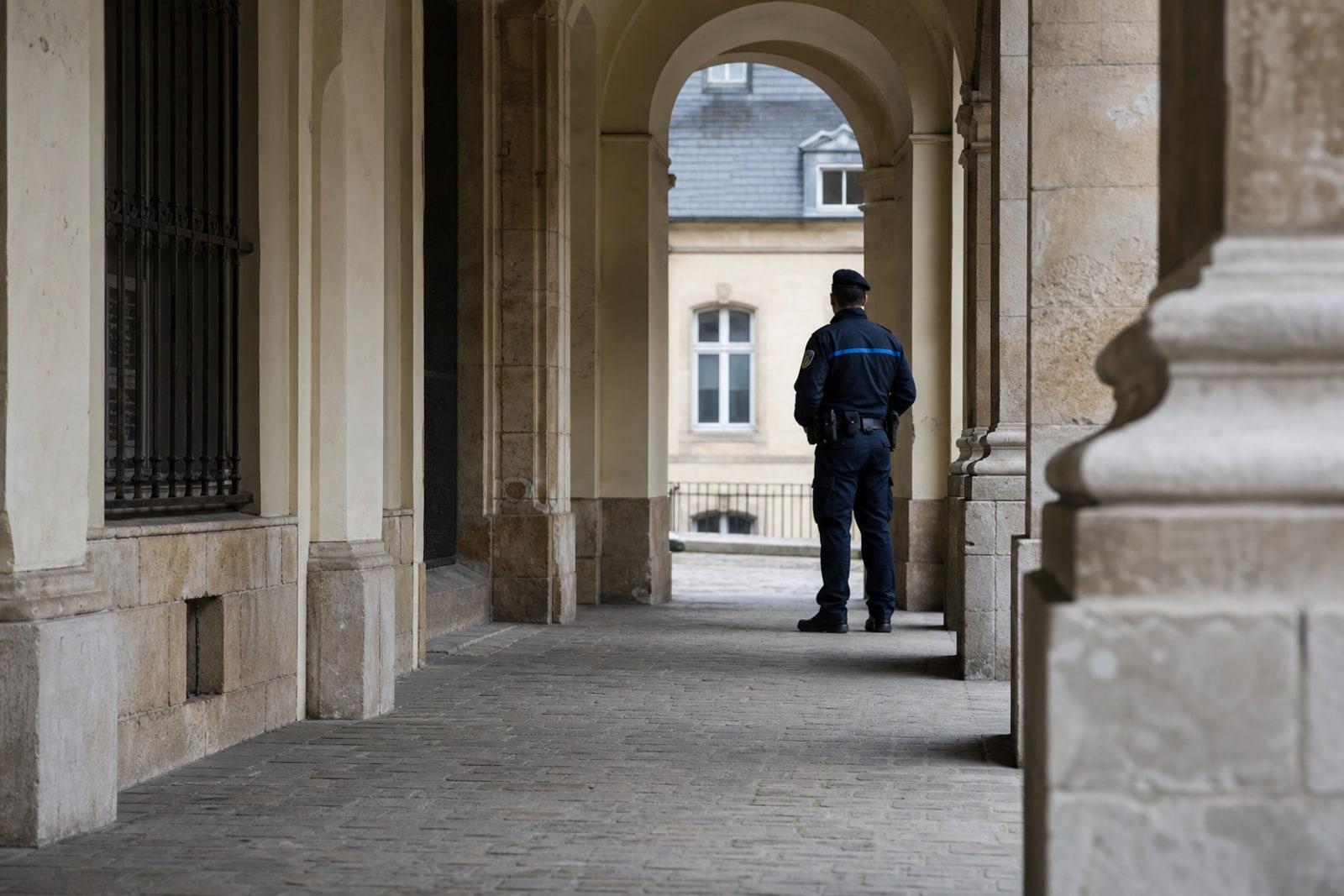
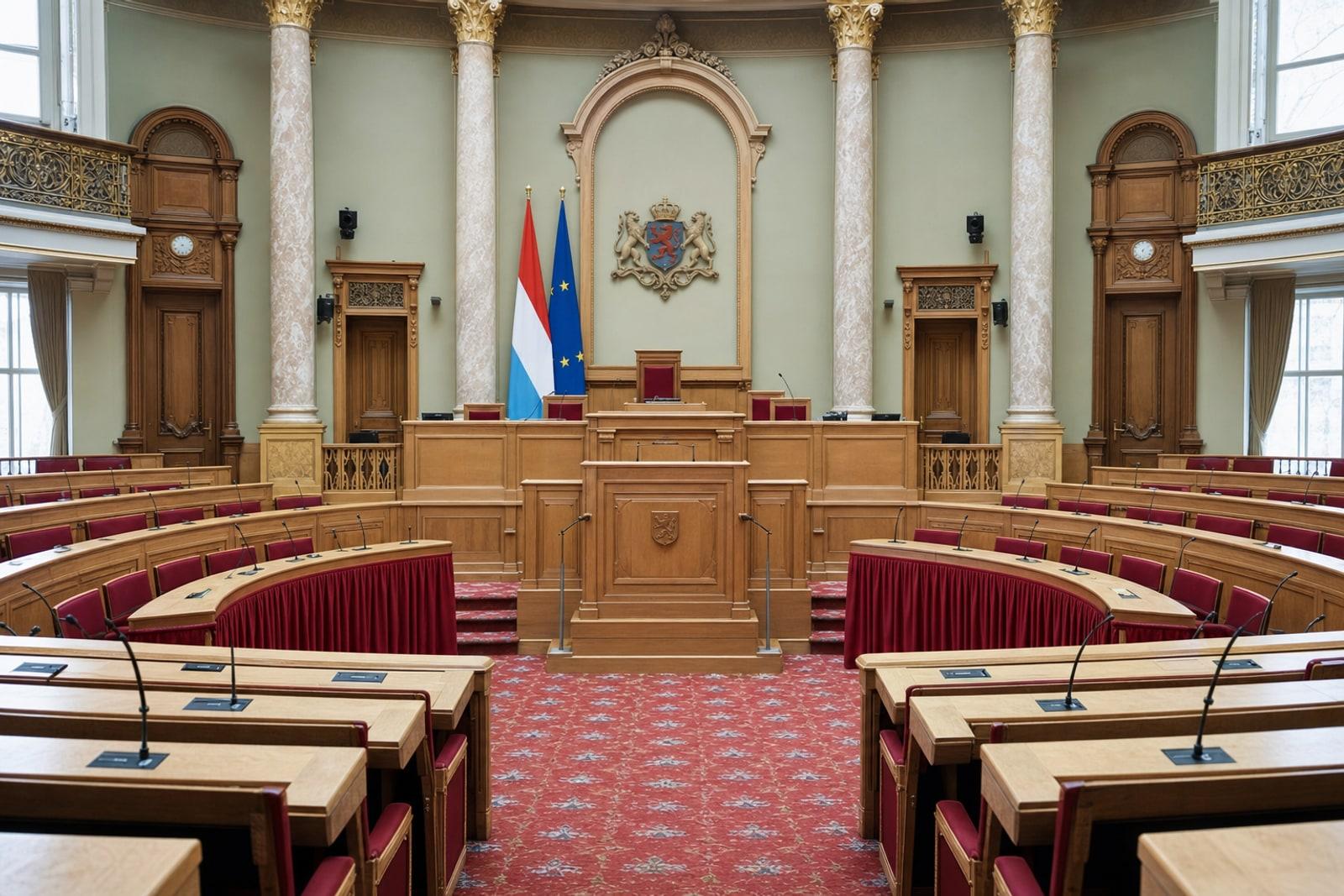
Luxembourg's parliament is preparing to give police broader power to order people out of public space, after years of legal wrangling that has pitted the government's security agenda against repeated warnings from the country's top advisory body and its human-rights watchdog.
The reform, known as the reinforced Platzverweis — a banishment or dispersal order — is contained in bill 8426, tabled on 25 July 2024 by Home Affairs Minister Léon Gloden of the Christian Social People's Party (CSV). The Chamber of Deputies' interior affairs committee adopted the rapporteur's report on 24 June 2026, clearing the way for a plenary vote scheduled for 8 July 2026, according to the parliament's own agenda and reporting by Reporter.lu.
What the reform would change
Luxembourg already allows a Platzverweis, introduced in 2022, but only against people physically blocking access to buildings open to the public. Bill 8426, which amends the law of 18 July 2018 on the Grand Ducal Police, widens that considerably. As drafted, officers could order someone to leave a place — using force if necessary — on a far longer list of grounds.
- New grounds: behaviour that disturbs public peace, health or safety, hinders circulation on public roads, or importunes passers-by — not just blocking a doorway.
- Reach and duration: the exclusion zone can extend up to one kilometre, and the order lasts up to 48 hours.
- Repeat offences: if a person is removed again within 30 days, a longer temporary place ban — originally proposed at up to 30 days — could follow.
- Enforcement: breaching an order carries a €250 fine.
During committee work the text was reshaped. Mayors, who in the original draft would have decided the longer place ban, were stripped of that role after déi Lénk deputy Marc Baum argued it was unconstitutional for an elected executive — rather than a judge — to curtail a citizen's freedom of movement, as reported by Le Quotidien. The committee also tightened the wording of the grounds, which critics had attacked as dangerously loose.
A long, contested passage through parliament
The bill is a plank of the CSV-DP coalition agreement, and a generalised Platzverweis had been a CSV demand when Gloden sat in opposition under the previous Green interior minister, Henri Kox. Its journey has been anything but smooth.
The Council of State, whose opinions can force a bill back to the drawing board, issued a supplementary opinion on Tuesday 2 December 2025 maintaining its formal opposition. It held that notions such as disturbing "tranquillity, health or public safety" remained too general to guarantee the predictability required when the state interferes with private life, and warned of a risk of arbitrary decisions, disproportionate restrictions and discriminatory impact on vulnerable people — with no swift legal remedy for those affected.
In committee, the three LSAP members and one Green deputy abstained on the report drawn up by CSV rapporteur Laurent Mosar; no one voted against. Gloden, for his part, has been unbending.
I am very determined that this bill should be voted through without being distorted.
The minister has framed the measure as a response to public demand rather than to lobbying. "People expect us to improve safety and the feeling of safety," he told Delano, dismissing organised opposition by pointing to what he called "the silent majority who don't shout."
Rights groups and judges sound the alarm
Outside parliament, the criticism has been broad and pointed. The Consultative Commission on Human Rights (CCDH), Luxembourg's national human-rights institution, warned in its April 2025 opinion that the bill covers a "large éventail de comportements formulés de manière vague" — a wide range of vaguely worded behaviours — "entraînant un risque d'arbitraire, de discriminations et de non-conformité à la Constitution et à la Convention européenne des droits de l'Homme."
The commission cautioned that police and officials could end up making decisions based on appearance or perceived origin, and that subjective feelings of insecurity should not justify repressive measures. It urged that demonstrations be explicitly excluded from the order's scope.
The judiciary has voiced similar doubts. Prosecutors in Luxembourg and Diekirch told lawmakers the listed behaviours were too imprecise to be applied uniformly and objectively, while the Public Prosecutor General questioned the measure's proportionality. Justices of the peace argued that orders restricting where a person may go should be issued by a judicial authority and come with a fast-track right of appeal — safeguards campaigners say the bill still lacks.
A wider fight over public space
The Platzverweis is the sharpest edge of a broader security drive under Gloden. Since taking office he has reinstated a begging ban in parts of Luxembourg City — which he insists targets only "organised aggressive begging" in specified streets and hours — and pushed for expanded video surveillance and automatic licence-plate recognition, alongside a new local policing unit within the Grand Ducal Police.
Supporters cast the package as common-sense reassurance for residents and shoppers who feel uneasy in parts of the capital. Opponents see a steady accretion of executive power over who may occupy public space, and over the most marginal residents in particular. "Les gens attendent de nous que nous améliorions la sécurité et le sentiment de sécurité," Gloden said in December, restating the case he intends to carry into the chamber.
With the government's majority intact and the opposition split between abstention and outright resistance, bill 8426 is widely expected to pass on 8 July. The questions raised by the Council of State and the CCDH — about vagueness, proportionality and the courts' role — are likely to outlast the vote, and could yet surface again before Luxembourg's judges.
Frequently asked
- What is the 'Platzverweis'?
- It is a police banishment or dispersal order that requires a person to leave a specified place. Luxembourg introduced a limited version in 2022; bill 8426 would expand it to a wider range of behaviours in public space.
- What would the reform allow police to do?
- Officers could order someone to leave — by force if needed — for up to 48 hours within a zone of up to one kilometre, on grounds including disturbing public peace, hindering traffic or importuning passers-by. Repeat offences could trigger a longer place ban, and breaching an order carries a €250 fine.
- Why is it controversial?
- The Council of State, the human-rights commission (CCDH), prosecutors and judges argue the grounds are too vague, risk arbitrary and discriminatory enforcement against vulnerable people, and lack a swift right of appeal before a court.
- When does parliament vote?
- The Chamber of Deputies' interior affairs committee adopted the report on 24 June 2026, and a plenary vote is scheduled for 8 July 2026.
Sources(13)
- 1Innere Sicherheit: Ausschuss nimmt „Platzverweis renforcé" anReporter.lu · reporter.lu
- 2Le Conseil d'État renouvelle son opposition au PlatzverweisPaperjam · paperjam.lu
- 3Entrave à l'accès d'un bâtiment: la CCDH monte au créneauPaperjam · paperjam.lu
- 4«Platzverweis» renforcé : la CCDH s'offusque à son tourLe Quotidien · lequotidien.lu
- 5«Platzverweis» renforcé : la justice émet d'importants doutesLe Quotidien · lequotidien.lu
- 6Les bourgmestres éloignés du PlatzverweisLe Quotidien · lequotidien.lu
- 7« Platzverweis », interdiction de la mendicité et création d'une unité de police localeChambre des Députés du Grand-Duché de Luxembourg · chd.lu
- 8Quelles limites pour le « Platzverweis » ?Chambre des Députés du Grand-Duché de Luxembourg · chd.lu
- 9La semaine du 22 juin 2026 à la ChambreChambre des Députés du Grand-Duché de Luxembourg · chd.lu
- 10Réunion de commission - 24 juin 2026 (Commission des Affaires intérieures)Chambre des Députés du Grand-Duché de Luxembourg · chd.lu
- 11Léon Gloden: "Les gens attendent de nous que nous améliorions la sécurité"Le gouvernement luxembourgeois · gouvernement.lu
- 12Léon Gloden: "People expect us to improve security"Delano · delano.lu
- 13Léon GlodenWikipedia · en.wikipedia.org
Related by topic