Housing
Luxembourg construction prices have climbed 54% in a decade, Eurostat data show
New-build residential construction costs in the Grand Duchy rose 54.5% between 2015 and 2025, outpacing the EU average, even as a building slowdown deepens Luxembourg's housing squeeze.
By Sophie Klein · · 4 min read
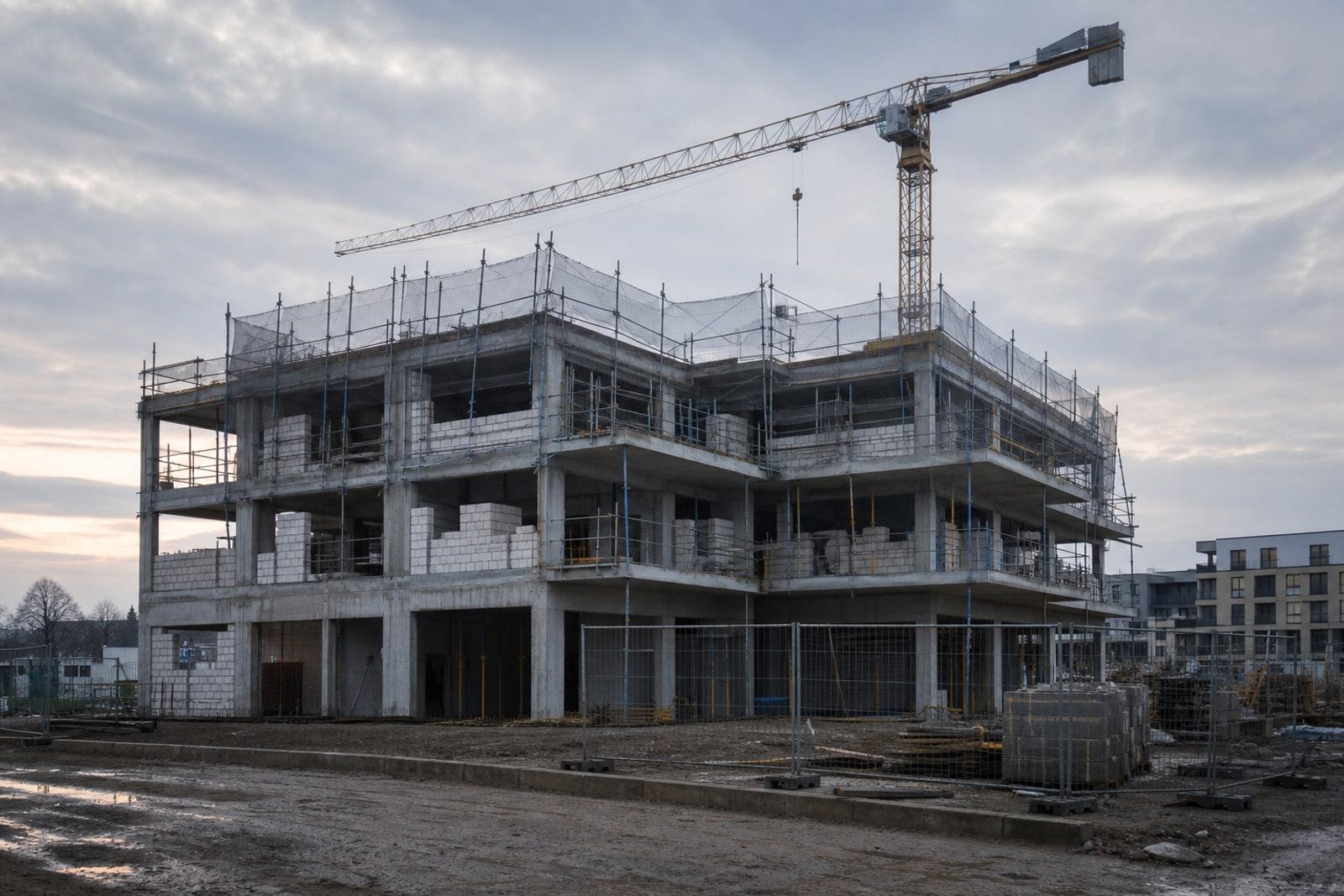
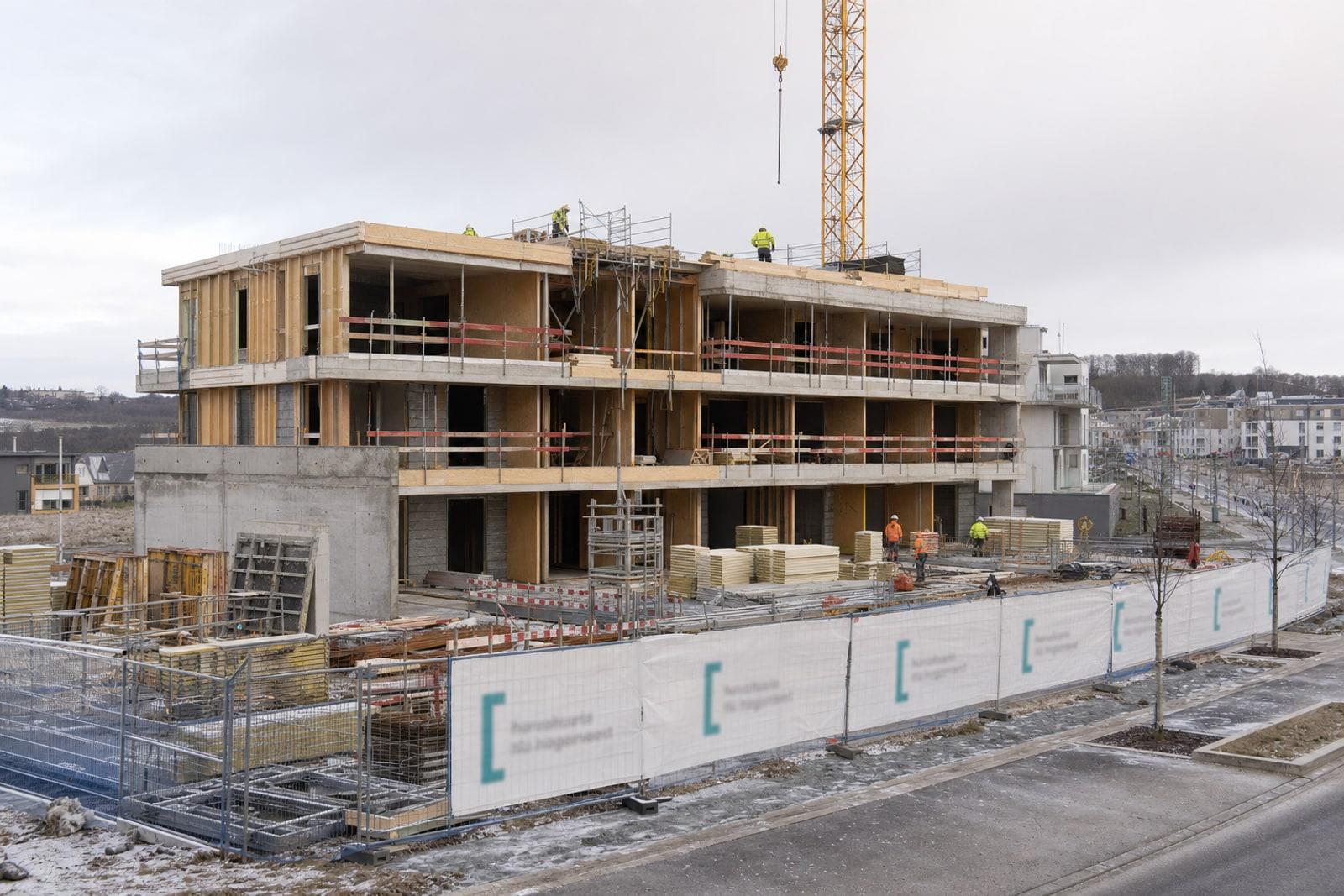
The cost of building a home in Luxembourg has surged over the past decade. Prices for new residential construction rose 54.5% between 2015 and 2025, according to Eurostat — a faster climb than the European Union average and a pressure now rippling through one of the continent's least affordable housing markets.
The figure, drawn from the EU statistics office's construction cost index and highlighted by the Luxembourg daily L'essentiel on 29 June, places the Grand Duchy above the EU-wide increase of 48.2% over the same period. It lands as Luxembourg grapples with a building slowdown that has left new-home output well short of what officials say the country needs.
What the numbers show
Eurostat reported on 25 June that construction prices for new residential buildings rose 48.2% across the EU between 2015 and 2025. The steepest increases were recorded in central and eastern Europe — Bulgaria led at 166.1%, followed by Hungary at 155.4% and Romania at 130.7% — while Italy, Greece and Finland saw the smallest rises. Luxembourg's 54.5% sits above the bloc's average, even if it is far from the top of the table.
Much of the increase was packed into a short, sharp burst. Annual EU price growth reached 5.8% in 2021, 12.2% in 2022 and 6.9% in 2023, before easing to 2.3% in 2024 and 1.3% in 2025. Eurostat's quarterly series for Luxembourg, rebased to 2021, stood at 131.4 in the final quarter of 2025 — more than 30% above its 2021 level.
Luxembourg's national statistics office, STATEC, tracks the same trend through its own gauge. That index, expressed on a base of 100 in 1970 and used to update most fire-insurance contracts and off-plan sale prices, reached 1,173.24 points in October 2025 after years of steady increases.
What is driving the increase
The decade-long climb owed less to gentle inflation than to the supply shocks of the early 2020s. STATEC has linked the surge to the Covid-19 pandemic and Russia's invasion of Ukraine, which sent the price of materials and fuel soaring almost simultaneously. At the 2022 peak, the office's general index jumped 8.6% in a single half-year, and annual residential construction prices rose 13.9% — the fastest rate since April 1975.
This new exceptional and generalised increase, which concerns all trades, is mainly explained by the acceleration in the prices of many building materials and petroleum products. — STATEC
The strain fell across every trade. The cost pressures cited by STATEC include:
- Materials — sand, iron reinforcement, masonry, insulation and timber, with wood prices spiking sharply in 2021 and 2022;
- Energy — petroleum products that raised the cost of earthworks, transport and on-site machinery;
- Labour — Luxembourg's automatic wage indexation, which lifted pay across the sector;
- Specific trades — roofing, where prices rose 45.5% between 2020 and April 2025.
Price growth has since cooled. STATEC found its general index up 1.3% between October 2024 and April 2025, and 1.5% over the year, while structural work edged up just 0.6% in the following half-year — close to the 1.0% annual average seen between 2010 and 2019. But the easing comes on top of a decade of compounding rises, leaving the absolute cost of building far above where it stood in 2015.
A building slowdown meets an affordability wall
Higher costs have collided with a sharp contraction in activity. Building-permit approvals have fallen for three consecutive years, with roughly 4,025 dwellings approved in 2024, down 8.6% on the year, and a steeper drop recorded in early 2025. The Fondation IDEA, an independent economic think tank, has warned that the government's target of building around 6,000 homes a year is unlikely to be met, even as the country is estimated to need between 5,600 and 7,500 new units annually.
The new-build segment looks especially fragile. Off-plan (VEFA) apartment transactions fell 18.2% year-on-year in the first quarter of 2026, according to the housing ministry, after STATEC flagged the segment's structural weakness in late 2025. Overall house prices, which dropped 9.1% in 2023 and 5.2% in 2024, returned to modest growth of 1.6% in 2025 and were up 1.7% year-on-year in early 2026 — stabilising at a high level rather than retreating. Rents, meanwhile, kept climbing, with advertised apartment rents up 4.4% over the year.
For economists, the squeeze raises uncomfortable questions about who can still afford to live in the Grand Duchy. Michel-Edouard Ruben, a senior economist at the Fondation IDEA, framed the dilemma bluntly, arguing that the right to housing does not automatically translate into a right to housing inside Luxembourg's borders:
"The right to housing? Of course. But that does not necessarily mean that you must live in Luxembourg," he said.
The construction-cost data sharpen that debate. With the price of putting up a home more than half again as high as it was a decade ago, the gap between what developers must spend to build and what buyers and renters can afford has become one of the defining strains on Luxembourg's housing market — and one that cooling inflation alone is unlikely to close.
Frequently asked
- How much have construction prices risen in Luxembourg over the past decade?
- According to Eurostat, prices for new residential construction in Luxembourg rose 54.5% between 2015 and 2025, above the EU-wide average increase of 48.2% over the same period.
- What caused the increase?
- STATEC attributes the surge mainly to the Covid-19 pandemic and the war in Ukraine, which drove up the cost of building materials (timber, sand, iron, insulation) and petroleum products, compounded by labour costs lifted by Luxembourg's automatic wage indexation. Price growth peaked in 2022 and has since slowed to roughly 1-2% a year.
- How does this connect to Luxembourg's housing crisis?
- Higher build costs squeeze developers and feed into prices for buyers and renters. Building-permit approvals have fallen for three consecutive years and new-build sales dropped sharply in early 2026, leaving new-home output below the estimated 5,600-7,500 units a year the country needs.
Sources(11)
- 1Logements au Luxembourg: +54% en dix ans: les prix de la construction ont bondiL'essentiel · lessentiel.lu
- 2Residential buildings construction price +48% since 2015Eurostat · ec.europa.eu
- 3Bulgaria Records Highest Increase of Residential Buildings Construction Prices in EU for 2015-2025Bulgarian News Agency (BTA) · bta.bg
- 4STATNEWS - Tendance croissante des prix dans la construction résidentielle (octobre 2025)STATEC · statistiques.public.lu
- 5Construction prices are back on the rise, says StatecPaperjam · en.paperjam.lu
- 6STATEC: Luxembourg Construction Prices SkyrocketingChronicle.lu · chronicle.lu
- 7Housing Crisis in Luxembourg Becoming Permanent, IDEA Analysis SuggestsChronicle.lu · chronicle.lu
- 8Le marché immobilier résidentiel au 1er trimestre 2026Ministère du Logement et de l'Aménagement du territoire (gouvernement.lu) · mlogat.gouvernement.lu
- 9Le logement en chiffres au quatrième trimestre 2025STATEC / Statistiques Luxembourg · statistiques.public.lu
- 10Construction cost of new residential buildings (teiis510)Eurostat · ec.europa.eu
- 11Luxembourg Residential Real Estate Market Analysis 2025Global Property Guide · globalpropertyguide.com
Related by topic