Property market
Luxembourg house prices rise again as the long correction ends
Official figures show residential prices up 1.7% over the year in the first quarter, led by houses and recovering sales — but rents keep outpacing inflation in one of Europe's costliest markets.
By Sophie Klein · · 4 min read
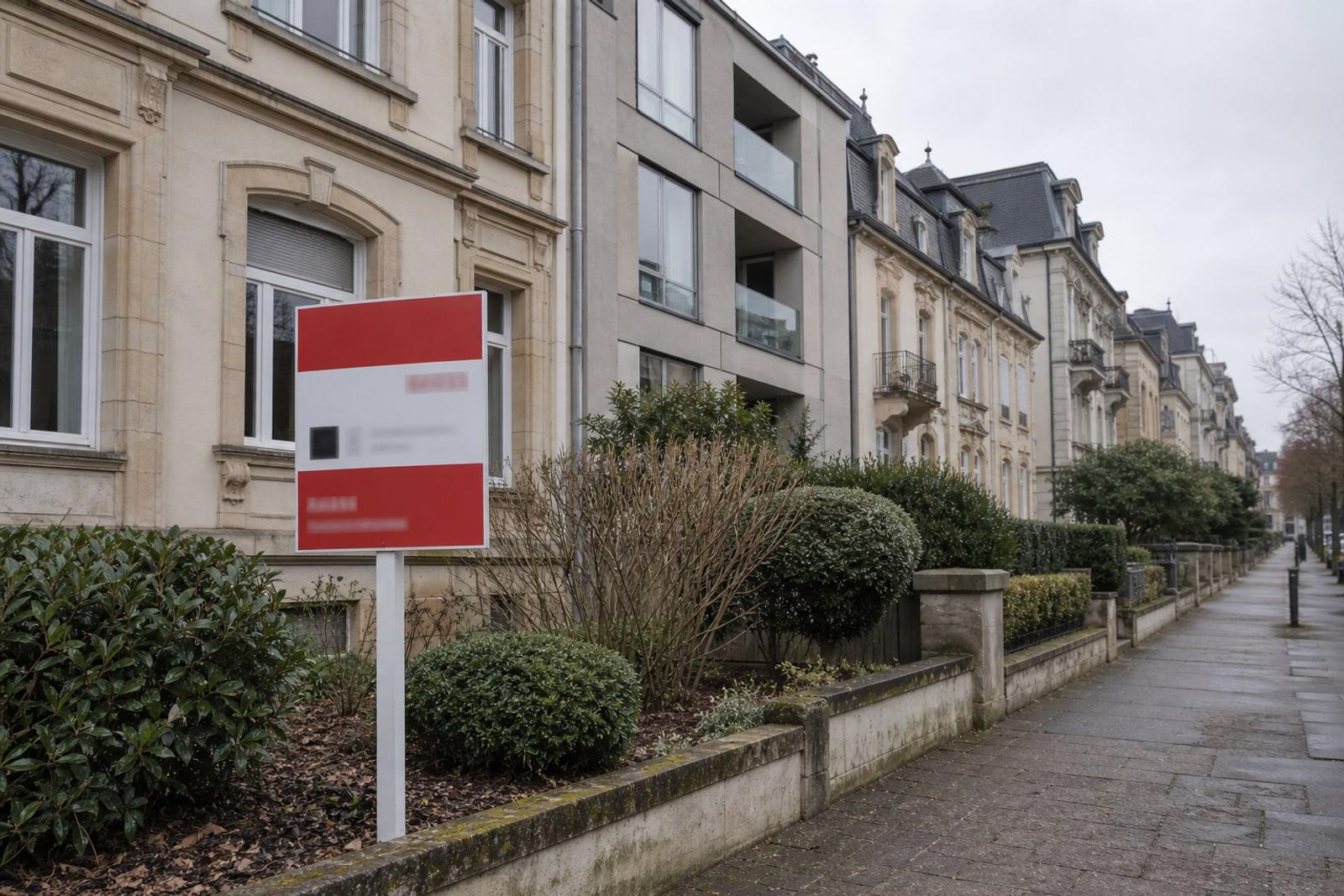
Luxembourg's residential property prices are rising again. Official figures published on 25 June showed home prices up 0.7% in the first quarter of 2026 and 1.7% over the previous twelve months, confirming that the grand duchy's deepest housing downturn in decades has given way to a cautious recovery.
The numbers, drawn from STATEC's hedonic house-price index and analysed in the 25th quarterly report of the Observatoire de l'Habitat, the government's housing observatory, point to a market that has steadied after two years of falling values. Annual price growth of 1.7% is now broadly in line with national inflation, which ran at 1.6% over the same period.
For a country routinely ranked among the most expensive places to buy a home in Europe, the turn matters. Housing affordability is the dominant pocketbook issue in Luxembourg, and a return to rising prices reshapes the arithmetic for thousands of would-be buyers and for the cross-border workers who commute in from France, Belgium and Germany.
Houses lead the rebound
The recovery is uneven. Prices for existing houses rose 3.0% over the year, well ahead of the 0.9% increase for existing apartments and the 0.9% gain for new-build apartments still under construction, the so-called VEFA segment.
Sales volumes tell a similar story of normalisation. Compared with the first quarter of 2025, transactions rose 9.4% for existing apartments and 11.5% for houses. Some 968 existing apartments changed hands, approaching the average recorded before the downturn, alongside roughly 650 houses. The exception was new construction: just 207 VEFA apartments were sold, down 18.2% on a year earlier, underlining how the building pipeline has yet to recover.
The Observatoire said transaction volumes had stabilised at levels significantly higher than those recorded during the sharpest phase of the slowdown, between 2023 and early 2024.
From correction to stabilisation
The rebound follows a painful reset. Luxembourg's long property boom stalled in mid-2022, when the European Central Bank raised interest rates sharply to fight inflation, abruptly pricing many buyers out of the market. Prices fell by about 16.3% from their Q3 2022 peak to a trough in early 2024, according to figures compiled by the Observatoire, with double-digit annual declines recorded in mid-2023.
The first annual increase since the end of 2022 came in the final quarter of 2024. The recovery then gathered pace through 2025, helped by temporary fiscal incentives that pulled buyers forward, though the quarter-to-quarter path was volatile. With the ECB easing and mortgage rates settling at around 3.2%, financing conditions have improved enough to coax purchasers back to a market where supply remains structurally tight.
The latest data suggest that volatility is fading. "The residential property market has returned to a more normal rhythm," the Observatoire concluded, framing the modest first-quarter gains as a phase of stabilisation rather than the start of a new boom.
Renters left behind
If buyers are seeing a gentler market, tenants are not. Advertised apartment rents rose 0.5% over the quarter and 4.4% over the year — far outpacing both inflation and sale prices. Advertised rents for furnished rooms climbed 4.7% over twelve months, while STATEC's index of rents actually being paid rose a more modest 1.4%.
Advertised apartment rents continue to rise at a sustained pace (+4.4% over twelve months), clearly above inflation.
That gap between a recovering sales market and a relentlessly tightening rental market is the crux of Luxembourg's affordability squeeze. With home ownership out of reach for many, demand is funnelled into renting, where supply is scarce and prices keep climbing.
What it means for buyers and renters
For prospective buyers, the data carry a mixed message. Prices are no longer falling, so waiting for a cheaper market looks like a losing bet; but with values rising only in step with inflation and rates off their peak, the panic of the 2022 shock has eased. For renters and lower-income households, the picture is bleaker, with advertised rents racing ahead of wages.
The figures land against a backdrop of long-running political pressure to fix the supply shortage. Housing Minister Claude Meisch has repeatedly tied the crisis to a simple imbalance between population growth and construction.
"We need more housing, that is a simple arithmetic truth, as more people have moved to Luxembourg than we have built homes," Meisch told the Luxembourg Times in a 2024 interview, adding that the goal was "making sure that eventually everyone in Luxembourg can find a home that they can afford, which today is not the case."
For now, the official verdict is one of stabilisation: a market that has stopped falling, is selling again, and is creeping higher — but one that remains, for many residents, stubbornly out of reach.
Frequently asked
- How much did Luxembourg house prices rise in early 2026?
- According to STATEC's hedonic index, analysed by the Observatoire de l'Habitat, residential prices rose 0.7% in the first quarter of 2026 and 1.7% over the previous twelve months.
- Are houses or apartments driving the increase?
- Houses are leading. Prices for existing houses rose 3.0% over the year, compared with 0.9% for existing apartments and 0.9% for new-build (VEFA) apartments.
- What is happening to rents in Luxembourg?
- Rents are still climbing fast. Advertised apartment rents rose 4.4% over twelve months — well above inflation of 1.6% — while STATEC's index of rents actually paid rose 1.4%.
- Why did Luxembourg house prices fall before recovering?
- The market peaked in 2022 and fell about 16.3% to early 2024 after the European Central Bank raised interest rates sharply. With rates now easing and mortgage costs near 3.2%, buyers have returned and prices have stabilised.
Sources(6)
- 1Le marché immobilier résidentiel au 1er trimestre 2026: retour à la normale de l'activité, légère hausse des prix et tensions persistantes sur le marché locatifMinistère du Logement et de l'Aménagement du territoire (Le gouvernement luxembourgeois) · mlogat.gouvernement.lu
- 2Luxembourg Housing Market Stabilises in Q1 2026, Rents Up 4.4%Chronicle.lu · chronicle.lu
- 3Le logement en chiffres au quatrième trimestre 2025STATEC / Statistics Portal Luxembourg · statistiques.public.lu
- 4Luxembourg Housing Prices Drop by 16.3% between Q3 2022, Q1 2024Chronicle.lu · chronicle.lu
- 5Luxembourg has "some catching up to do" on affordable housing (interview with Claude Meisch)Luxembourg Times / gouvernement.lu · gouvernement.lu
- 6Renewed momentum on the Luxembourg property market?Spuerkeess · spuerkeess.lu
Related by topic