Global health
Congo's Ebola epidemic passes 400 deaths as conflict cripples containment
The Bundibugyo-strain outbreak in eastern DRC is now the third-largest on record. With no licensed vaccine and armed groups blocking access, officials warn the risk of regional spread is high.
By Léa Hoffmann · · 5 min read
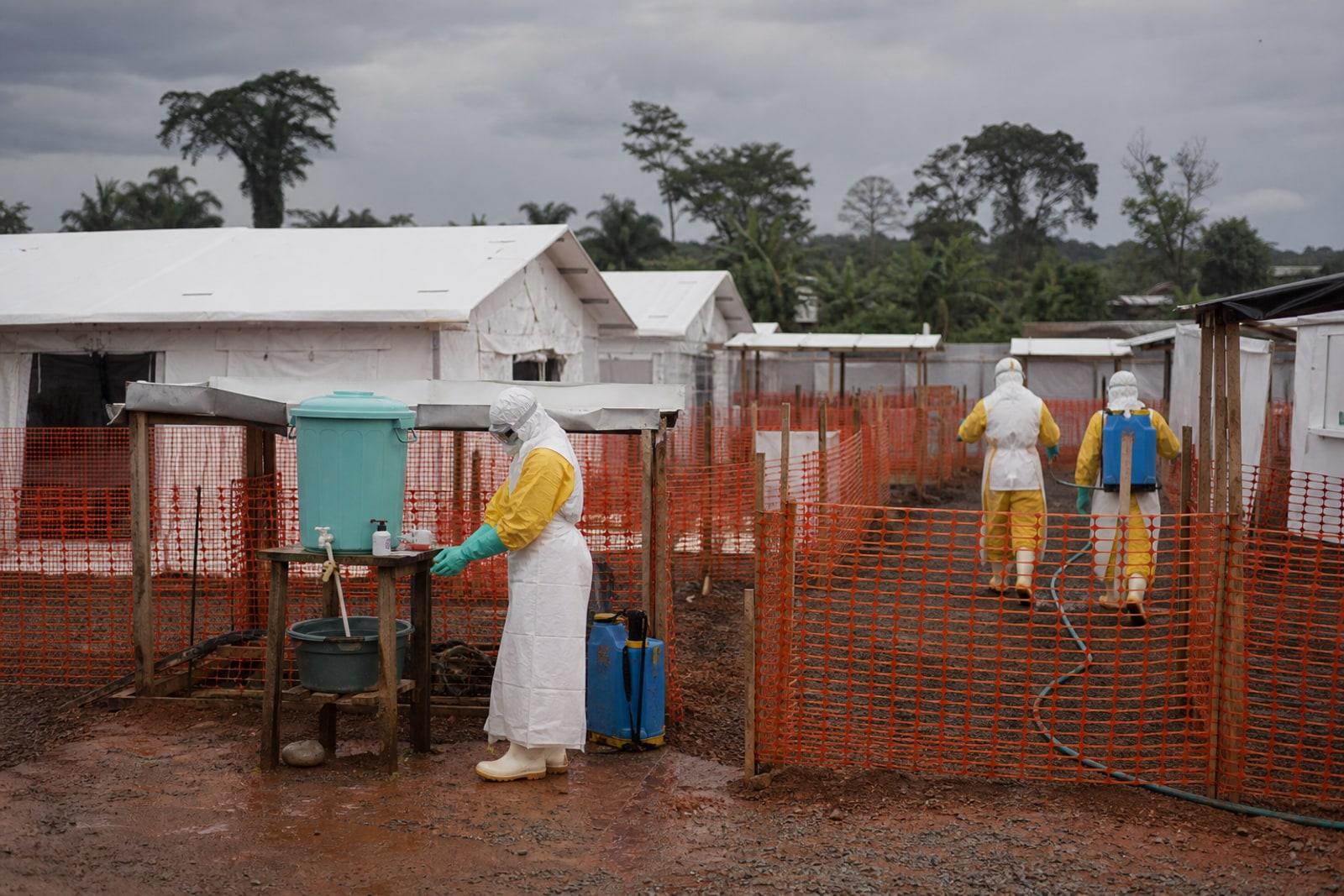
Congo's worst Ebola epidemic in years has now killed more than 400 people, as an outbreak driven by a rarely seen strain of the virus spreads through a corner of the country where armed conflict has all but paralysed the medical response.
The Democratic Republic of the Congo's National Institute of Public Health recorded 1,333 confirmed cases and 399 deaths as of 29 June, a tally that crossed the 400 mark within days as fresh fatalities were reported from Ituri province. The World Health Organization has classed the emergency as the third-largest Ebola outbreak on record, behind only the 2014–2016 West Africa epidemic and the 2018–2020 outbreak in the same eastern Congolese borderlands.
What sets this one apart is the pathogen itself. It is caused by the Bundibugyo virus, a species of Ebola for which — unlike the far more common Zaire strain — there is no licensed vaccine and no approved treatment. The vaccines and antibody drugs stockpiled after previous epidemics were developed against a different virus, leaving responders to rely largely on supportive care while researchers scramble to test candidate therapies.
A fast-moving outbreak concentrated in Ituri
The epidemic, confirmed by DRC's health ministry on 15 May and declared a Public Health Emergency of International Concern by the WHO two days later, is the country's 17th recorded Ebola outbreak since the virus was first identified in 1976. It remains overwhelmingly concentrated in Ituri, where the provincial capital Bunia has been the hardest hit.
By the WHO's tally of 19 June, 33 health zones were affected across three provinces — 21 in Ituri, 11 in North Kivu and one in South Kivu — with a further case later reported in neighbouring Haut-Uélé. The crude case fatality rate has hovered around 30 percent. Key figures include:
- More than 90 percent of cases are in Ituri, centred on Bunia, Rwampara and Mongbwalu.
- Uganda has recorded 20 confirmed cases and two deaths, including in the capital Kampala, linked to cross-border transmission.
- France reported a single case: a physician who fell ill after returning from a humanitarian mission in the DRC.
- Nearly 80 health workers have been infected, according to United Nations figures.
Why containment is failing
The virus is circulating in one of the most dangerous regions on earth. Eastern Congo has for years been racked by conflict involving the M23 movement, which controls swathes of South Kivu, alongside the Allied Democratic Forces and the CODECO militia. That insecurity has repeatedly cut off the surveillance, contact tracing and safe burials on which any Ebola response depends.
Treatment centres have been attacked and, in some cases, set alight by residents distrustful of outside health teams. Multi-day funerals — during which mourners touch the highly infectious bodies of the dead — continue to seed new chains of transmission. Border closures and shortages of protective equipment have slowed operations further.
These centres have been attacked several times. They need more of everything: protective gear, medicines, rapid test kits and body bags.
That assessment, from Al Jazeera correspondent Catherine Wambua-Soi reporting from the region, captures the gap between the scale of the threat and the resources on the ground. Médecins Sans Frontières, which has deployed more than 600 staff and runs treatment centres in Bunia, Mongbwalu and across the border in Kampala, has warned of "major gaps in surveillance, diagnosis, contact tracing and community engagement" that are undermining efforts to bring the outbreak under control.
An international response racing the virus
The response has nonetheless scaled up sharply. According to the United Nations, treatment capacity has grown from fewer than 10 beds to more than 500 across 19 centres, daily testing has risen from 30 samples to over 2,000 across nine laboratories, and more than 100 patients have recovered. WHO Director-General Tedros Adhanom Ghebreyesus travelled to the DRC on 28 May to back the effort.
On 5 June, the WHO and the Africa Centres for Disease Control and Prevention launched a joint continental plan seeking US$518 million over six months to fight the outbreak and shore up defences in neighbouring states. Researchers are, meanwhile, moving to trial candidate treatments — including the antiviral remdesivir and monoclonal antibodies — with the United States supplying experimental doses for clinical studies.
"The only way to beat this outbreak is through close partnership, working together under the leadership of the affected countries in one coordinated effort, guided by a simple principle: one plan, one budget, one team."
That was how Tedros framed the strategy at the plan's launch. His counterpart at the Africa CDC, Director-General Jean Kaseya, put the urgency more bluntly: "Ebola moves fast. Africa must move faster."
Fears of a wider regional spread
The central worry now is that the virus escapes its heartland. The WHO and Africa CDC assess the risk to countries sharing land borders with affected areas as high, citing the constant movement of people tied to cross-border trade and mining. Ituri and Haut-Uélé abut South Sudan and the Central African Republic, while the wider region borders Uganda and Rwanda.
Cross-border transmission has already been documented in Uganda, and a single imported case reached France, underscoring how quickly the disease can travel. The joint response plan singles out 10 priority countries where surveillance and readiness are being reinforced in case the epidemic jumps further. For now, health officials say the trajectory depends less on the science of Ebola — which is well understood — than on whether responders can reach the sick at all in a landscape defined by war.
Frequently asked
- How many people have died in the 2026 DRC Ebola outbreak?
- The DRC's National Institute of Public Health reported 1,333 confirmed cases and 399 deaths as of 29 June 2026, and the toll passed 400 in early July. It is described as the third-largest Ebola outbreak on record.
- Why is this Ebola outbreak harder to contain?
- It is caused by the Bundibugyo strain, for which there is no licensed vaccine or approved treatment — existing Ebola tools were developed for the Zaire strain. Armed conflict in eastern DRC also blocks contact tracing, safe burials and access to patients.
- Which areas are affected?
- Ituri province is the epicentre, holding more than 90 percent of cases, with spread to North Kivu, South Kivu and Haut-Uélé. Uganda has recorded 20 cases and two deaths, and France one imported case.
- What is the international response?
- The WHO declared a Public Health Emergency of International Concern on 17 May 2026, and the WHO and Africa CDC launched a joint US$518 million, six-month plan on 5 June to fund treatment, testing and preparedness in 10 priority countries.
Sources(10)
- 1Ebola disease caused by Bundibugyo virus, DRC & Uganda — Disease Outbreak News (DON608, 19 June 2026)World Health Organization · who.int
- 2Epidemic of Ebola disease caused by Bundibugyo virus in the DRC and Uganda determined a public health emergency of international concernWorld Health Organization · who.int
- 3Africa CDC and WHO launch joint continental Ebola response planWorld Health Organization · who.int
- 4Lives at risk in DR Congo as Ebola outbreak continues to outpace responseUN News · news.un.org
- 5DR Congo says 1,307 Ebola cases confirmed, including 377 deathsAl Jazeera · aljazeera.com
- 62026 Central Africa Ebola epidemicWikipedia · en.wikipedia.org
- 7Ebola disease outbreak in DR Congo: MSF response, key facts, and timelineMédecins Sans Frontières · doctorswithoutborders.org
- 8Ebola Outbreak: Current SituationUS Centers for Disease Control and Prevention · cdc.gov
- 9WHO, Africa CDC announce joint Ebola response planCIDRAP, University of Minnesota · cidrap.umn.edu
- 10Ebola deaths pass 400 in the DRCWorld Socialist Web Site · wsws.org
Related by topic