Climate finance
World Bank drops its 45% climate finance target under US pressure
The world's biggest development lender has retired the headline goal of its climate plan — devoting 45% of financing to climate action — after its largest shareholder demanded it go.
By Jonas Thill · · 4 min read
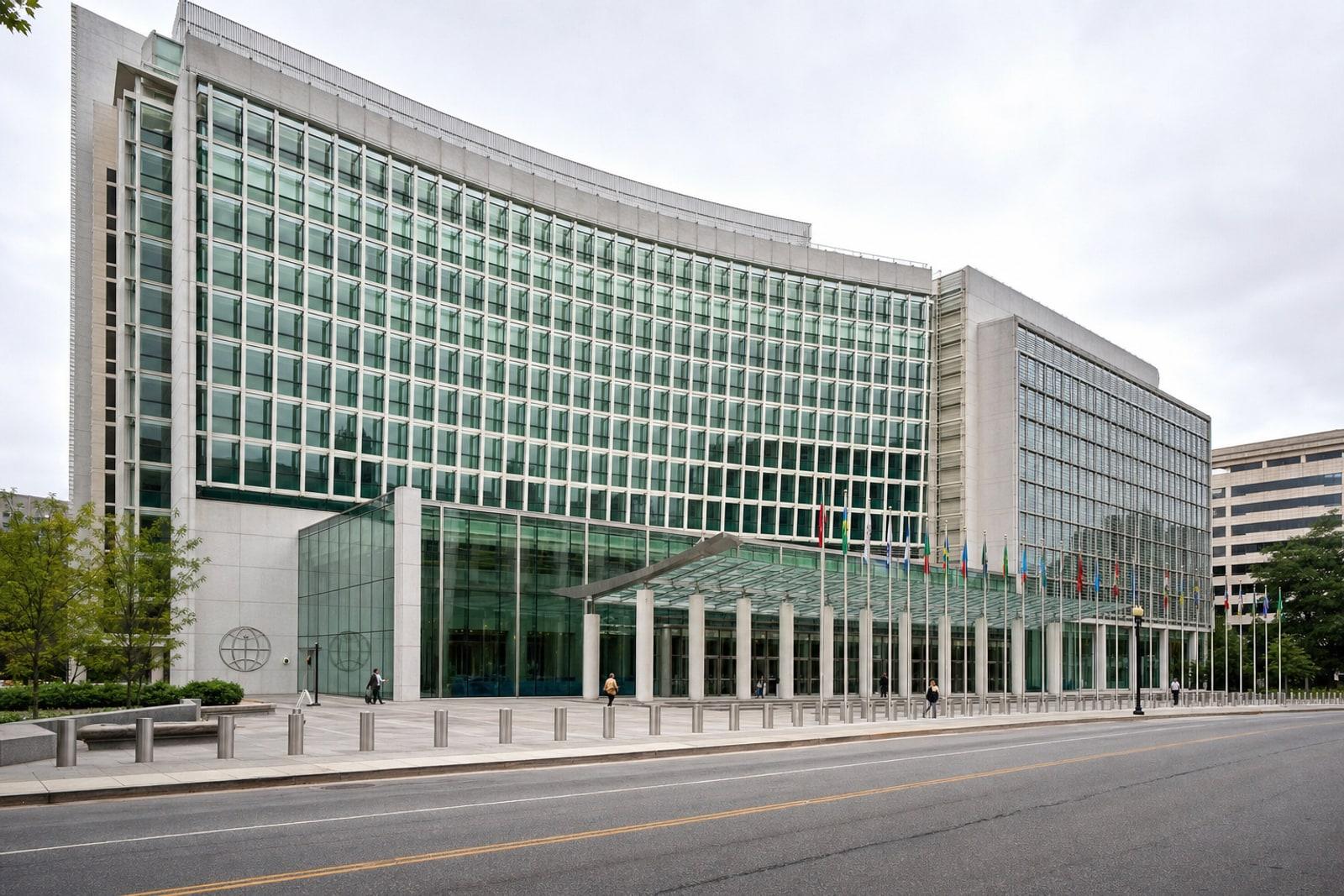
The World Bank has stripped the explicit climate-finance targets out of its renewed climate strategy, retiring a pledge to devote 45 per cent of its annual financing to projects that help countries cut emissions or adapt to a warming planet. The decision, confirmed as the bank's Climate Change Action Plan came up for renewal at the end of June, follows months of pressure from the Trump administration — the bank's largest shareholder — and marks the most visible retreat yet by a multilateral lender from measurable climate commitments.
The board extended the action plan itself, which had been due to expire on 30 June, but removed its central metric. "We will retire the 45-percent climate co-benefits target and the 35-percent target in the (Climate Change Action Plan)," the bank said in the statement reported by AFP, adding: "We will complete our shift from inputs to outcomes to maximize development impact."
What the bank dropped — and what survives
The 35 per cent goal dated from the plan's launch in 2021 and committed the group to ensuring that share of its financing carried "climate co-benefits". In 2023, under president Ajay Banga, shareholders raised the bar to 45 per cent. The targets worked: the bank's climate finance roughly doubled between 2021 and 2025, to about $39 billion a year, and in the 2025 fiscal year the group exceeded the goal for the first time, with 48 per cent of financing — roughly $50.8 billion group-wide, according to AFP — qualifying as climate-related.
The renewed plan keeps much of the machinery while abandoning the yardstick. According to reporting by E&E News and AFP, the bank will still:
- align its lending with the Paris Agreement;
- continue reporting climate co-benefits and net greenhouse-gas emissions across its portfolio;
- provide technical support and country-level climate and development diagnostics;
- submit the plan to an independent evaluation requested by the board.
Future climate work, the bank said, would be "driven by demand from client countries" — language that shifts responsibility for climate ambition from the institution's own targets to the borrowing governments themselves.
Washington's hand
The change was not made in a vacuum. In April, US Treasury Secretary Scott Bessent publicly demanded that the bank abandon what he called its "distortionary" climate goal, saying the 45 per cent target "breeds inefficiency, distorts economic decision making, and moves the Bank away from its core mission" of reducing poverty and driving growth. The United States holds the largest single shareholding in the bank, and according to E&E News, people familiar with the negotiations said Washington was firm that the target had to go even as other shareholders indicated support for it.
Reporting by Climate Home News and the World Resources Institute (WRI) indicates the US was joined by only a small number of countries, including Russia and Gulf states, while European governments, Latin American nations, small island states and a broad coalition of developing countries — a bloc WRI puts at nearly 100 — pushed for the plan and its commitments to be maintained. One developed-country official involved in the talks told E&E News the outcome was "way, way away from where we should be for a responsible financial architecture".
"It is unfortunate that a small number of shareholders have succeeded in weakening this framework by eliminating its target," said Melanie Robinson, global director for climate, economics and finance at the World Resources Institute.
Why it matters beyond Washington
The World Bank is the single biggest multilateral source of climate finance for developing countries, and multilateral development banks together supplied more than 40 per cent of public climate finance in 2022, according to figures cited by Climate Home News. Explicit targets gave staff an internal incentive to originate climate projects and gave outside observers a transparent way to hold the institution to account. Analysts quoted by Climate Home News argue the bank's climate work can endure without the number — the pipeline, reporting and Paris alignment remain — but warn that removing the target weakens both incentives and transparency, particularly for adaptation projects that struggle to attract commercial money.
The timing is awkward for the wider climate-finance agenda. At COP29 in Baku and COP30 in Belém, governments built a "Baku to Belém" roadmap intended to scale climate finance for developing countries to $1.3 trillion a year by 2035 — an architecture that leans heavily on multilateral development banks as catalysts. A retreat from measurable commitments by the largest of them sends a contrary signal just as record heat grips parts of Europe and the northern hemisphere summer again tests adaptation systems.
Europe held the line — and loses it
For European shareholders, who backed keeping the framework intact, the outcome is a defeat in an institution where voting weight, not headcount, decides. Europe has spent a decade building the plumbing of green finance — from EU sustainable-finance rules to market infrastructure such as the Luxembourg Green Exchange, launched in 2016 as the world's first platform dedicated to green securities — on the assumption that credible targets and disclosure steer capital. The World Bank's pivot from targets to "demand-driven" climate lending now tests whether that assumption holds when the shareholder map shifts.
The bank insists the retreat is methodological, not substantive: outcomes over inputs. Its critics counter that what gets measured gets financed. With the target gone, the next fiscal year's numbers will show which side is right.
Frequently asked
- What climate target did the World Bank drop?
- It retired the goal of devoting 45% of annual financing to projects with climate co-benefits — raised from 35% in 2023 — while extending the rest of its Climate Change Action Plan beyond its 30 June 2026 expiry.
- Why did the World Bank remove the target?
- The bank says it is shifting 'from inputs to outcomes', but the change followed explicit pressure from the US Treasury under Secretary Scott Bessent, who called the 45% target distortionary. The US is the bank's largest shareholder.
- What climate work will the World Bank still do?
- It will keep aligning lending with the Paris Agreement, report climate co-benefits and net greenhouse-gas emissions, provide climate-development diagnostics and technical support, and undergo an independent evaluation of the plan.
- How did other countries react?
- European governments, Latin American nations, small island states and a coalition of nearly 100 developing countries pushed to keep the commitments; NGOs such as the World Resources Institute criticised the removal as a weakening of the framework.
Sources(12)
- 1World Bank drops climate finance targets in renewed action plan (AFP)AFP via Arab News · arabnews.com
- 2World Bank drops climate finance target amid US pressureE&E News by POLITICO · eenews.net
- 3STATEMENT: World Bank Extends Climate Change Action Plan, But Drops Key Climate Finance TargetWorld Resources Institute · wri.org
- 4World Bank Drops Climate Finance Target Under U.S. PressureESG Today · esgtoday.com
- 5US pressure puts World Bank's climate plan at risk (Climate Home News)Green Central Banking / Climate Home News · greencentralbanking.com
- 6World Bank's climate work can endure without finance target, experts sayClimate Home News · climatechangenews.com
- 7World Bank 'retires' climate goal | Europe heatwave continues | Trump wind payoffsCarbon Brief · carbonbrief.org
- 8World Bank Scraps Climate Financing Targets After US CriticismBloomberg · bloomberg.com
- 9COP29 and COP30 Presidents present Baku to Belém Roadmap to mobilize US$1.3 trillion in climate financeCOP30 Presidency (cop30.br) · cop30.br
- 10COP30: What does the 'Baku to Belém roadmap' mean for climate finance?Carbon Brief · carbonbrief.org
- 11Luxembourg Launches World's First Green Stock Exchange: LGXForbes · forbes.com
- 12The Luxembourg Green ExchangeUNFCCC · unfccc.int
Related by topic