Courts & business
US Supreme Court shields Bayer's Monsanto from Roundup cancer-warning lawsuits
The justices ruled 7-2 that federal pesticide law bars state failure-to-warn claims over Roundup, lifting a multibillion-euro legal cloud over the German group and sending its shares sharply higher.
By Marc Weber · · 5 min read
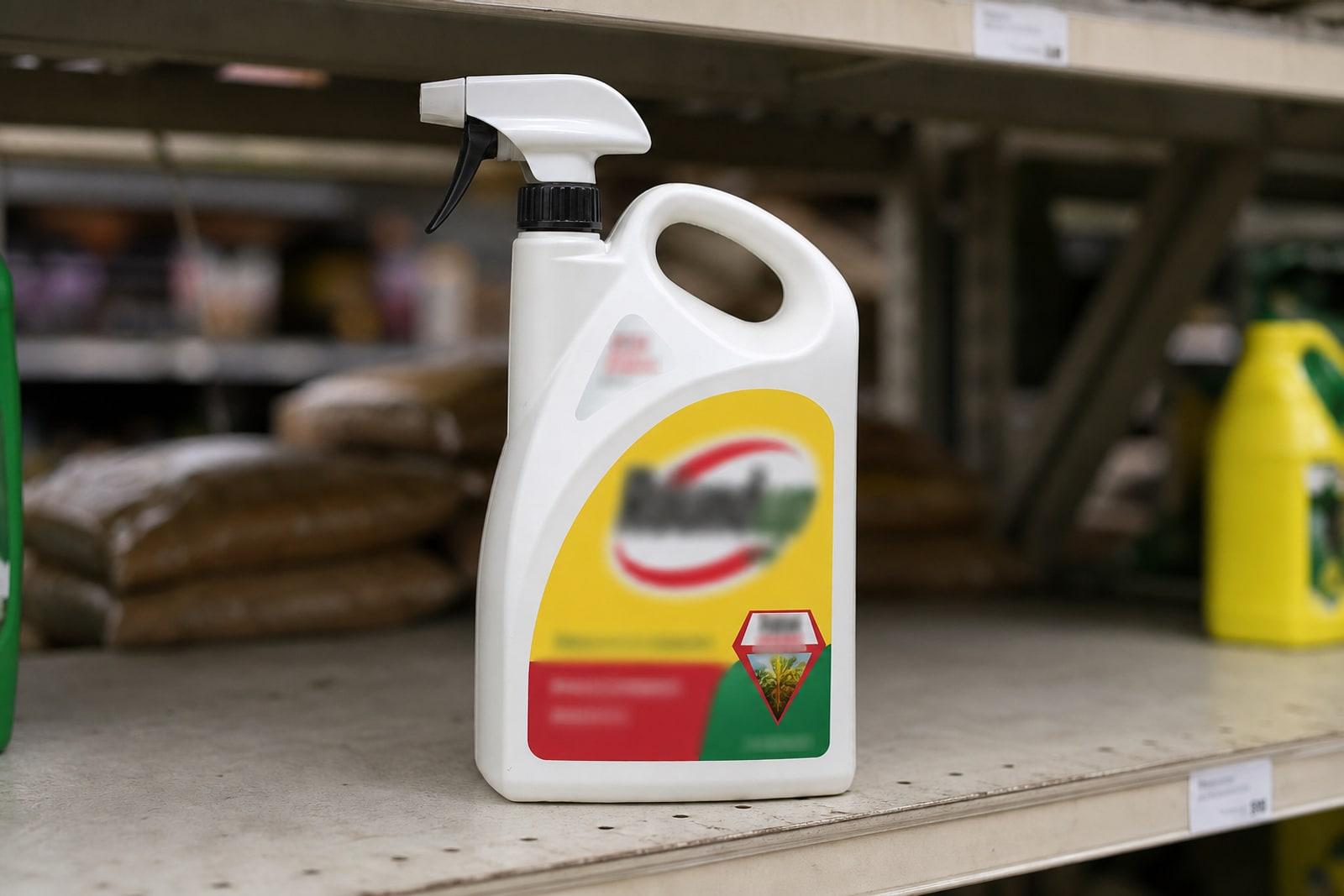
The United States Supreme Court on Thursday shielded Bayer's Monsanto unit from a wave of lawsuits claiming its Roundup weedkiller causes cancer, ruling that federal pesticide law bars consumers from suing over the absence of a cancer warning on the product's label. The 7-2 decision lifts one of the heaviest legal clouds hanging over one of Europe's largest companies and sent the German group's shares to their biggest one-day gain in more than two decades.
The ruling in Monsanto Co. v. Durnell reverses a Missouri jury verdict against the company and resolves a question that has dogged Bayer since it bought Monsanto in 2018: whether plaintiffs can use state courts to demand a cancer warning that US federal regulators never required. Writing for the majority, Justice Brett Kavanaugh concluded they cannot.
A federal law trumps state juries
At the centre of the case is the Federal Insecticide, Fungicide, and Rodenticide Act, or FIFRA, the statute that governs how pesticides are registered and labelled in the United States. The Environmental Protection Agency, which administers it, has long held that glyphosate — Roundup's active ingredient — is "not likely to be carcinogenic to humans" when used as directed, and approved the product's label without a cancer warning.
The justices held that FIFRA expressly pre-empts a state-law claim that Monsanto should have added such a warning, because doing so would impose a labelling requirement that conflicts with the federally approved label.
Because Durnell's state tort claim would impose a pesticide labeling requirement 'in addition to or different from' the label required by EPA, FIFRA expressly preempts Durnell's claim.
Chief Justice John Roberts and Justices Clarence Thomas, Samuel Alito, Sonia Sotomayor, Elena Kagan and Amy Coney Barrett joined the opinion; Justice Thomas also filed a concurrence. The Court reversed the Missouri judgment and sent the case back to the state courts.
The Missouri groundskeeper at the centre
John Durnell, a Missouri resident, said he had used Roundup for roughly two decades — at one point as a neighbourhood association's designated "spray guy" — before developing non-Hodgkin's lymphoma. He argued the company should have warned him of the risk. A jury agreed, awarding him $1.25 million in compensatory damages, and the Missouri Court of Appeals rejected Monsanto's argument that federal law barred the suit. The state's supreme court declined to intervene.
The Supreme Court took up the appeal in January and heard argument on 27 April, narrowing the dispute to a single question: whether FIFRA pre-empts a label-based failure-to-warn claim where the EPA has not required the warning. Thursday's answer effectively removes the central legal theory that plaintiffs' lawyers have used to win some of the largest Roundup verdicts.
Billions in liability — and a share-price surge
For Bayer, the stakes were measured in billions. The Roundup litigation has become one of the costliest corporate legal sagas in recent memory, swelling almost from the moment the German company closed its roughly $63 billion takeover of Monsanto. The numbers underscore the scale:
- Roughly 200,000 Roundup-related claims have been filed against Bayer, with tens of thousands still outstanding.
- The company has spent more than $10 billion fighting and settling cases and has earmarked up to $16 billion in total provisions.
- In February it proposed a $7.25 billion class-action settlement, with payments spread over up to about two decades.
Investors greeted the decision as a turning point. Bayer shares jumped sharply in Frankfurt, rising by as much as 17 to 20 percent during the session — the stock's biggest one-day move since 2003. Bayer welcomed the outcome, saying it should lead to the dismissal of pending failure-to-warn suits while it presses ahead with the proposed class settlement.
"The U.S. Supreme Court decision is good for science, farmers, and industries that depend on regulatory clarity for innovation," the company said in a statement.
Dissent, critics and the European backdrop
The decision was not unanimous. Justice Ketanji Brown Jackson, joined by Justice Neil Gorsuch, dissented, arguing that the majority had stretched the reach of the federal statute and stripped injured users of any recourse.
"In accepting Monsanto's argument and holding that Durnell's failure-to-warn claim is preempted, the Court misunderstands FIFRA's requirements, misinterprets the scope of FIFRA's preemption, and ultimately leaves Durnell without a remedy for the significant harms he has suffered," she wrote.
Plaintiffs' lawyers were blunt. "This Supreme Court ruling wrongly slams the courthouse door on Americans sickened by pesticides," said Christopher Seeger, a leading attorney in the litigation. The scientific dispute that fuelled the cases remains unsettled: while the EPA found glyphosate unlikely to cause cancer, the World Health Organization's International Agency for Research on Cancer classified it as "probably carcinogenic to humans" in 2015.
Glyphosate is also contested in Europe, where it is regulated separately from the United States. In November 2023 the European Commission renewed the chemical's approval across the bloc for another ten years, until December 2033, after member states failed to muster the qualified majority needed to decide the question themselves. In that vote only three countries opposed renewal — Austria, Croatia and Luxembourg — while several others, including Germany and France, abstained.
The US ruling does not touch those European rules, and it does not end Bayer's exposure outright: the proposed class settlement still requires court approval, and lawyers are likely to test other legal theories. But by closing off the failure-to-warn route in American courts, the decision removes the threat that has weighed most heavily on Bayer's valuation — and hands the Leverkusen-based group its most significant legal victory since the Monsanto deal.
Frequently asked
- What did the US Supreme Court decide in Monsanto v. Durnell?
- It ruled 7-2 that the Federal Insecticide, Fungicide, and Rodenticide Act (FIFRA) expressly pre-empts state-law failure-to-warn claims over Roundup, because such claims would require a cancer warning that the EPA never mandated. The Missouri verdict against Monsanto was reversed.
- What does the ruling mean for Bayer's legal liability?
- It removes the main legal theory behind many Roundup verdicts and should lead to dismissal of pending failure-to-warn suits. Bayer, which has faced about 200,000 claims and earmarked up to $16 billion, still plans to pursue a proposed $7.25 billion class-action settlement that needs court approval.
- Is glyphosate still allowed in the European Union?
- Yes. In November 2023 the European Commission renewed glyphosate's EU approval for ten years, until December 2033. Luxembourg was one of only three member states — alongside Austria and Croatia — to vote against the renewal.
- Do scientists agree that Roundup causes cancer?
- No. The US Environmental Protection Agency considers glyphosate 'not likely' to cause cancer when used as directed, while the WHO's International Agency for Research on Cancer classified it as 'probably carcinogenic to humans' in 2015.
Sources(12)
- 1Monsanto Co. v. Durnell, No. 24-1068 (slip opinion)Supreme Court of the United States · supremecourt.gov
- 2Monsanto Company v. Durnell (24-1068)SCOTUSblog · scotusblog.com
- 3U.S. Supreme Court backs Monsanto in its fight against liability from popular weed killerNPR · npr.org
- 4Supreme Court sides with Monsanto in case over cancer risks from weedkiller RoundupCBS News · cbsnews.com
- 5Supreme Court ruling blocks thousands of lawsuits against maker of Roundup weedkillerPBS NewsHour / Associated Press · pbs.org
- 6U.S. Supreme Court backs Monsanto over Missouri man in fight over Roundup cancer claimsKCUR / NPR · kcur.org
- 7Supreme Court limits Roundup cancer suits against Bayer's MonsantoCNBC · cnbc.com
- 8Immediate statement: US Supreme Court rules in favor of Monsanto in the Durnell caseBayer · bayer.com
- 9Bayer Shares Surge After U.S. Supreme Court Rules in Company's FavourGlobal Banking & Finance Review · globalbankingandfinance.com
- 10Bayer Jumps 20% on Supreme Court Win Over Roundup WarningsBloomberg · bloomberg.com
- 11Renewal of the approval of glyphosate: Questions and AnswersEuropean Commission · ec.europa.eu
- 12Brussels approves use of glyphosate in EU for 10 more yearsEuronews · euronews.com
Related by topic