Brexit
UK-EU 'reset' stalls as Starmer resignation prompts summit delay
A sectoral 'de-Brexitisation' has rebuilt UK-EU ties deal by deal since 2025. Keir Starmer's resignation and a postponed summit now test whether the rapprochement outlasts him.
By Camille Reuter · · 4 min read
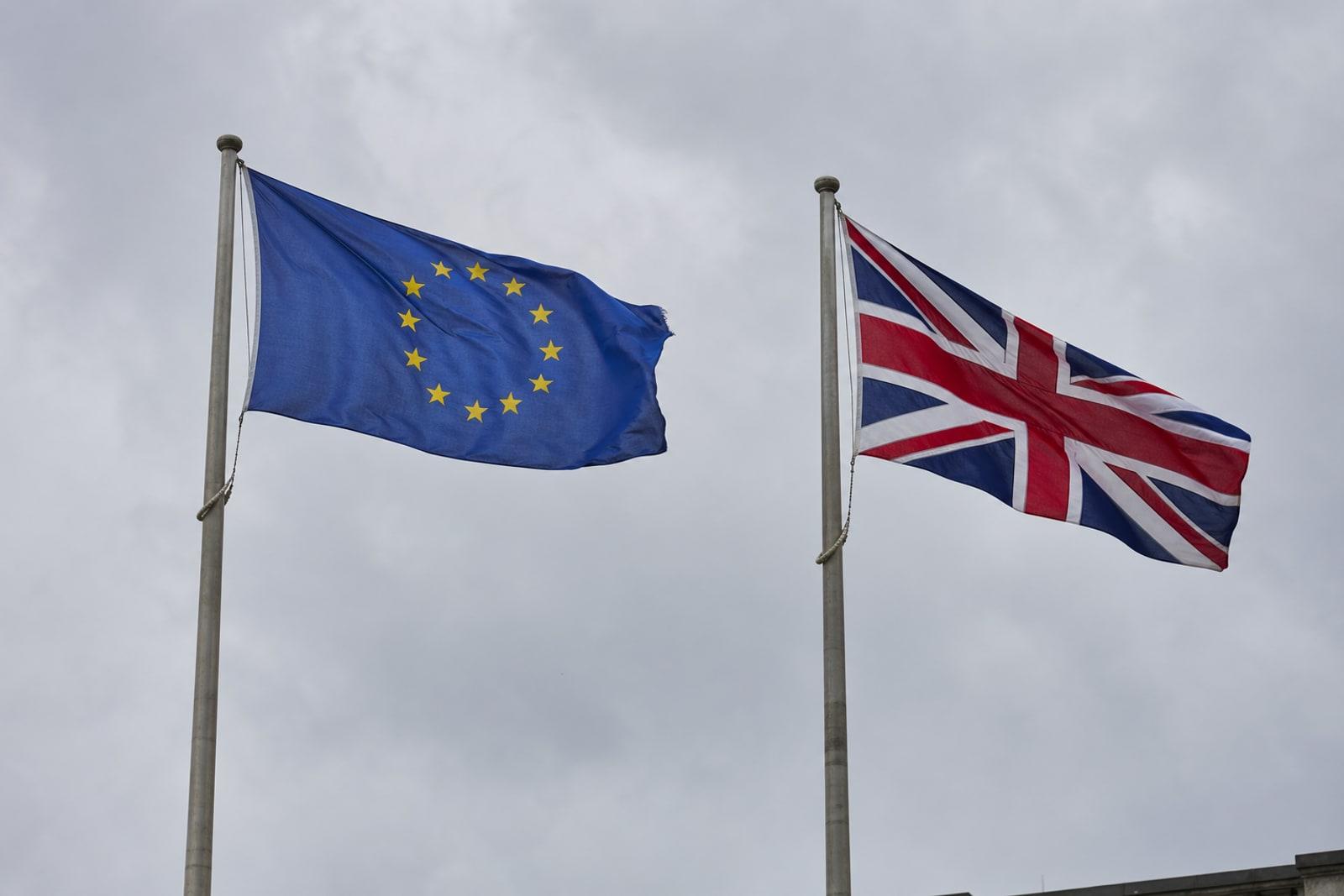
For nearly two years, Britain has been edging back toward the European Union without ever saying so. There has been no application to rejoin, no referendum, no return to the single market. Instead, London and Brussels have stitched their relationship back together one technical agreement at a time — on food standards, carbon markets, fishing and defence — in a process that admirers and critics alike have begun to call “de-Brexitisation”.
That incremental rapprochement now faces its first serious test. On 22 June 2026, almost ten years to the day after the Brexit referendum, Prime Minister Keir Starmer announced he would step down, throwing the timetable of the so-called “reset” into doubt and prompting the EU to postpone a summit that had been scheduled for 22 July.
A reset built deal by deal
The shift began in earnest at the first post-Brexit UK-EU leaders' summit, held in London on 19 May 2025. There Starmer, European Commission President Ursula von der Leyen and European Council President António Costa unveiled a new Strategic Partnership, a Security and Defence Partnership and a “Common Understanding” mapping out cooperation across a swathe of policy areas.
The concrete results have accumulated steadily since:
- Fishing: reciprocal access to each other's waters was extended until 30 June 2038 — a twelve-year deal and the EU's principal demand — finalised on 19 June 2025.
- Food and farming: the two sides agreed to build a common sanitary and phytosanitary area to strip out most certificates and border checks on agri-food trade, saving exporters around £200 per consignment. The EU granted a negotiating mandate in November 2025, with implementation targeted for mid-2027.
- Carbon markets: the UK and EU committed to link their emissions trading systems, sparing British firms an estimated £800m in carbon border costs by 2030.
- Energy: the Trade and Cooperation Agreement's energy chapter was put on a more permanent footing, with Britain exploring participation in EU electricity trading.
- Mobility: talks opened on a capped, time-limited “youth experience scheme” and on UK use of EU e-gates.
The price of much of this is regulatory re-alignment. The food deal, in particular, requires Britain to follow EU rules dynamically — accepting Brussels' standards as they evolve, the very loss of autonomy Brexit was meant to reverse.
What it is not
For all the momentum, the reset stops well short of undoing Brexit. Starmer repeatedly restated three red lines, and did so again at the May 2025 summit.
Not rejoining the single market, no rejoining the customs union and no return to freedom of movement.
He framed the package as pragmatic rather than ideological — “Britain is back on the world stage,” he told the summit, calling the deal a “win-win”. In January 2026 he said any further convergence would be decided “issue-by-issue, sector-by-sector”, and that the UK was “better looking to the single market rather than the customs union” for deeper ties. Crucially, his government excluded financial services from the alignment drive altogether, ruling out a return to the EU rulebook for the City.
Not everything has gone Britain's way. In November 2025 the government conceded it had been unable to agree terms for UK participation in the EU's €150bn SAFE defence-procurement fund, saying it could not strike a deal in the national interest. Canada subsequently secured its own arrangement.
Political turbulence in London
Starmer's resignation — after a battering in May's local elections and the rise of Nigel Farage's Reform UK — leaves the most sensitive deals on food, carbon and youth mobility unsigned. Andy Burnham, the Greater Manchester mayor recently returned to Parliament, is the favourite to succeed him, which would hand Britain its sixth prime minister in seven years.
Brussels has signalled it will wait rather than rush. Costa said the July gathering had to be shelved, but added: “My wish is that his successor will give continuity on this path to reset our relationship with the UK.” The message was that the EU still wants the agreements and is prepared to hold out for a stable partner rather than negotiate with a departing government.
Why Luxembourg is watching
For Luxembourg, the stakes are tangible. The Grand Duchy's outsized financial centre competes directly with London for fund administration and banking business, and Britain's decision to keep financial services outside the reset preserves much of the post-Brexit status quo from which EU hubs have benefited. Closer UK-EU cooperation on market plumbing is being explored, but without a return to mutual regulatory recognition.
The reset also unfolds as the EU deepens its own single market. The European Commission's Market Integration and Supervision Package, published in December 2025, and a roadmap to build a “Savings and Investments Union” by the end of 2027 reach into banking, securitisation, digital payments and the rules on posting workers — areas where Luxembourg, an open economy reliant on cross-border finance and labour, is unusually exposed. A Britain drifting back toward Brussels' orbit, even informally, reshapes the competitive map around the Grand Duchy and bears on the cohesion of a single market on which Luxembourg has staked its prosperity.
For now the direction of travel points toward Brussels. Whether it holds depends on who next walks into Downing Street — and whether they share Starmer's appetite for rebuilding, deal by careful deal, what the referendum once tore apart.
Frequently asked
- What is 'de-Brexitisation'?
- An informal term for the way Britain has incrementally rebuilt ties with the EU since 2025 through sectoral agreements and regulatory re-alignment — on food standards, carbon markets, fishing, energy and defence — without rejoining the single market, customs union or freedom of movement.
- Does the reset mean the UK is rejoining the EU?
- No. UK leaders have repeatedly ruled out the single market, customs union and freedom of movement. The reset is a series of targeted deals rather than a path to formal re-entry, and it excludes financial services from alignment.
- Why does it matter for Luxembourg?
- Luxembourg's financial centre competes with London, and the UK kept financial services out of the alignment drive, preserving the post-Brexit status quo. The shifts also bear on EU single-market cohesion as the bloc pursues its own deeper integration by 2027.
Sources(12)
- 1The UK–EU reset: Next steps after the May 2025 summitHouse of Commons Library · commonslibrary.parliament.uk
- 2UK-EU Summit Explainer (HTML)GOV.UK · gov.uk
- 3The UK-EU reset six months after the summit: Where are we?UK in a Changing Europe · ukandeu.ac.uk
- 4EU-UK relations: Council greenlights negotiations on agri-food deal and linking emissions trading systemsCouncil of the EU (Consilium) · consilium.europa.eu
- 5'Britain is back on the world stage' — Keir Starmer's UK-EU summit remarks in fullPolitics.co.uk · politics.co.uk
- 6Will Keir Starmer's 'EU reset' deliver in 2026?Institute for Government · instituteforgovernment.org.uk
- 7Why has Keir Starmer resigned as UK prime minister, and who will take over?Al Jazeera · aljazeera.com
- 8British Prime Minister Keir Starmer announces resignationCBS News · cbsnews.com
- 9EU-UK July 22 summit postponed following Starmer's resignation announcementMLex · mlex.com
- 10EU's Costa sees need to postpone EU-UK summit after Starmer's resignationDevdiscourse (Reuters) · devdiscourse.com
- 11Luxembourg faces 2027 deadline as EU pushes single market resetPaperjam · en.paperjam.lu
- 12The UK-EU reset and financial servicesUK in a Changing Europe · ukandeu.ac.uk
Related by topic