European defence
Turkey presses to join the EU's €150 billion rearmament drive, dividing the bloc
Ankara wants into SAFE, the EU's €150 billion defence-loan fund, and its joint-procurement pipeline. Greece and Cyprus are blocking the door; Germany, Italy and Spain want Turkey closer.
By Camille Reuter · · 5 min read
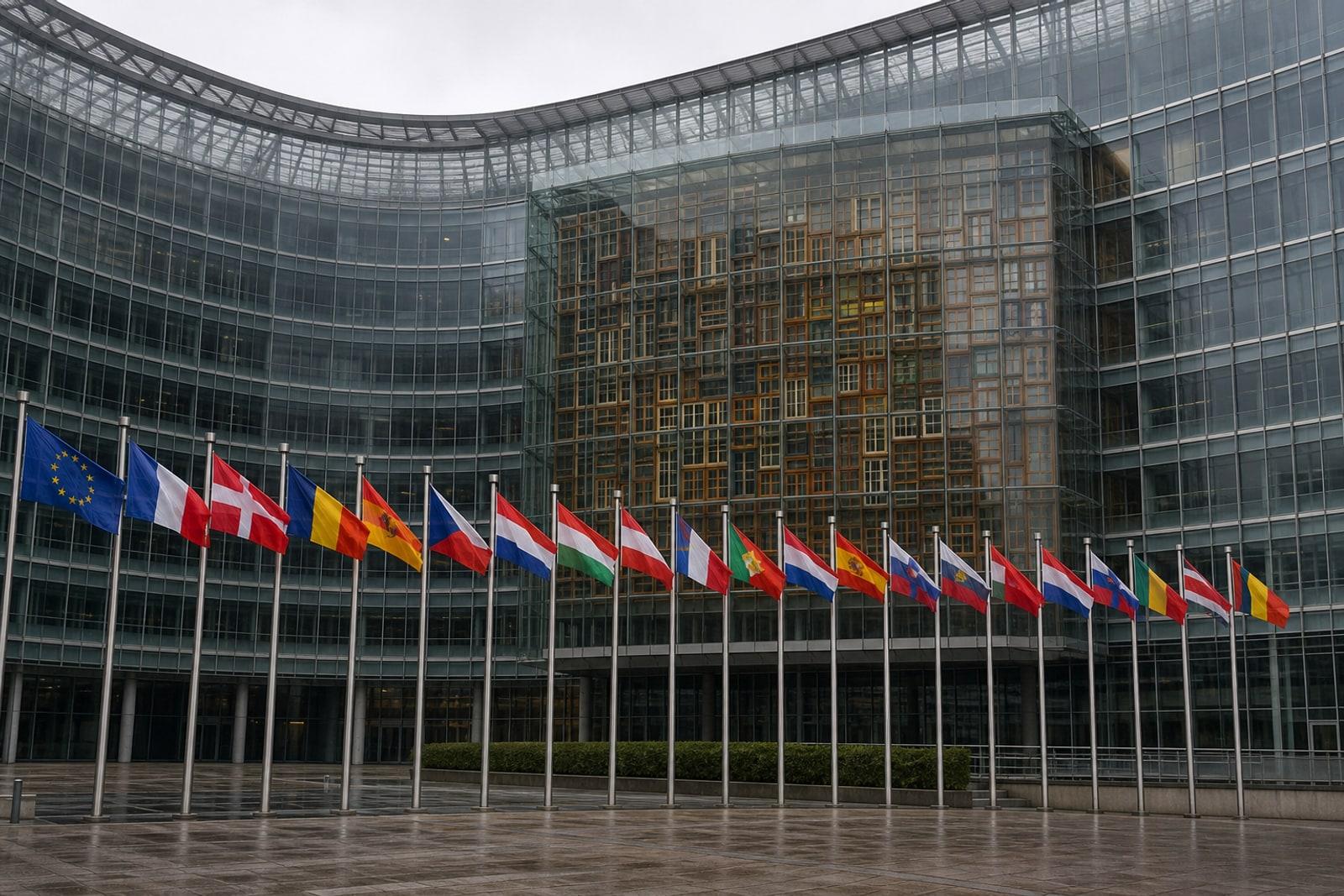
Turkey is mounting its most determined push yet to be let inside the European Union's new defence-spending machinery, testing how far a rearming Europe is prepared to open its industrial base to a powerful but politically awkward NATO ally. At the centre of the dispute sits SAFE — Security Action for Europe — the EU's €150 billion fund of cut-price loans for joint weapons buying, and the question of whether Ankara's drone-makers and shipyards can plug into it.
The stakes reach well beyond the eastern Mediterranean. SAFE is the first time the bloc has used its collective borrowing power to underwrite military spending, and the rules governing who may supply its procurement pipelines are becoming a defining test of Europe's post-Ukraine security strategy. Whether a non-EU NATO member such as Turkey can tap that money bears directly on how the continent — including small states like Luxembourg now ramping up their own defence budgets — organises a rearmament drive worth, on paper, more than €800 billion.
What Ankara is asking for
Turkish leaders have made the case repeatedly and in public. President Recep Tayyip Erdoğan has argued that European security is unthinkable without his country, while Foreign Minister Hakan Fidan said in November 2025 that Turkey, as a NATO ally, "provides critical contribution to Europe's security" and should be included in EU defence initiatives, "including the SAFE mechanism."
The time has long come for Europe to include Türkiye in its existing defense and security mechanism.
Concretely, Ankara wants two things: access to SAFE-financed joint procurement so Turkish firms can sell into the EU's new buying pipelines, and a broader seat in the bloc's defence planning. Turkey is no longer merely a buyer of weapons. Its industry has become a serious exporter of armed drones, armoured vehicles and warships, and several EU governments increasingly see it as a source of capability they cannot quickly build themselves.
How the EU's defence fund actually works
SAFE, adopted on 27 May 2025, lets the European Commission raise up to €150 billion on capital markets against the EU budget and re-lend it to governments for joint defence projects. The mechanics, however, are restrictive by design:
- Only EU member states can borrow under SAFE. Nineteen have requested loans, and on 11 February 2026 the Council cleared a first wave of roughly €38 billion for eight of them — Belgium, Bulgaria, Denmark, Spain, Croatia, Cyprus, Portugal and Romania.
- Equipment bought with the loans must be largely European: no more than 35% of a product's component costs may come from outside the EU, the EEA-EFTA states or Ukraine.
- Firms from other non-EU countries can take part on equal terms only if their government concludes a bilateral participation agreement with the EU — and that requires both a security and defence partnership and the unanimous backing of all 27 member states.
That last hurdle is where Turkey's bid has stalled. Canada became the first non-EU country to clear it: member states endorsed its agreement in December 2025 and the Council concluded it on 15 June 2026. Turkey, by contrast, applied for enhanced access but the Commission said it could not process Ankara's request — alongside South Korea's — before the relevant deadline, and Turkey was never invited to negotiate. Analysts at the IISS and the Greek think-tank ELIAMEP note that, rather than force a divisive vote, Brussels effectively chose not to put Turkey's case forward at all, preserving unity at SAFE's launch.
A bloc that cannot agree
The deadlock is, at root, about the EU's unanimity rule, which hands Greece and Cyprus an effective veto over any Turkish deal. Greek Prime Minister Kyriakos Mitsotakis has linked any access to Ankara first withdrawing the 1995 parliamentary resolution threatening war should Greece extend its Aegean territorial waters.
"If Turkey wishes to join the EU's funding instruments, the concerns of Greece and Cyprus should be taken into account," Mitsotakis said. "Thirty years on, the casus belli must be taken off the table."
Cyprus, which says its position was formally adopted by the EU in October 2025, frames the objection around Turkey's continued military presence in the island's north. President Nikos Christodoulides argued that no "third country, which occupies territories or threatens the security of member states, can under any circumstances participate in" the EU's defence instruments. France has also been wary.
Other capitals pull the opposite way. Germany, Italy, Spain and Finland favour deeper industrial cooperation, and where SAFE is blocked, governments are simply going around it. Britain agreed in late 2025 to sell Turkey 20 Eurofighter Typhoons; in April 2026 Airbus and Turkish Aerospace Industries signed a deal to supply Hürjet jet trainers to Spain. Turkey also participates in the German-led European Sky Shield Initiative — leaving it functionally woven into Europe's rearmament even as it is shut out of the financing.
Ankara, for its part, has begun playing down the snub. Defence Minister Yaşar Güler told an evaluation meeting in December 2025 that Turkey did not "attach much importance" to whether it joined SAFE, predicting that ammunition-short European states would come knocking regardless.
Why it matters beyond Brussels
For smaller members, the row is not abstract. Luxembourg has committed to lifting defence spending to 2% of gross national income by 2030 — from €696 million in 2024 to about €1.46 billion — and was not among the first eight SAFE borrowers. Like its peers, it must decide where the equipment it buys will come from, and whether "Buy European" should mean Europe alone or a wider circle of trusted suppliers.
That is the deeper question SAFE has forced into the open. A rearming Europe needs scale, speed and industrial depth it does not yet possess. Turkey offers some of that — but on terms a divided bloc has so far been unable to agree. How Brussels resolves the tension between strategic need and political grievance will shape not only its relationship with Ankara, but the architecture of European defence for years to come.
Frequently asked
- What is the EU's SAFE instrument?
- Security Action for Europe (SAFE) is an EU fund, adopted on 27 May 2025, that lets the European Commission raise up to €150 billion against the EU budget and lend it to member states for joint defence procurement, part of the wider ReArm Europe / Readiness 2030 plan.
- Can Turkey access SAFE money?
- Not currently. Only EU member states can borrow, and Turkish firms could supply SAFE-funded purchases on equal terms only if Ankara signed a bilateral participation agreement with the EU — which needs unanimous approval from all 27 states. Turkey applied for enhanced access but was not invited to negotiate.
- Why are EU member states divided over Turkey?
- Greece and Cyprus oppose Turkish participation, citing Ankara's 1995 casus belli over the Aegean and its military presence in northern Cyprus, and can veto any deal under the EU's unanimity rule. Germany, Italy, Spain and Finland favour deeper cooperation and are pursuing bilateral arrangements instead.
- How does this affect Luxembourg?
- Luxembourg is raising defence spending toward 2% of GNI by 2030 and, like other states, must decide where its new equipment comes from. The SAFE rules on non-EU suppliers shape how small members buy jointly and whether 'Buy European' includes partners like Turkey.
Sources(17)
- 1What is Security Action for Europe (SAFE)?Council of the EU (Consilium) · consilium.europa.eu
- 2SAFE | Security Action for EuropeEuropean Commission, Defence Industry and Space · defence-industry-space.ec.europa.eu
- 3EU approves €38bn in first defence investments under €150bn SAFE schemeEuronews · euronews.com
- 4SAFE: Council clears path for financial assistance to eight member states and concluding the Canada agreementCouncil of the EU (Consilium) · consilium.europa.eu
- 5SAFE: Council concludes agreement with CanadaCouncil of the EU (Consilium) · consilium.europa.eu
- 6Commission approves first wave of defence funding for eight Member States under SAFEEuropean Commission · ec.europa.eu
- 7Time for EU to include Türkiye in security mechanisms: ErdoganHürriyet Daily News · hurriyetdailynews.com
- 8Türkiye's full inclusion in EU defense efforts vital for Europe's peace, security: President ErdoganAnadolu Agency · aa.com.tr
- 9Turkey Pushes To Join EU Defence Fund, Greece Threatens VetoThe European Conservative · europeanconservative.com
- 10Turkish defense minister downplays SAFE bid, says Europe will turn to Türkiye when neededTürkiye Today · turkiyetoday.com
- 11Mitsotakis on Turkey: You Can't Vie for SAFE Funding While Threatening an EU MemberTo Vima · tovima.com
- 12Cyprus' position on Turkish involvement in Safe programme 'adopted' by EU, Christodoulides saysCyprus Mail · cyprus-mail.com
- 13Turkey Set to Miss Deadline for Inclusion in EU's SAFE Defense MechanismGreek City Times · greekcitytimes.com
- 14Turkey pushes for larger role in Europe's defense as Trump questions NATODefense News · defensenews.com
- 15Turkey's Defence Industry and the EU SAFE RegulationELIAMEP · eliamep.gr
- 16The SAFE Regulation and Its Implications for Non-EU Defence SuppliersIISS · iiss.org
- 17Luxembourg Details Plans to Raise Defence Spending to 2% of GNI by 2030Chronicle.lu · chronicle.lu
Related by topic