Space
Faulty Boeing satellites leave Luxembourg's SES pressing a contested $472m claim
Power failures that crippled the first O3b mPower spacecraft have hardened into a drawn-out fight over who pays — a test of the financial risk beneath Luxembourg's bet on space.
By Marc Weber · · 4 min read
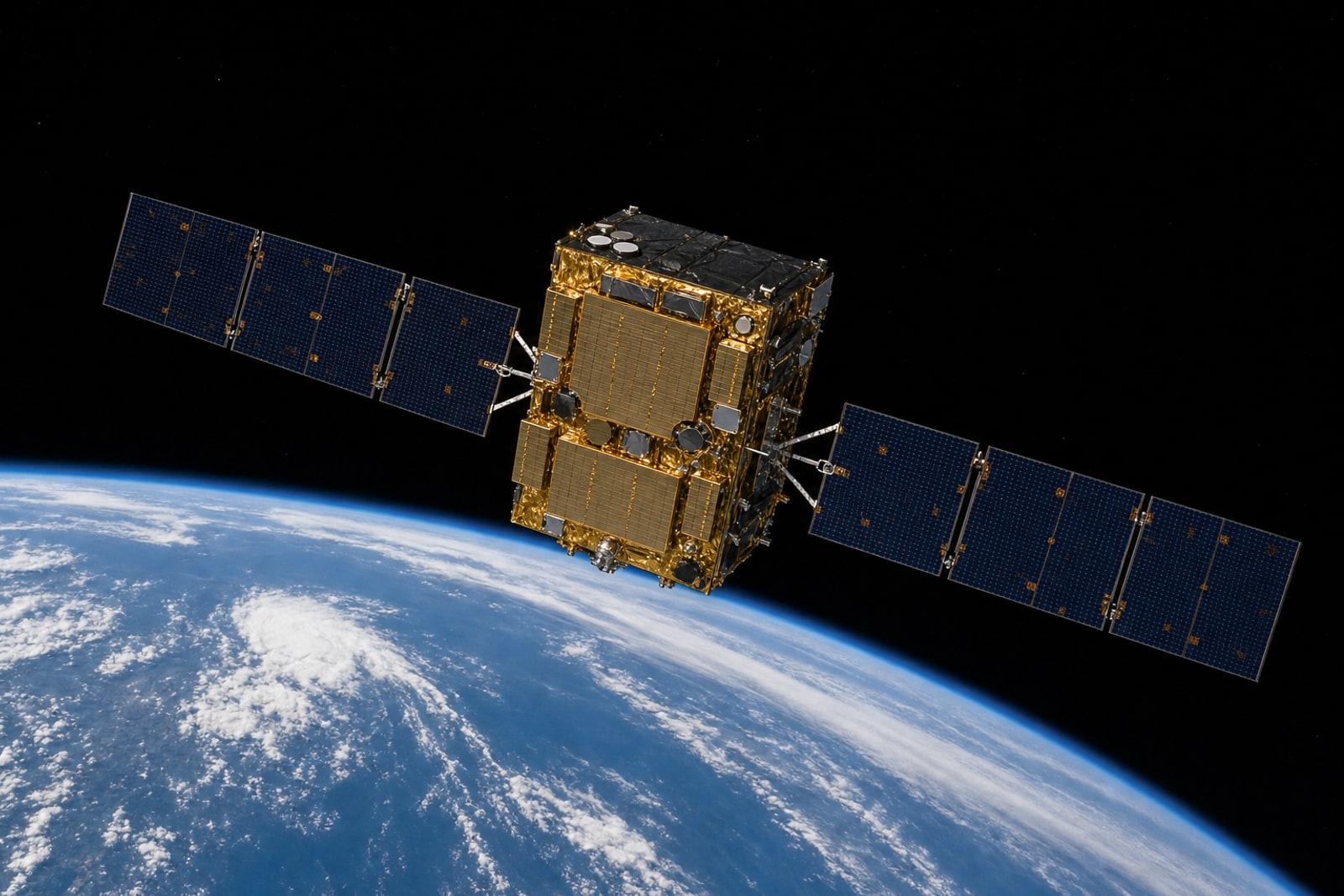
When SES launched the first four of its O3b mPower satellites in December 2022, the Luxembourg operator billed the fleet as the backbone of its next decade: powerful, Boeing-built spacecraft designed to beam high-throughput broadband to ships, remote islands, mining sites and armed forces from medium Earth orbit, some 8,000 kilometres up. Barely a year later, SES disclosed that the satellites were failing in a way no one had planned for — and the bill for the malfunction now runs close to half a billion dollars.
The question of who should pay that bill — the manufacturer, the operator's insurers, or SES itself — has hardened into one of the space industry's most closely watched financial disputes. It is also a case study in the risk that sits behind Luxembourg's ambition to be Europe's space hub, because SES is the Grand Duchy's flagship company and the state is among its largest shareholders.
A common fault, thousands of kilometres up
The problem is electrical. Beginning in 2023, SES said the spacecraft were suffering "sporadic" power-module switch-offs — glitches that repeatedly cut power to parts of each satellite, including, the company acknowledged, "a few non-recoverable events." The trip-offs could often be reset, a process one SES executive likened to flipping a household circuit breaker, but they permanently reduced how much capacity the satellites could carry and how long they would last.
All four satellites then in orbit were affected. SES warned that their operational life and broadband capacity would be "significantly lower" than the 12 years originally promised, and said the disruption would knock roughly 5% off its 2024 revenue and core earnings. The spacecraft were built by Boeing, whose satellite division has wrestled with a string of troubled programmes.
Rather than head straight to court, SES first reshaped its manufacturing contract. Boeing agreed to upgrade five of the satellites still to be built and to add two entirely new ones — lifting the constellation from a planned 11 to 13 spacecraft — with the two companies sharing the cost and the risk.
Adding a common objective with Boeing was essential to the negotiation that involved reshaping the contract where both companies took an element of risk.
That was how Ruy Pinto, then SES's chief executive, described the 2023 deal. Boeing, for its part, disclosed a $315 million charge on a satellite contract for an undisclosed customer widely identified as SES, which its finance chief attributed to additional work on an innovative programme built around new technology.
Insurers dig in over a $472 million claim
The larger fight is with the underwriters. SES filed an insurance claim that could reach $472 million (about €437 million) on the first four satellites — roughly 70% of their $674 million insured value, and one of the largest space-insurance claims on record.
- $472 million — the size of SES's claim, about 70% of the fleet's $674 million insured value
- $315 million — the charge Boeing booked on the contract
- 4 — satellites hit by the power fault, in a constellation now set to grow to 13
Insurers have not disputed that the satellites are defective. What they resist, according to industry reporting, is paying for revenue SES expects to lose over the satellites' shortened future lifetimes, rather than damage that can be verified today — a causation-and-valuation argument that space-insurance disputes often turn on, and one that could ultimately head to arbitration.
In the meantime, SES has been settling with underwriters one at a time. It said it expected to collect $58 million in the second quarter of 2025 and had recovered around $87 million by that autumn, with more anticipated as talks continued; over the full year it reported gathering roughly $189 million from insurers. The company treats the payments cautiously, noting that "income is only recognized when claims with individual insurers are agreed and settled."
Why the fight lands in Luxembourg
SES is not an ordinary claimant. Founded in 1985 with the backing of the Luxembourg government and headquartered at Betzdorf, east of the capital, it is the anchor tenant of a space sector the Grand Duchy has spent four decades cultivating — from hosting satellite operators to the 2017 SpaceResources.lu law on space mining. The Luxembourg State still holds a special class of shares that gives it about a third of the voting rights, and in 2025 SES completed the takeover of its historic rival Intelsat, another operator with deep Luxembourg roots.
That makes the O3b mPower saga more than a corporate mishap: it is a test of how the financial hazards of space — hardware that can quietly degrade thousands of kilometres from any repair — are absorbed by a small country that has tied part of its economic identity to the industry.
There is, at least, a partial reprieve in orbit. SES has said severe solar storms in 2024 helped clear a build-up of charged particles that had been triggering the power-module faults, easing the problem on the earlier satellites, while Boeing has shipped redesigned spacecraft with hardware fixes. New launches are steadily restoring lost capacity. "From May, we will be increasing capacity by almost 30% to the constellation this year," chief executive Adel Al-Saleh told analysts in 2025. Even so, the claim remains open, the settlements unfinished — and the question of who ultimately pays for a fleet that faltered in orbit is still being argued on the ground.
Frequently asked
- What went wrong with the O3b mPower satellites?
- The first four satellites, built by Boeing and launched in December 2022, suffered a recurring power-module fault that cut power to parts of each spacecraft, including some non-recoverable events. That reduced their broadband capacity and shortened their operational life well below the planned 12 years.
- How much money is at stake?
- SES filed an insurance claim of up to $472 million (about €437 million), roughly 70% of the fleet's $674 million insured value. Boeing separately booked a $315 million charge on the contract. SES has recovered part of the claim through piecemeal settlements while insurers resist paying for projected future losses.
- What is the Luxembourg connection?
- SES is headquartered in Betzdorf, Luxembourg, was founded in 1985 with government backing, and the Luxembourg State holds special shares giving it about a third of the voting rights. As the anchor of the Grand Duchy's space sector, SES's dispute puts Luxembourg's flagship space investment under scrutiny.
Sources(9)
- 1Forrester's Digest: SES may not receive $472 million insurance claimSatNews · satnews.com
- 2SES: O3b mPower satellites' defect to reduce performance, lifespan of first 6 satellites, cut 2024 revenue/EBITDA by ~5%Space Intel Report · spaceintelreport.com
- 3SES and Boeing to Share Risk and CapEx on 2 Additional mPOWER SatellitesVia Satellite · satellitetoday.com
- 4SES Posts Stable Q1 Revenue, Expects 30% Capacity Increase from New O3b SatellitesVia Satellite · satellitetoday.com
- 5SES' O3b mPower satellites will have a "significantly" shorter life after power issuesDataCenterDynamics · datacenterdynamics.com
- 6SES says O3b mPower electrical issues are worse than thoughtSpaceNews · spacenews.com
- 7Boeing ships more O3b mPower satellites with fixes SES might no longer needSpaceNews · spacenews.com
- 8SES (company)Wikipedia · en.wikipedia.org
- 9ShareholdersSES · ses.com
Related by topic