Russia
Russia's war economy shows strain but no collapse, analysts say
Slowing growth, a deepening budget deficit, falling oil revenue and a stressed banking sector point to mounting strain — but the numbers describe long-term fragility, not imminent collapse.
By Jonas Thill · · 5 min read
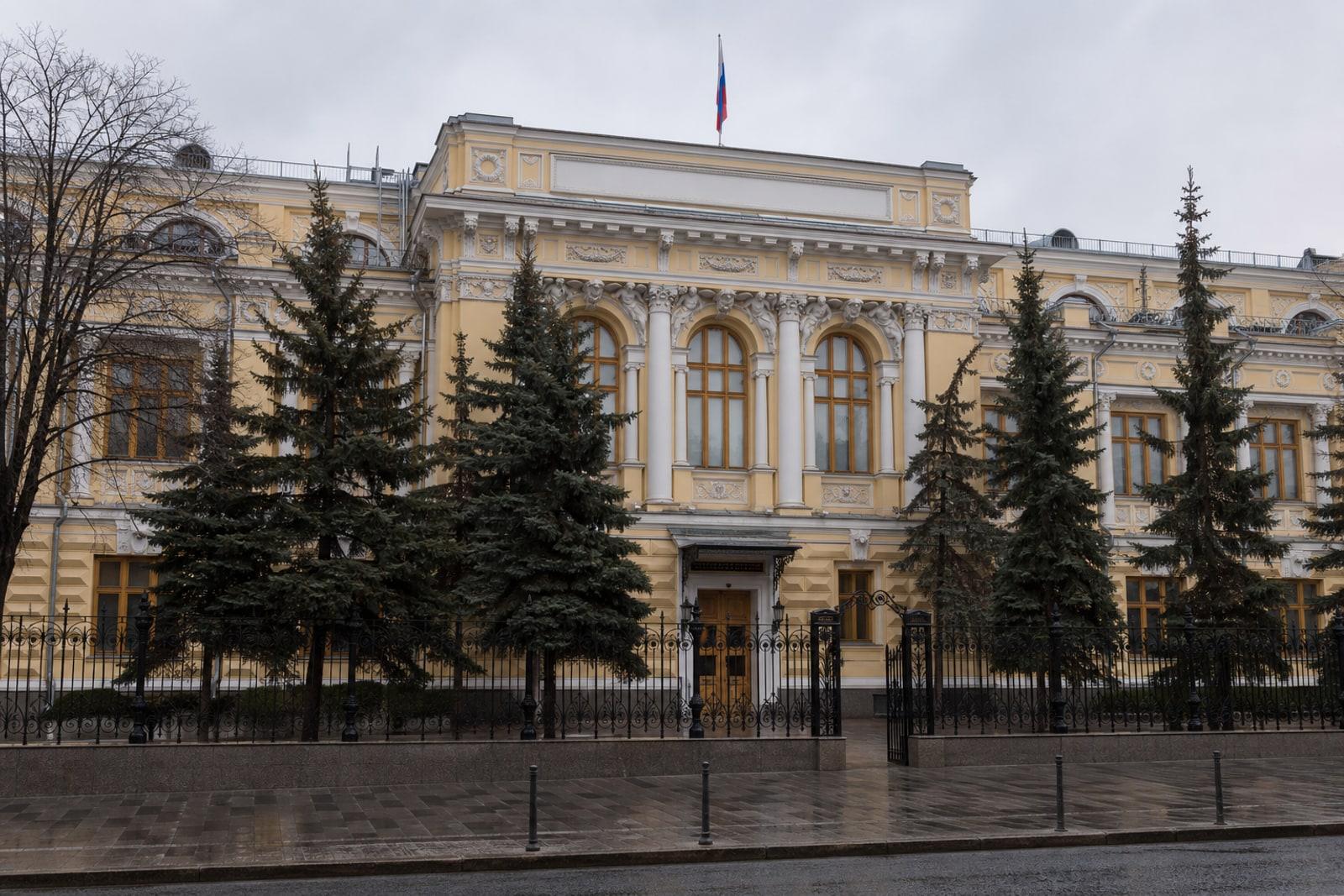
Russia's wartime economy is showing unmistakable signs of fatigue. Growth has stalled, the budget deficit blew past its full-year target within three months, oil and gas revenue has slumped and bad loans are piling up in the banks. Yet for all the strain, the data assembled by the IMF, Russia's own institutions and independent researchers describes an economy that is wobbling — not one that is failing.
That distinction is the single most important variable for European security. It determines how long Moscow can keep paying for its war on Ukraine, and it frames the sanctions policy that the European Union — Luxembourg included — must keep deciding by unanimity.
The strain is real
On 19 June 2026 the Bank of Russia cut its key interest rate by 25 basis points to 14.25%, its ninth consecutive reduction after wartime borrowing costs had been driven to a two-decade high. Markets had expected a deeper cut of 50 basis points; the more cautious move signalled that policymakers are wary of reigniting prices. Annual inflation stood at 5.6% in mid-June, and the central bank expects it to ease to between 4.5% and 5.5% over the year.
Growth has all but disappeared. The IMF lowered its 2026 forecast for Russia to 0.8%. Russia's own Economy Ministry went further in May, slashing its projection to just 0.4%, down from 1.3%, on assumptions of oil at $59 a barrel and inflation of 5.2%. Real incomes, which grew 7.7% in 2025, are now expected to rise only 1.6%. Russian economists themselves put the minimum needed for sustainable development at around 3.5% a year — far above anything on the horizon.
The public finances tell the sharpest story. Oil and gas revenues fell roughly 45% year-on-year in the first quarter of 2026, hit by lower prices and by reduced export volumes after Ukrainian drone strikes on export infrastructure. The federal budget deficit reached 4.58 trillion rubles, or 1.9% of GDP, in the first three months alone — already beyond the 3.79 trillion target set for the entire year. By the end of April it had widened to 5.877 trillion rubles, or 2.5% of GDP, with revenues down 8.2% as spending rose 17%.
The cushions are thinning too. Liquid assets in the National Wealth Fund stood at about $48 billion on 1 June 2026 — roughly 1.5% of projected GDP, and down about two-thirds in dollar terms from a prewar peak of $113.5 billion. The Kiel Institute estimates the fund's liquid share has fallen from 6.5% of GDP at the war's start to 1.8% by April.
Cracks in the banks
Pressure is now visible in the financial system. The share of bad loans in Russian bank assets has climbed from 5.4% in 2024 to 6.5% by March 2026, and broader problem assets reached 23.4 trillion rubles — about 11.2% of the total. Central bank data cited in May showed that 13 of the country's 78 largest companies could no longer service their debt, a legacy of cheap wartime credit now coming due.
Analysts describe a "two-track" economy: a defence-industrial complex flush with state money alongside a private sector squeezed by weak demand and punishing rates. Some, including a Kremlin-linked think tank, warn of a possible systemic banking crisis by late 2026, though Governor Elvira Nabiullina has played down any immediate threat of bank runs.
Erosion, not collapse
What the figures do not show is a cliff edge. The consensus among researchers at the Kiel Institute, the IISS and CSIS is of structural erosion rather than sudden failure: an economy close to its full productive capacity, with a depleted labour force and a deepening reliance on China, which now accounts for roughly 35% of Russia's foreign trade.
The underlying foundations of the economy have weakened considerably. Fiscal reserves have been largely exhausted, growth has come to a standstill, and the country's dependence on China is becoming ever more pronounced.
That assessment, from Kiel Institute president Moritz Schularick, captures the paradox. Russia is not running out of cash so much as running out of the things money cannot quickly buy. As Matthew C. Klein, author of the institute's war-financing analysis, put it: "The fundamental constraint facing Russia today is not access to money but access to people, technology, and productive capacity."
For now, Moscow retains the means to keep fighting. The squeeze on oil revenue, Nabiullina noted after the June rate decision, is compounded by domestic supply problems: "The recent spike in fuel prices will impact June inflation. The government is taking the necessary measures, but it may take time for supplies to recover."
Why it matters in Luxembourg
The slow grind is exactly the environment in which sanctions are designed to bite. The EU adopted its 20th package against Russia on 23 April 2026, targeting energy, the military-industrial complex, trade, financial services and crypto, with the largest batch of individual listings in two years. The 19th package, agreed in October 2025, had already banned Russian LNG imports and added 117 vessels to the EU's shadow-fleet blacklist.
Each package requires the agreement of all 27 member states, Luxembourg among them — and the Grand Duchy is no bystander. Clearstream, one of Europe's main securities depositories holding immobilised Russian assets, is based in Luxembourg, which sits alongside Belgium, France and Germany as a major custodian of frozen funds. Those four have resisted outright confiscation of Russian sovereign assets, wary of the legal and financial risks.
The harder Russia's finances tighten, the louder that debate will grow. A war economy that is wobbling but not failing offers no quick resolution — only a long contest of endurance in which sanctions policy, and the votes cast in Brussels, will help decide how the strain finally tells.
Frequently asked
- Is Russia's economy about to collapse?
- No. Despite slowing growth, a widening deficit, falling oil revenue and rising bad loans, most analysts — including the Kiel Institute, IISS and CSIS — describe long-term structural fragility and erosion rather than imminent collapse. Russia retains the means to keep funding the war in the near term.
- What is Russia's current interest rate and inflation?
- On 19 June 2026 the Bank of Russia cut its key rate by 25 basis points to 14.25%, its ninth consecutive cut. Annual inflation was 5.6% in mid-June, with the central bank forecasting a decline to 4.5–5.5% over 2026.
- How is Luxembourg connected to Russia sanctions?
- EU sanctions packages require the agreement of all 27 member states, including Luxembourg. The Grand Duchy is also a major custodian of frozen Russian assets — Clearstream, a leading securities depository holding immobilised Russian funds, is based in Luxembourg — and has resisted outright confiscation alongside Belgium, France and Germany.
Sources(14)
- 1Russian Central Bank Slashes Key Rate to 14.25%The Moscow Times · themoscowtimes.com
- 2Bank of Russia cuts the key rate by 25 bp to 14.25% p.a.Bank of Russia · cbr.ru
- 3Russia Cuts 2026 Growth Forecast as Oil Revenues and Wartime Pressures Weigh on EconomyThe Moscow Times · themoscowtimes.com
- 4IMF lowers Russian 2026 GDP growth forecast from 1% to 0.8%Interfax · interfax.com
- 5Russia's oil and gas revenues fall 45% in first quarter as budget deficit exceeds full-year targetMeduza · meduza.io
- 6Russia's Federal Budget Deficit Blows Past Annual Target in Just 3 MonthsThe Moscow Times · themoscowtimes.com
- 7Russian federal budget deficit 5.877 trillion rubles or 2.5% of GDP in Jan-April - MinFinInterfax · interfax.com
- 8Endgame: Russia's war economy hits its limitsKiel Institute for the World Economy · kielinstitut.de
- 9Russia's budget deficit widens as analysts warn of potential banking crisis in 2026bne IntelliNews · intellinews.com
- 10Russia's national wealth fund liquid assets down to $48.05 bln as of June 1Reuters / TradingView · tradingview.com
- 11Russia's war of aggression against Ukraine: 20th round of stern EU sanctionsCouncil of the EU (Consilium) · consilium.europa.eu
- 1219th package of sanctions against Russia: EU targets Russian energy, third-country banks and crypto providersCouncil of the EU (Consilium) · consilium.europa.eu
- 13Where are the Russian assets? Nobody, except Belgium, wants to sayEuronews · euronews.com
- 14Luxembourg freezes €2.5bn over Russia sanctionsPaperjam · en.paperjam.lu
Related by topic