Myanmar
Myanmar's post-coup war passes 100,000 dead as the junta tightens its grip
A conflict monitor puts the toll of Myanmar's civil war above 100,000 since the 2021 coup, as the military claims an election win and much of the world looks away.
By Camille Reuter · · 4 min read
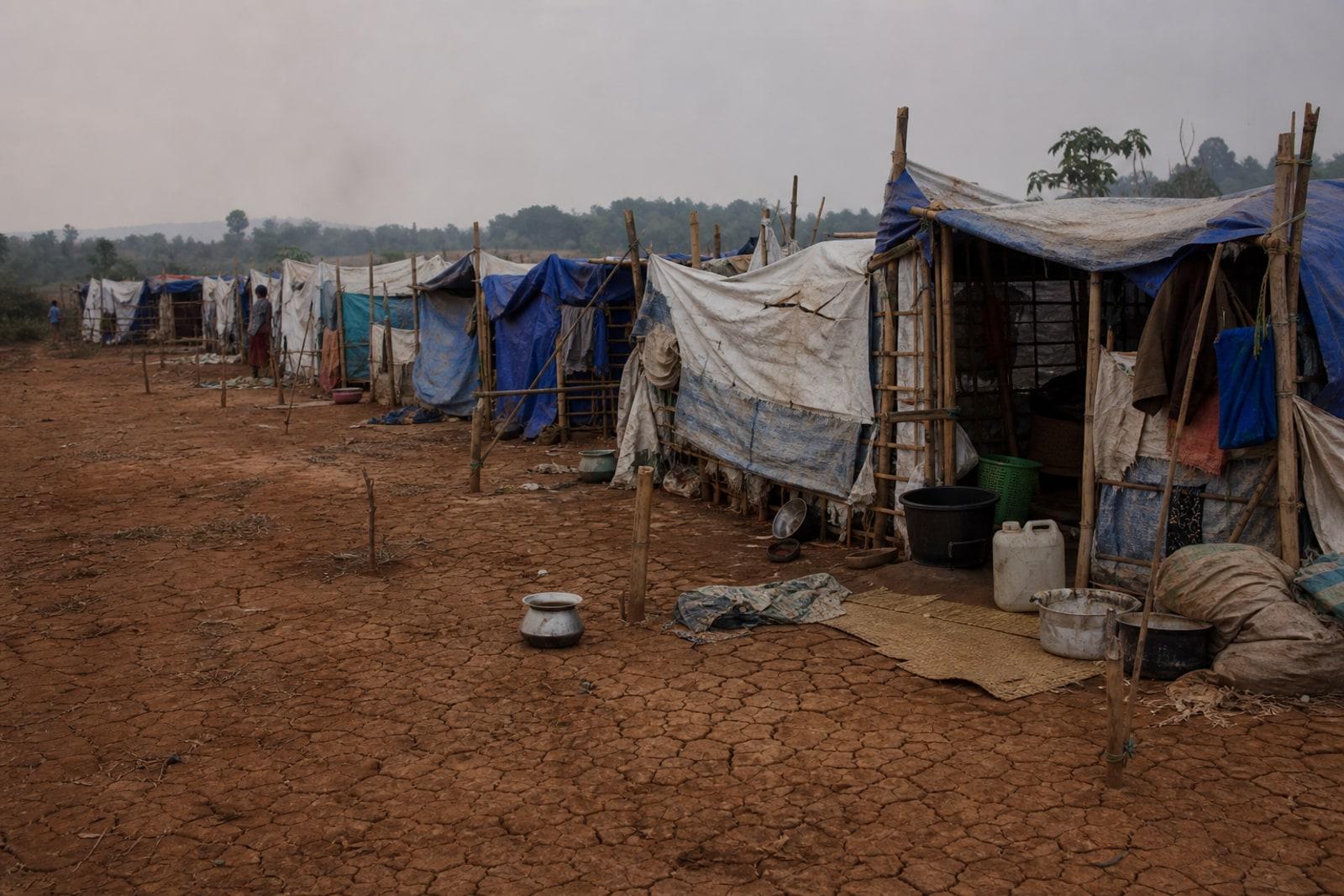
More than 100,000 people have been killed in Myanmar since the military seized power in February 2021, according to a leading conflict monitor — a threshold that lays bare the scale of a war that has splintered the country and drawn far less attention than conflicts elsewhere.
The Armed Conflict Location & Event Data Project (ACLED), which compiles fatality figures from media and other reports, counted 100,114 conflict-related deaths since the coup, according to the tally reported this week. There is no official toll and estimates vary widely, but analysts regard the five-year war as the deadliest active conflict in Asia.
The count captures fighting between the ruling military, known as the Tatmadaw, and a sprawling array of pro-democracy fighters and long-established ethnic armed groups. ACLED says it has registered more than 1,200 distinct armed groups, describing Myanmar as "the most fragmented conflict in the world." Last year, the monitor ranked it the second most conflict-hit nation on earth, behind only the Palestinian territories.
A war that spread across a nation
What began as a crackdown on protesters after the army ousted the elected government of Nobel laureate Aung San Suu Kyi has metastasised into a nationwide insurgency. A resistance offensive launched in late 2023 seized swathes of territory, prompting the junta to activate a conscription law in early 2024 to replenish its ranks.
Sun Mon Thant, a senior analyst at ACLED, said the violence had reached almost every corner of the country.
It's deadly, it's dangerous to civilians, the conflict has spread across the whole country.
The military has increasingly relied on air power to compensate for losses on the ground. Human Rights Watch, in its World Report 2026, documented airstrikes throughout 2025 that struck schools, hospitals, religious gatherings and displacement camps, and accused the junta of obstructing aid to opposition-held areas.
A humanitarian emergency deepens
The human cost extends far beyond the dead. The United Nations estimates more than 3.7 million people are internally displaced, and by AFP's account more than one in five people now face acute food insecurity as the economy collapses. Human Rights Watch put the number facing acute hunger at over 15 million.
A magnitude-7.7 earthquake in March 2025, which the UN said affected some 17 million people, compounded the misery; rights groups say the military kept up its attacks even as survivors dug through rubble.
A UN human rights report published in late June found that Myanmar's military was responsible for at least 702 civilian deaths — including 224 women and 153 children — over the six months to the end of January 2026, the period surrounding the country's tightly controlled elections. Airstrikes were the single largest cause of death, and the central Sagaing region was the deadliest area for civilians.
Ravina Shamdasani, a spokeswoman for the UN Human Rights Office, said the toll was the military's responsibility, noting that "those 702 are attributable to the Myanmar military." The report warned that dwindling international funding for humanitarian protection was compounding the suffering.
An election the West rejects
Even as the fighting rages, the junta has moved to cloak its rule in a civilian veneer. A general election held in phases from late December 2025 into January 2026 — with no voting in dozens of rebel-held townships — handed the pro-military Union Solidarity and Development Party more than 80 percent of contested seats.
On 10 April 2026, coup leader Min Aung Hlaing, who had stepped down as commander-in-chief days earlier, was sworn in as president. "Myanmar has returned to the path of democracy and is heading towards a better future," he declared. Democracy watchdogs and Western governments dismissed the vote as a sham designed to launder military rule, and the armed resistance vowed to fight on.
A muted international response
The international reaction has been fractured. China and Russia have supplied the junta with military jets and diplomatic cover, and Beijing has brokered ceasefires with some ethnic armies — steps that have helped shore up the regime.
The European Union has kept up pressure through sanctions. On 27 April 2026, the Council of the EU extended its restrictive measures for another year, until 30 April 2027, citing "the continuing grave situation in Myanmar, including actions undermining democracy, as well as serious human rights violations." The measures now target 105 individuals and 22 entities and include:
- asset freezes and EU travel bans on those listed;
- an embargo on arms and equipment that could be used for internal repression;
- a ban on exporting dual-use goods to the military and border police;
- a prohibition on military training and cooperation with the Tatmadaw.
The EU has also blacklisted members of the junta's election commission. Yet critics argue that sanctions have done little to slow the killing, and the UN has warned of what it called foreign indifference to a crisis that, five years on, shows no sign of ending. As one widow told AFP after losing her husband to the war, the pain is "just endless."
Frequently asked
- How many people have died in Myanmar's civil war?
- The conflict monitor ACLED counted 100,114 conflict-related deaths since the February 2021 coup, in a tally reported at the start of July 2026. There is no official toll and estimates vary, but analysts consider it Asia's deadliest active conflict.
- Where does the death-toll figure come from?
- It comes from the Armed Conflict Location & Event Data Project (ACLED), a widely cited monitor that compiles fatality figures from media and other reports. The figure was carried by AFP and republished by outlets including France 24, RTÉ and The Manila Times.
- How has the European Union responded?
- On 27 April 2026 the Council of the EU extended its sanctions until 30 April 2027, citing the 'continuing grave situation' in Myanmar. The measures cover 105 individuals and 22 entities and include asset freezes, travel bans, an arms embargo and a ban on military cooperation with the Tatmadaw.
- Who governs Myanmar now?
- Coup leader Min Aung Hlaing was sworn in as president on 10 April 2026 following military-controlled elections that Western governments and rights groups rejected as a sham. The pro-military USDP won more than 80 percent of contested seats, and the armed resistance continues to fight.
Sources(10)
- 1More than 100,000 killed in Myanmar since 2021 coup, monitor saysFrance 24 (AFP) · france24.com
- 2Estimated 100,000 killed in Myanmar's five-year civil warRTÉ (AFP) · rte.ie
- 3Myanmar post-coup conflict death toll exceeds 100,000The Manila Times (AFP) · manilatimes.net
- 4100,000 Killed in Myanmar Post-Coup Conflict: MonitorThe Defense Post (AFP) · thedefensepost.com
- 5World Report 2026: MyanmarHuman Rights Watch · hrw.org
- 6Myanmar: Foreign indifference compounds suffering of civilians – UN reportOHCHR · ohchr.org
- 7Myanmar army killed over 700 civilians in six months: UN reportMyanmar Now · myanmar-now.org
- 8Myanmar: EU restrictive measures extended until April 2027Council of the European Union (Consilium) · consilium.europa.eu
- 9Myanmar's coup leader Min Aung Hlaing sworn in as presidentAl Jazeera · aljazeera.com
- 10Myanmar: Elections a Fraudulent Claim for CredibilityHuman Rights Watch · hrw.org
Related by topic