Cybersecurity
Malware on Luxembourg's state IT system exposed government device data
A malware intrusion on the state IT centre's device-management system let an external actor reach names, phone numbers and work emails of device users. Officials say no citizen data was touched.
By Camille Reuter · · 4 min read
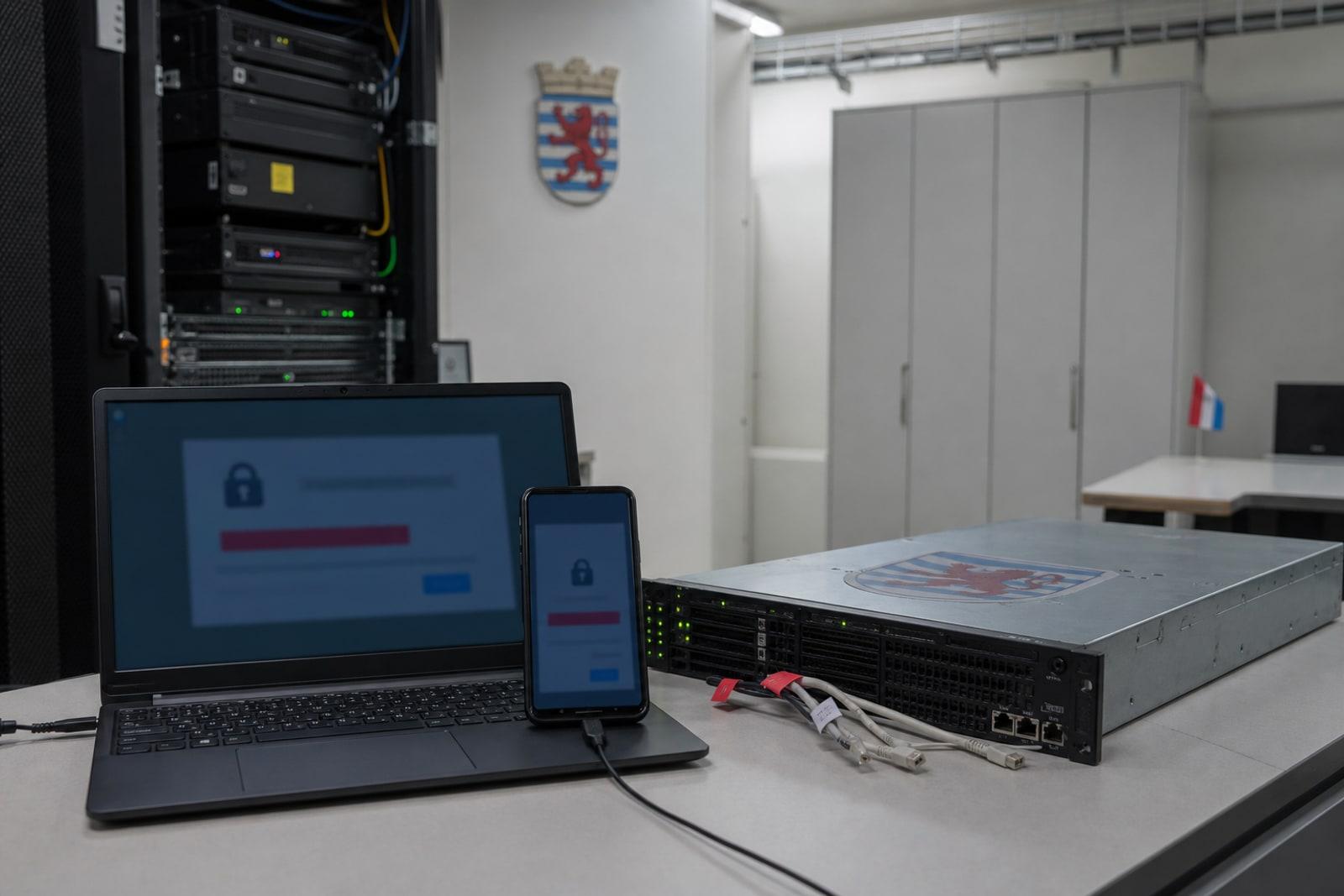
For close to a month, malicious code sat quietly inside one of the systems that keeps the Luxembourg state running. When the country's IT administration finally spotted it on the evening of Thursday 26 February 2026, officials cut off access to internal government services from staff smartphones and tablets and began an investigation that would reach the prime minister's cabinet within days.
The intrusion struck the Centre des technologies de l'État (CTIE), the body that builds, runs and secures the Luxembourg government's IT. The malware was found on the platform the CTIE uses to manage the state's mobile devices. According to reporting by Paperjam, it had infected the system around the end of January — only hours before the supplier updated it — and went undetected for roughly a month, a timeline echoed in the headline of a later account by DataBreaches.net.
Crucially, this was not the kind of attack that knocks public websites offline. There was no flood of junk traffic and no ransom demand. It was a quiet intrusion aimed at data, and it raises a pointed question on the same digital backbone residents and civil servants rely on: how long can a foothold persist inside the state's systems before it is caught?
What was — and wasn't — exposed
Technical analysis by the CTIE and the governmental response team GOVCERT.LU established that an attacker had reached a specific list used to manage state-issued laptops. In a joint statement, the Ministry for Digitalisation and the High Commission for National Protection said:
an external actor was able to access a list of information necessary for managing the laptop devices administered by the CTIE
That list, officials said, contained device-management details rather than the contents of anyone's files. The exposed information covered:
- the names of the device holders;
- their telephone numbers and professional email addresses;
- the technical characteristics of the devices themselves.
Two boundaries shaped how serious the breach was judged to be. First, the reach was limited. "The CTIE services contained the unauthorised access within a few hours and limited it to the list of laptop devices managed by the CTIE," the Ministry for Digitalisation said. Second, and the point the government stressed most, ordinary residents' records were not in scope: "No information relating to citizens was affected." Mobile devices used in the education sector, managed separately by the CGIE, were also untouched.
Services for the public stayed up
While the breach was contained, the disruption was real for government staff. From the evening of 26 February, internal state services could no longer be reached through CTIE-managed phones and tablets — email and calendars among them — and employees fell back on their work computers, which continued to function normally. For the public, the practical message was that services accessed by computer kept working; the incident hit internal device management, not the citizen-facing portals people use to file taxes or paperwork.
A response that climbed to the cabinet
The CTIE moved to wall off the problem, isolating the compromised server and standing up a completely new one. The matter then escalated through Luxembourg's crisis machinery. The country's cyber risk assessment cell met on the evening of Thursday 5 March, and Prime Minister Luc Frieden convened experts to brief the Government Council the following day, Friday 6 March. Individuals whose details appeared on the list were notified and urged to stay vigilant.
That a device-management list — not a trove of citizen data — drove a briefing at cabinet level reflects how seriously such intrusions are now taken. The metadata exposed here, from work email addresses to device specifications, is exactly the raw material that can fuel later phishing or targeting of public officials.
Part of a wider European squeeze
The CTIE breach did not happen in isolation. Luxembourg has absorbed a run of cyber incidents in recent years: a brief distributed denial-of-service (DDoS) episode hit government sites in January 2025; a two-week DDoS wave in spring 2024, claimed by pro-Russian hackers, disrupted ministries and agencies; and in July 2025 a zero-day flaw in Huawei networking equipment crashed POST Luxembourg's telecoms network, according to The Record.
Across the continent, public administrations have been under sustained pressure. The pro-Russian hacktivist collective NoName057(16) claimed roughly 1,530 operations between late October 2025 and mid-March 2026 — about 300 a month, with government websites making up close to a third of its targets — according to an investigation by The Moscow Times and the outlet Vot Tak. Europol and Eurojust have run international operations to disrupt that network. The CTIE intrusion is a different animal from those noisy DDoS campaigns — no group has claimed it, and its aim was access, not disruption — but it lands in the same climate of intensifying attacks on European states.
For Luxembourg, the episode is less a single dramatic outage than a stress test of resilience: the malware was caught, the damage was bounded and citizen data was spared — but only after an intruder had spent the better part of a month inside the machinery of government.
Frequently asked
- Was Luxembourg's cyber incident a DDoS attack or a data breach?
- It was a data-access malware intrusion, not a DDoS or ransomware attack. Malware on the CTIE's device-management platform let an external actor reach a list of state laptop-management data; there was no traffic flood or ransom demand.
- Was citizens' personal data exposed?
- No. The Ministry for Digitalisation said no information relating to citizens was affected. The exposed data covered public-sector device holders' names, phone numbers, professional emails and technical device details.
- Did the attack take down public e-government services?
- No. State services accessed via computer remained fully operational. The disruption affected internal access from CTIE-managed mobile devices, which were cut off from the evening of 26 February 2026.
- How did the government respond?
- The CTIE and GOVCERT analysed the malware, isolated the affected server and built a new one. Luxembourg's cyber risk assessment cell met on 5 March 2026 and Prime Minister Luc Frieden briefed the cabinet on 6 March; affected staff were notified.
Sources(10)
- 1Access to State IT System Restricted After Malware DetectedChronicle.lu · chronicle.lu
- 2Investigation Confirms Malware Accessed Personal Information on Government SystemChronicle.lu · chronicle.lu
- 3State IT device data compromised in Luxembourg cyberattackPaperjam · en.paperjam.lu
- 4Luxembourg government mobiles cut off after malware alertPaperjam · en.paperjam.lu
- 5Luxembourg government mobiles cut off after malware alertDelano · delano.lu
- 6Malware on Luxembourg public sector devices was active for almost a monthDataBreaches.Net · databreaches.net
- 7Luxembourg Investigates Cyber Incident Affecting State DevicesLuxembourg Expats · luxembourgexpats.lu
- 8Pro-Russian Hacker Group Gamifies Cyberattacks on Europe With Crypto Rewards – InvestigationThe Moscow Times · themoscowtimes.com
- 9Global operation targets NoName057(16) pro-Russian cybercrime networkEuropol · europol.europa.eu
- 10Huawei zero-day attack behind last year's crash of Luxembourg's entire telecoms networkThe Record (Recorded Future News) · therecord.media
Related by topic