Housing
Half of Luxembourg's new foreign workers leave within five years — and housing is the main reason
A government-commissioned LISER study finds 66% of recent arrivals name housing costs as the factor most likely to push them out, as the state ramps up affordable-housing spending to record levels.
By Sophie Klein · · 4 min read
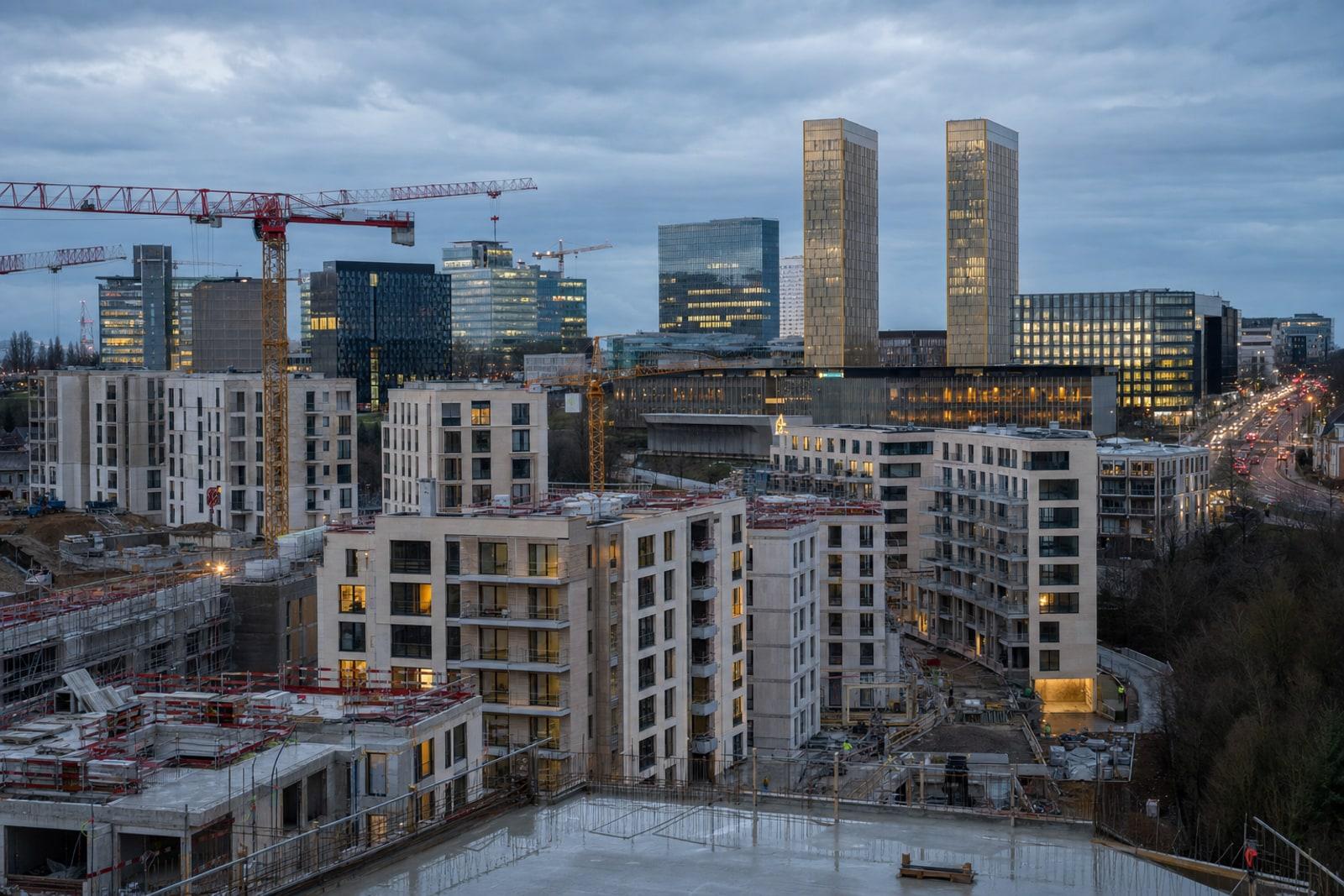
Luxembourg has little difficulty persuading skilled workers to come. Keeping them is another matter. Around 30% of new entrants to the labour market leave the country within a year, and half are gone within five, according to the LUXTALENT study carried out by the Luxembourg Institute of Socio-Economic Research (LISER) for the Ministry of the Economy. When researchers asked more than 3,200 recent arrivals what would most likely drive them out, the answer was overwhelming: the cost of housing, cited by 65.8% — far ahead of distance from family (36%) or opportunities abroad (35%).
The finding, published on 15 June, lands at the heart of the country's economic model. Foreign-born workers accounted for 90.5% of all new entrants to Luxembourg's labour market in 2024, LISER found, and the General Inspectorate of Social Security estimates the country will need 335,000 new hires by 2040 — 180,000 to replace retirees and 155,000 for newly created jobs. A talent pipeline that leaks at both ends is, in other words, a structural risk rather than an expat grievance.
A revolving door for talent
The people Luxembourg is losing are precisely those it competes hardest to attract. According to the survey, conducted among working-age immigrants who arrived in 2023, roughly 80% of newcomers hold university degrees and more than a third work in finance, professional services or IT. Nearly half had considered alternative destinations such as Switzerland, Germany or the Netherlands before choosing the Grand Duchy — drawn mainly by a job offer (45%), quality of life (38%), personal networks (35%) and salary (32%).
The paradox is that most want to stay: 62% told LISER they wished to remain longer than originally planned. Yet the first phase of the study, published in March, showed departure rates edging up, with 34% of the 2023 cohort of new labour-market entrants leaving within a year. STATEC's demographic data tell a similar story of churn: in 2024 Luxembourg recorded 25,725 arrivals against 16,444 departures, and population growth of 1.5% was among the weakest in a decade.
Europe's most expensive address
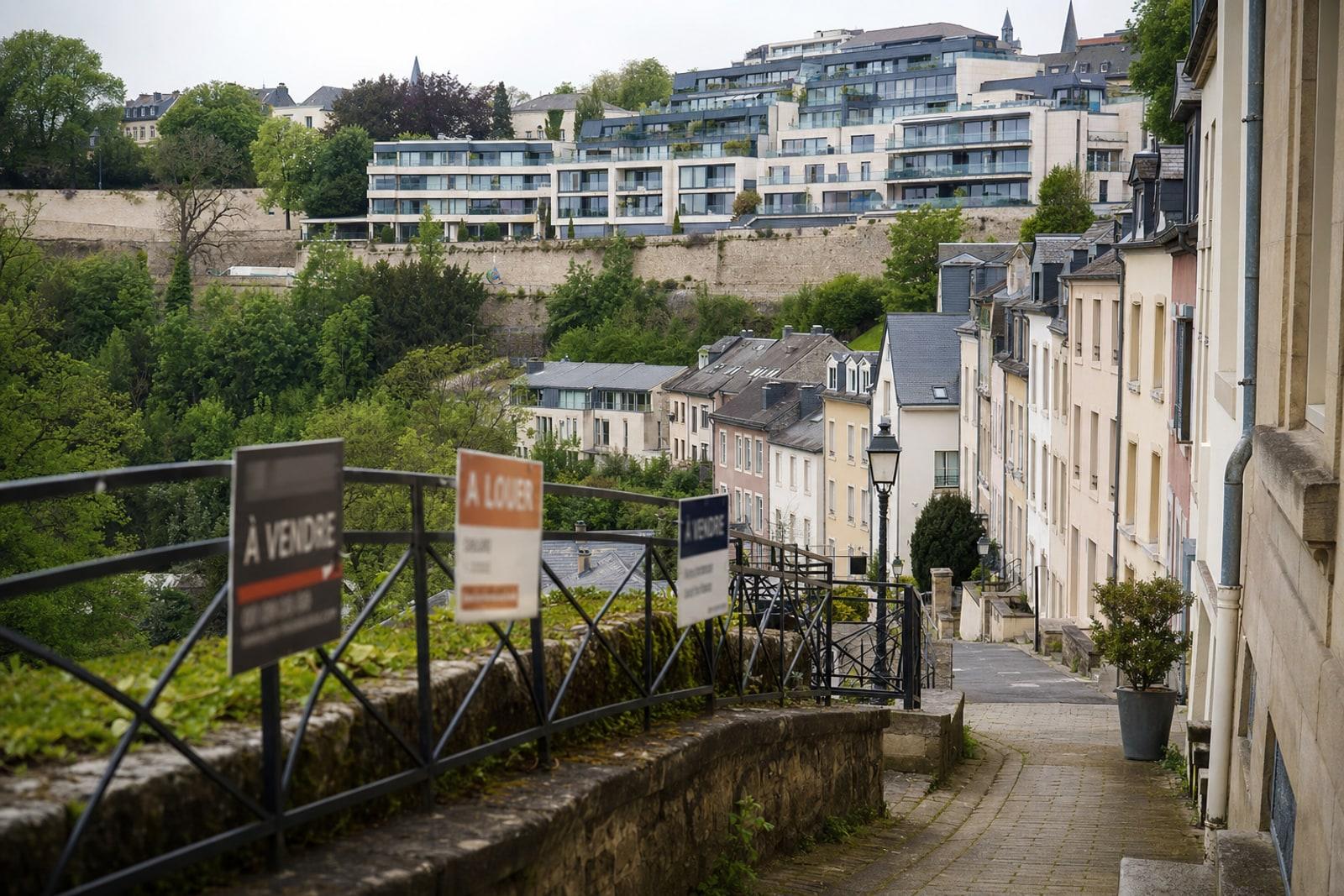
The price gap with neighbouring capitals is not a perception problem. Deloitte's Property Index 2025 ranked Luxembourg the most expensive country in Europe in which to buy a new home, at an average of €8,760 per square metre. Luxembourg City topped the capital-city table at €11,074 per square metre — ahead of Munich (€10,800) and Paris (€10,760) — and was also Europe's most expensive rental market, at an average of €43.40 per square metre a month. Unlike Paris or Munich, Luxembourg offers no cheaper domestic alternative city; the escape valve is the border, and LISER researchers note that growing numbers of workers now settle in France, Belgium or Germany instead.
Employers have been sounding the alarm for some time. The Chamber of Commerce's Talent4Luxembourg report, presented in December 2025, put housing at the centre of its 34 recommendations for keeping the country competitive, and the American Chamber of Commerce has gone as far as exploring building subsidised flats for member companies' young staff. "Luxembourg must become a true 'Talent Hub', capable of attracting, integrating and retaining the talent our economy needs," said Muriel Morbé, the Chamber of Commerce's director of talents and skills.
Housing minister Claude Meisch has framed the stakes in similar terms.
We have to be careful not to scare young professionals or soon-to-be graduates away from Luxembourg.
"We need to build more publicly owned housing and do it more quickly," Meisch told the Luxembourg Times in an interview republished by the government.
Record spending, distant payoff
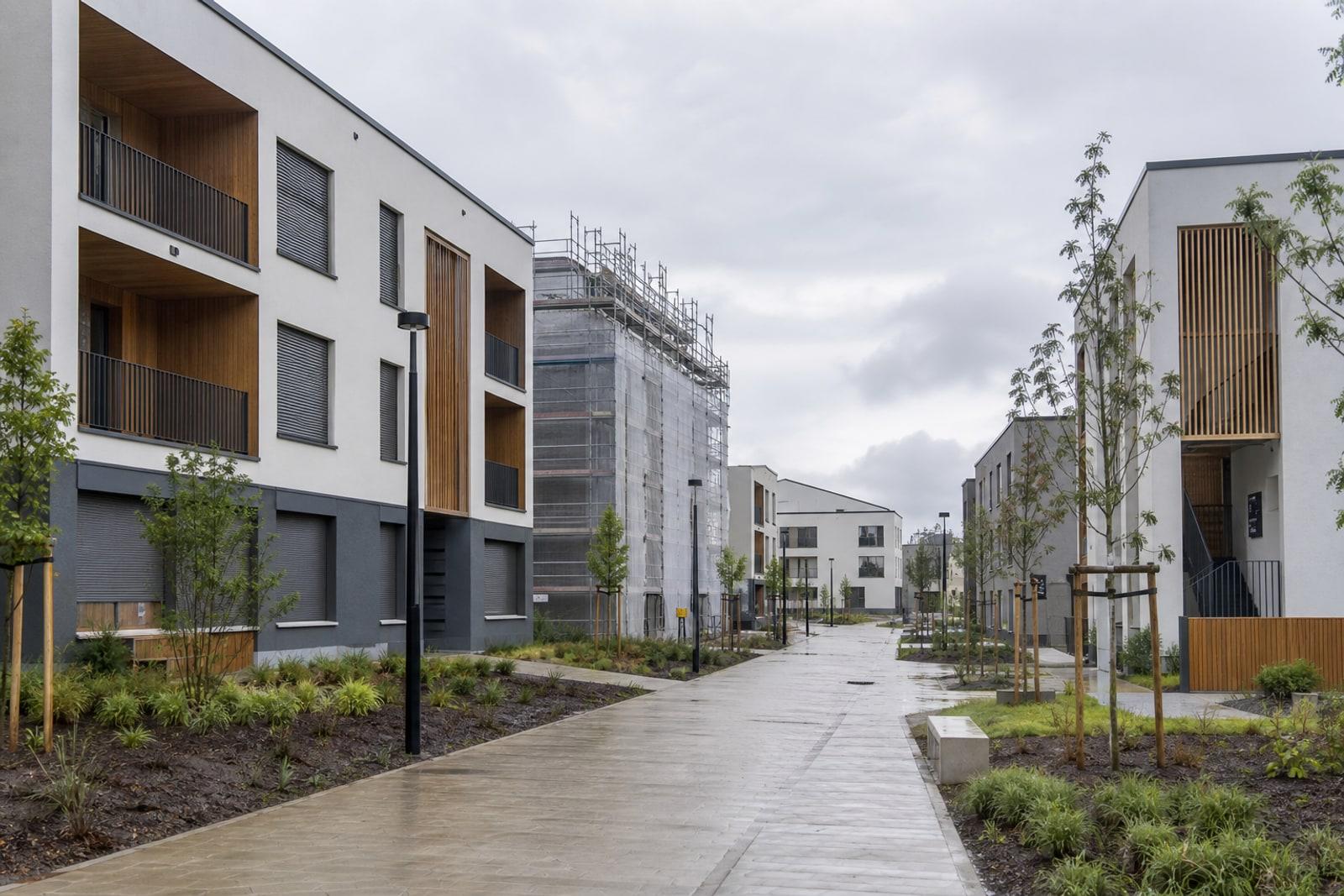
The state is now spending on affordable housing at unprecedented levels. The annual report of the Special Fund for Affordable Housing, published on 2 July, shows €474m spent in 2025 — the fund's budget more than doubled from €220m — bringing the subsidised stock to 5,348 homes across 341 projects, 64% of them earmarked for affordable rental. Spending is projected to stay above €475m a year until 2029, peaking at €542m in 2027.
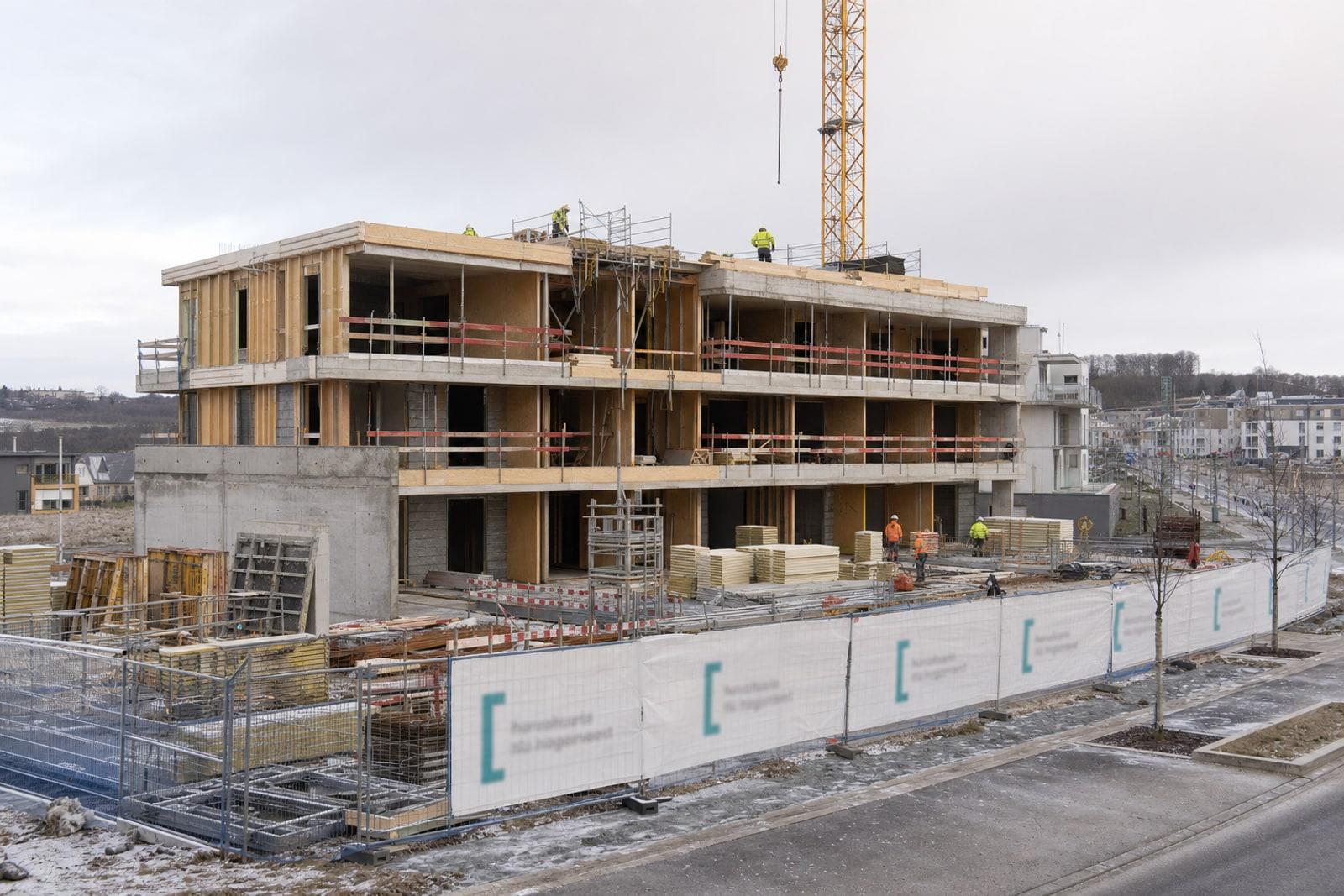
The public developer Fonds du logement has 1,227 homes under construction, according to Le Quotidien, including the flagship Wunne mat der Wooltz district in Wiltz, a 34-hectare site planned to deliver around 1,085 homes, with the first units — some built from prefabricated modules — arriving from 2026. Alongside the construction push, a revised housing-aid law took effect on 1 January, and the new national register of affordable housing (RENLA) now offers a single application point.
RENLA's own figures, however, illustrate the scale of the gap: by April 2026 some 8,900 prospective tenants had registered for roughly 3,500 listed dwellings. Other measures aim at the pay slip instead, including a 50% tax exemption on up to €400,000 of remuneration for impatriates. The unresolved tension is one of timing. As Delano noted in its analysis of the fund's report, most of the effects of the current investment strategy will not be felt for another ten or twenty years — while LISER's data show new arrivals deciding whether to stay or go within five.
Frequently asked
- What is the LUXTALENT study?
- A two-part study by the Luxembourg Institute of Socio-Economic Research (LISER) for the Ministry of the Economy. The first part (March 2026) tracked labour-market entries and exits from 2002 to 2024; the second (June 2026) surveyed more than 3,200 working-age immigrants who arrived in 2023 about why they came and what might make them leave.
- Why do skilled workers leave Luxembourg?
- Housing costs are by far the main factor: 65.8% of surveyed newcomers cited them as the most likely reason to leave, ahead of distance from family (36%) and opportunities abroad (35%). Luxembourg City is Europe's most expensive capital for both buying and renting, according to Deloitte's Property Index 2025.
- What is the government doing about housing costs?
- It spent a record €474m from the Special Fund for Affordable Housing in 2025, bringing subsidised stock to 5,348 homes, with spending set to peak at €542m in 2027. A revised housing-aid law and the single RENLA affordable-housing register took effect in 2026, and the Fonds du logement has 1,227 homes under construction.
- How dependent is Luxembourg's economy on foreign workers?
- Extremely: foreign-born workers made up 90.5% of all new labour-market entrants in 2024, and the IGSS estimates the country needs 335,000 new hires by 2040 to replace retirees and fill new jobs.
Sources(18)
- 1High Housing Costs Principal Reason For Newcomers Leaving LuxembourgChronicle.lu · chronicle.lu
- 2Why foreign talent is reluctant to settle in LuxembourgDelano · delano.lu
- 330% of foreign workers leave Luxembourg after a yearDelano · delano.lu
- 4Publication of the results of the first part of the LUXTALENT studyLISER · liser.lu
- 5Étude LUXTALENT — deuxième partie (communiqué du 15 juin 2026)gouvernement.lu · gouvernement.lu
- 6The government is investing more than ever, but time is running outDelano · delano.lu
- 7New in 2026gouvernement.lu · gouvernement.lu
- 8Affordable housing: registration for RENLA now available online via MyGuichet.lugouvernement.lu · gouvernement.lu
- 9Luxembourg Chamber of Commerce Presents 34 Recommendations to Boost Talent Attraction & RetentionChronicle.lu · chronicle.lu
- 10Luxembourg has "some catching up to do" on affordable housing (Luxembourg Times interview with Claude Meisch)Ministry of the Economy / gouvernement.lu (orig. Luxembourg Times) · meco.gouvernement.lu
- 11Deloitte Property Index 2025 — Overview of European Residential MarketsDeloitte · deloitte.com
- 12Europe's Property Index 2025: The most and least affordable cities to buy a homeThe Superprime · thesuperprime.com
- 13Luxembourg will be most expensive country in Europe to buy new apartment in 2025Open4Business · open4business.com.ua
- 14Lower migration, low fertility: the demographic slowdown continuesSTATEC · statistiques.public.lu
- 15Luxembourg Population Growth Slows; Reaches 681,973, Driven by MigrationChronicle.lu · chronicle.lu
- 161 227 logements en chantier : le Fonds du logement accélère son développementLe Quotidien · lequotidien.lu
- 17Premier coup de pelle du projet « Wunne mat der Wooltz » à WiltzFonds du logement · fondsdulogement.lu
- 18Luxembourg's business community explores building housing for workersChamber of Commerce press review (orig. Luxembourg Times) · cc.lu
Related by topic