Public health
HIV infections in Luxembourg fall to multi-year low as syphilis climbs 35%
New 2024 surveillance data show 39 new HIV infections — down 24% — even as syphilis, gonorrhoea and other sexually transmitted infections keep rising.
By Léa Hoffmann · · 4 min read
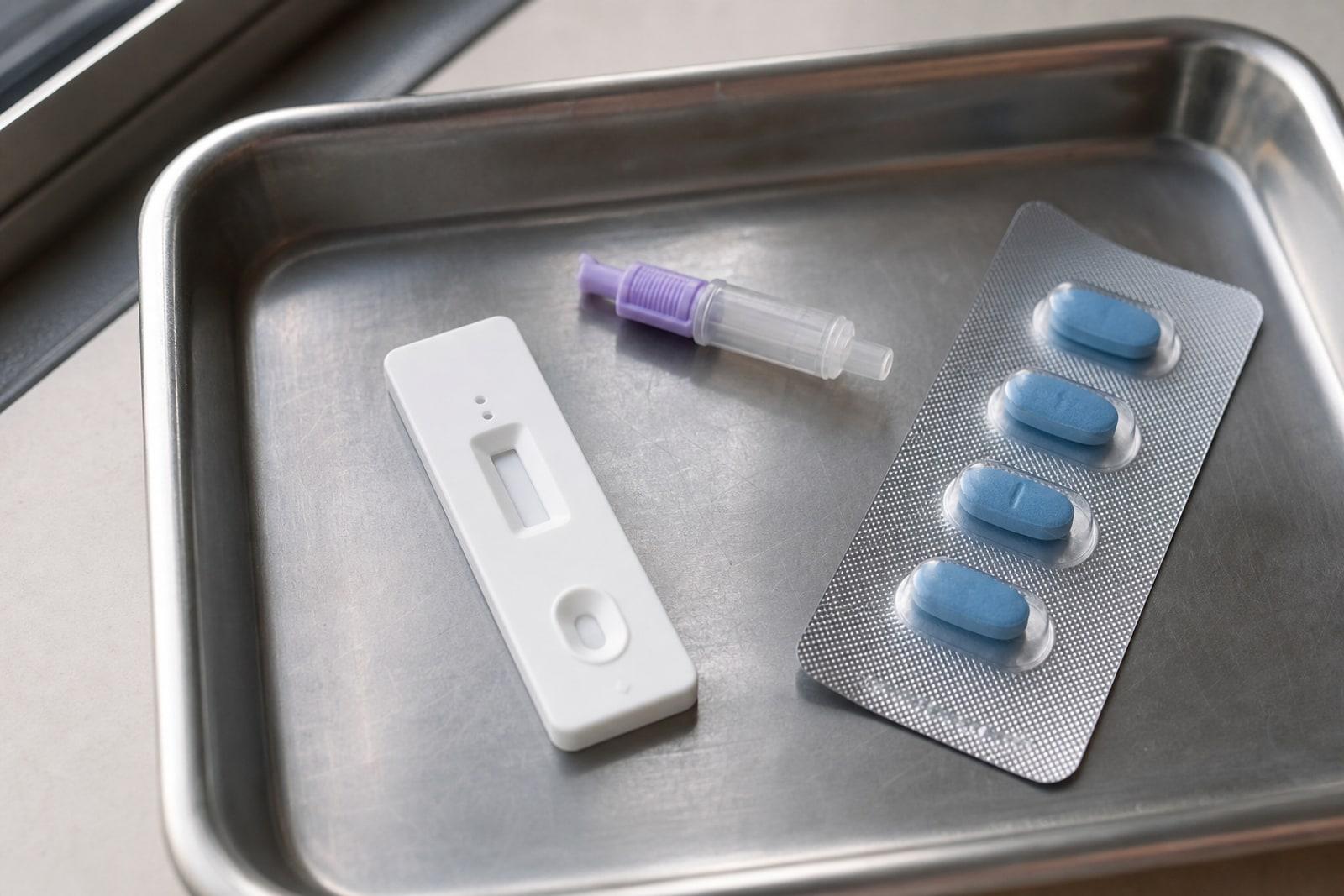
New HIV infections in Luxembourg fell to their lowest level in years in 2024, even as syphilis, gonorrhoea and other sexually transmitted infections kept climbing — a divergence that public-health officials read as both a sign of progress against HIV and a warning that protection against other infections is slipping.
The figures come from the 2024 epidemiological report on communicable diseases, published by Luxembourg's Direction de la santé (Health Directorate). It recorded 39 new HIV infections over the year, a 24% drop from 2023, alongside a 35% surge in syphilis and a continued rise in gonorrhoea. The contrast has become the defining feature of the country's sexual-health picture.
A widening gap between HIV and other STIs
The 39 new HIV infections logged in 2024 mark a clear retreat from recent years. The same surveillance series counted 67 new infections in 2022 and 53 in 2023, and roughly 49 a year before the pandemic — making the 2024 total the lowest in recent memory.
Bacterial STIs moved in the opposite direction. The report counted 147 syphilis cases, up 35% on the previous year, and 689 gonorrhoea cases, a 14% increase. Chlamydia, the most common of the three, held roughly steady at 1,619 cases, against 1,635 in 2023. The infections fall disproportionately on men aged 20 to 39: about 78% of gonorrhoea cases and 77% of syphilis cases were in men, and the Health Directorate noted that syphilis is increasingly reaching a young population in precarious circumstances.
The trend is not unique to Luxembourg, but the Grand Duchy stands out: European data have repeatedly placed it among the EU and EEA countries with the highest syphilis notification rates, at roughly 23 cases per 100,000 people in recent years.
What is driving the HIV decline
Officials and prevention services attribute the fall in HIV to a combination of wider protection, growing use of pre-exposure prophylaxis (PrEP) and the logic of treatment-as-prevention. PrEP — antiretroviral medication taken by HIV-negative people to block infection — is dispensed through the Centre Hospitalier de Luxembourg's national infectious-diseases service and reimbursed by the national health fund, the CNS.
Laurence Mortier, who directs the Luxembourg Red Cross HIV service, has linked the decline to "une plus grande protection" — greater protection — and the arrival of PrEP. The other pillar is treatment itself: people on effective antiretroviral therapy who reach an undetectable viral load cannot transmit the virus, the principle summarised as Undetectable = Untransmittable.
Luxembourg's care cascade is approaching the UNAIDS 95-95-95 targets: roughly 85% of people living with HIV are diagnosed, 89% of those are on treatment, and 95% of those treated have an undetectable viral load. An estimated 1,500 people live with HIV in the country, with around 60 thought to be undiagnosed — the gap that testing campaigns are designed to close.
Why syphilis and gonorrhoea keep rising
The same dynamics that suppress HIV do little for bacterial STIs. PrEP and antiretroviral treatment offer no protection against syphilis, gonorrhoea or chlamydia, and a shift away from condoms among some groups leaves those infections free to spread. Wider, more frequent testing also detects more cases that once went unrecorded — meaning part of the rise reflects better surveillance rather than transmission alone.
Many of these infections can be symptomless for long stretches while still causing harm and passing on, which is why authorities have pushed routine screening for people with multiple partners. As the health ministry put it, testing is the most effective way to catch an infection that "can sometimes remain asymptomatic for years while damaging the body irreversibly."
How Luxembourg's prevention response is adapting
The country's answer has been to make testing easier and prevention broader. Free, anonymous and prescription-free HIV and STI testing is offered through European Testing Weeks — held in both May and November 2025 — at clinics, the Red Cross and partner laboratories including Ketterthill, Bionext and Laboratoires Réunis. HIV self-tests, condom distribution and vaccination against HPV and Hepatitis B round out the toolkit, alongside PrEP and post-exposure prophylaxis.
A national awareness campaign aimed at 15-to-25-year-olds, coordinated by the National Youth Information Agency, ran through social media, school materials and youth-centre events in 2025, reflecting where new infections are concentrated. Health Minister Martine Deprez has framed screening as a shared duty rather than an individual risk calculation.
"Screening is an act of care and of responsibility towards oneself, one's partners and those close to us," said Deprez, Luxembourg's minister of health and social security.
For now, the surveillance numbers tell a two-sided story: a sexual-health strategy that is visibly working against HIV, and a set of bacterial infections that continue to outrun it. The challenge for Luxembourg's prevention services is to carry the gains made against one virus into the fight against the rest.
Frequently asked
- How many new HIV infections did Luxembourg record in 2024?
- 39 new HIV infections, a 24% drop from 2023 and the lowest figure in the country's recent surveillance series, according to the Health Directorate's 2024 epidemiological report.
- Are sexually transmitted infections rising in Luxembourg?
- Yes for bacterial STIs. In 2024 syphilis cases rose 35% to 147 and gonorrhoea rose 14% to 689, while chlamydia stayed roughly stable at 1,619 cases. They mainly affect men aged 20 to 39.
- Why is HIV falling while other STIs rise?
- PrEP and antiretroviral treatment sharply reduce HIV transmission but give no protection against syphilis, gonorrhoea or chlamydia. Less condom use and broader testing both contribute to the rise in bacterial STIs.
- Where can residents get tested or access PrEP in Luxembourg?
- Free, anonymous, prescription-free testing is available during European Testing Weeks via clinics, the Luxembourg Red Cross and partner labs. PrEP is dispensed through the CHL's national infectious-diseases service and reimbursed by the CNS.
Sources(8)
- 1Publication du rapport épidémiologique 2024 — bilan des maladies infectieuses au LuxembourgDirection de la santé / Le gouvernement luxembourgeois · dirsante.gouvernement.lu
- 2Protégez-vous: le nombre de cas de syphilis a bondiL'essentiel · lessentiel.lu
- 3Au Luxembourg, se faire dépister du VIH «ça ne coûte rien et c'est important»L'essentiel · lessentiel.lu
- 4Newly Diagnosed HIV Cases in Luxembourg Drop to 53 in 2023Chronicle.lu · chronicle.lu
- 5Présentation du Rapport d'activité 2023 du Comité de Surveillance du SIDA: Baisse des nouvelles infections au VIH!Portail Santé / Le gouvernement luxembourgeois · santesecu.public.lu
- 6Campagnes de prévention et de dépistage contre les infections sexuellement transmissiblesLe gouvernement luxembourgeois · gouvernement.lu
- 7Annual epidemiological report for 2023 — SyphilisEuropean Centre for Disease Prevention and Control (ECDC) · ecdc.europa.eu
- 8Luxembourg on the road to ending the HIV epidemicLuxtoday.lu · luxtoday.lu
Related by topic