Telecoms
Luxembourg's copper phone network nears its 2030 switch-off
State operator POST is migrating the last analogue lines to fibre and voice-over-internet. Just 15,500 copper connections remain — and alarms, lifts and telecare devices are in the firing line.
By Marc Weber · · 5 min read
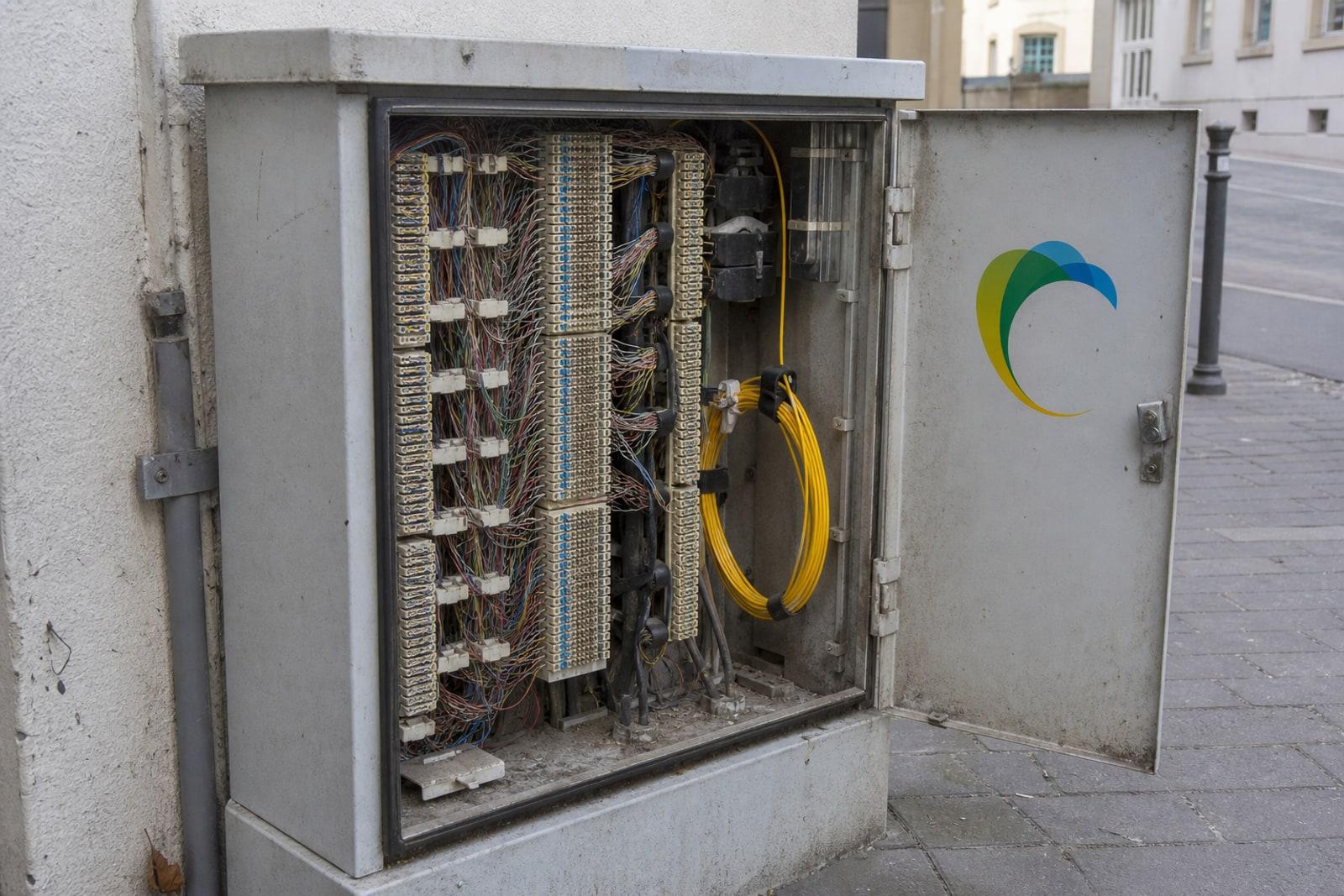
Luxembourg is quietly dismantling one of its oldest pieces of national infrastructure. The copper telephone network that has carried the Grand Duchy's phone calls and dial-up connections for generations is being switched off line by line, and the state-owned incumbent POST Luxembourg is steering the last analogue subscribers onto fibre and voice-over-internet services before the old network is retired for good around 2030.
The scale of what remains is now small but sensitive. According to the statistical report on 2025 published by the telecoms regulator, the Institut Luxembourgeois de Régulation (ILR), just 15,500 analogue connections were still running over copper at the end of last year. Almost every other fixed voice line in the country has already moved to "voice over broadband," while fibre now accounts for 72.8% of all fixed internet accesses — up 11.4% during 2025 and 17.9 percentage points since 2021, one of the highest rates in Europe.
The clock started in earnest in March 2024, when the first household copper disconnections took effect. Under the rules overseen by the ILR, an operator must write to each affected customer at least six months before their line is cut, giving them a firm disconnection date and telling them to choose an alternative — fibre, cable, 5G or satellite. There is no direct charge for the migration, though in-building cabling can add installation costs, and customers keep their existing number even if they change provider.
A network at the end of its life
Regulators and operators frame the retirement as unavoidable rather than optional. The copper plant, some of it decades old, is expensive to maintain and increasingly unequal to a data-hungry economy; the ILR says maintaining it alongside a nationwide fibre roll-out is "no longer relevant." POST Technologies still runs more than 8,000 kilometres of copper cable and well over a million kilometres of copper pairs — an inheritance from the state telephone service that traces back to the PTT founded in 1842 and was fully automated only in 1963.
The copper network is reaching the limit of its technical capacities.
Fibre, by contrast, is cheaper to keep running — maintenance costs run 40% to 60% below copper, according to figures cited in the Luxembourg press — as well as faster and more energy-efficient. Cable already reaches around 90% of households at speeds up to 1 Gbit/s, and 5G now covers roughly four in five residents, giving the regulator the replacement coverage it needs before pulling the plug.
The devices that could go silent
For most people the switch is invisible: internet and phone service simply move to a fibre or cable box. The real disruption risk lies with the everyday equipment quietly wired into the old line — devices built to dial out over an analogue circuit that will stop working the moment it is cut. The ILR's advice is blunt: check everything connected to the line before the disconnection date. The equipment most often overlooked includes:
- Personal-alert and telecare pendants used by elderly and vulnerable residents — in Luxembourg these téléalarme services are run by bodies such as the City of Luxembourg (operating since 1987), Stëftung Hëllef Doheem and private providers.
- Lift emergency telephones, historically connected over the switched telephone network and now required to meet the EN 81-28 safety standard; many need a mobile gateway or IP box to keep calling out.
- Burglar and fire alarms that transmit over a phone line, including monitored services such as POST's own Alarmis.
- Fax machines and card-payment terminals in shops and small businesses.
Owners typically have to add a mobile (GSM) gateway or move the device onto an internet connection — a modest cost, but one that has to be arranged before the line goes dead, not after. That is why the regulator and operators stress the six-month warning letter and say they will accompany customers, including older users, through the change rather than simply cutting them off.
Part of a Europe-wide retreat from copper
Luxembourg is far from alone. Across the European Union, incumbents are racing to shut ageing analogue networks and concentrate investment on fibre, with the European Commission pushing member states towards gigabit connectivity and copper retirement around 2030. The industry body Connect Europe expects some 21 national PSTN networks to be decommissioned by the end of the decade.
In neighbouring France, Orange began the commercial closure of its copper network on 31 January 2026 in more than 2,000 communes, with a full technical shutdown planned by 2030 after more than half a century of service. In the United Kingdom, BT's access arm Openreach is retiring the public switched telephone network by 31 January 2027 — a date pushed back from December 2025 largely to protect the roughly 1.8 million telecare users still on copper-based systems.
Openreach's experience is a warning for Luxembourg's smaller migration: the hard part is not the fibre, but the fragile lifelines hanging off the old lines. "There's no time left to stall," the company's director of all-IP, James Lilley, said as the UK deadline approached, adding that a dedicated "Prove Telecare" service had been built to "migrate" vulnerable customers "safely." He was blunter still about the network itself: "The PSTN analogue network is obsolete, becoming harder to maintain and significantly more expensive to run."
For the 15,500 Luxembourg households and businesses still on a copper line, the message from the ILR is to act on the letter when it arrives — and, above all, to make sure the alarm, the lift phone or the emergency pendant will still work the day the copper falls silent.
Frequently asked
- When will Luxembourg's copper phone network be switched off?
- The definitive copper switch-off is expected around 2030. Disconnections began in March 2024 and are happening progressively, area by area. Each affected customer must receive a letter from their operator at least six months before their own line is cut, with a firm disconnection date.
- How many copper lines are still in use?
- According to the regulator ILR's report on 2025, 15,500 analogue connections were still running over copper at the end of the year. Almost all other fixed voice lines have already migrated to voice-over-broadband, and fibre now accounts for 72.8% of all fixed internet accesses.
- What happens to my alarm, lift phone or telecare pendant?
- Any device that dials out over the analogue line — a burglar or fire alarm, a lift emergency phone, a telecare/personal-alert pendant, a fax machine or a card-payment terminal — will stop working once the copper line is cut. It must be moved to a mobile (GSM) gateway or an internet connection before the disconnection date, so the ILR advises checking every connected device when you receive your notice.
- Will migrating to fibre cost me money, and can I keep my number?
- There is no direct charge for the migration itself, and you keep your telephone number, including if you switch operator. However, in-building work such as vertical cabling can add installation costs, and equipment like alarms or lift phones may need an adaptor.
Sources(11)
- 1Is your connection ready for the transition?myILR / Institut Luxembourgeois de Régulation · myilr.lu
- 2Questions about copper phase out (FAQ)myILR / Institut Luxembourgeois de Régulation · myilr.lu
- 3Remplacer le cuivre par un réseau plus fiable et moderneLe gouvernement luxembourgeois / ILR · gouvernement.lu
- 4Télécommunications 2025: une croissance plus modérée dans un marché en forte évolutionLe gouvernement luxembourgeois / ILR · gouvernement.lu
- 5Luxembourg regulator launches awareness campaign on copper network switch-offTelecompaper · telecompaper.com
- 6Le réseau cuivre disparaîtra en 2030Le Quotidien · lequotidien.lu
- 7Time for a 'big switch-up' as PSTN switch-off loomsOpenreach · openreach.com
- 8Fermeture du réseau cuivre : Le calendrierOrange (Réseaux Orange) · reseaux.orange.fr
- 9Telephony copper plant retirement in the United KingdomWikipedia · en.wikipedia.org
- 10Le réseau fixe / POST's fixed networkPOST Technologies · posttechnologies.lu
- 11Post Luxembourg (company history and status)Wikipedia · en.wikipedia.org
Related by topic