Persian Gulf
Iran's Strait of Hormuz Transit Fees Test Maritime Law and Global Oil Flows
Tehran has charged vessels up to $2 million to cross the world's most important oil chokepoint, calling the levies 'service fees' even as a US-brokered truce reopens the waterway.
By Camille Reuter · · 4 min read
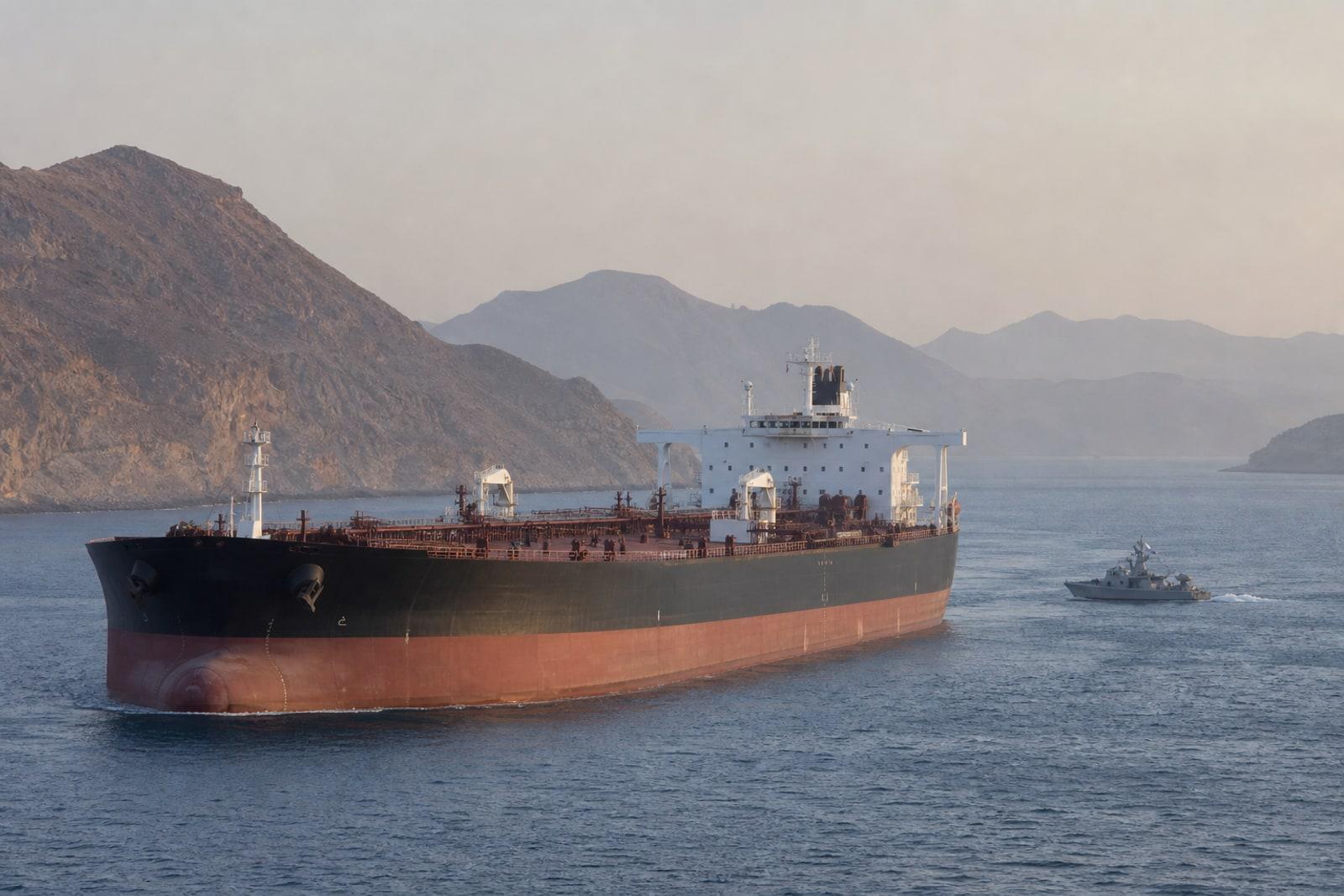
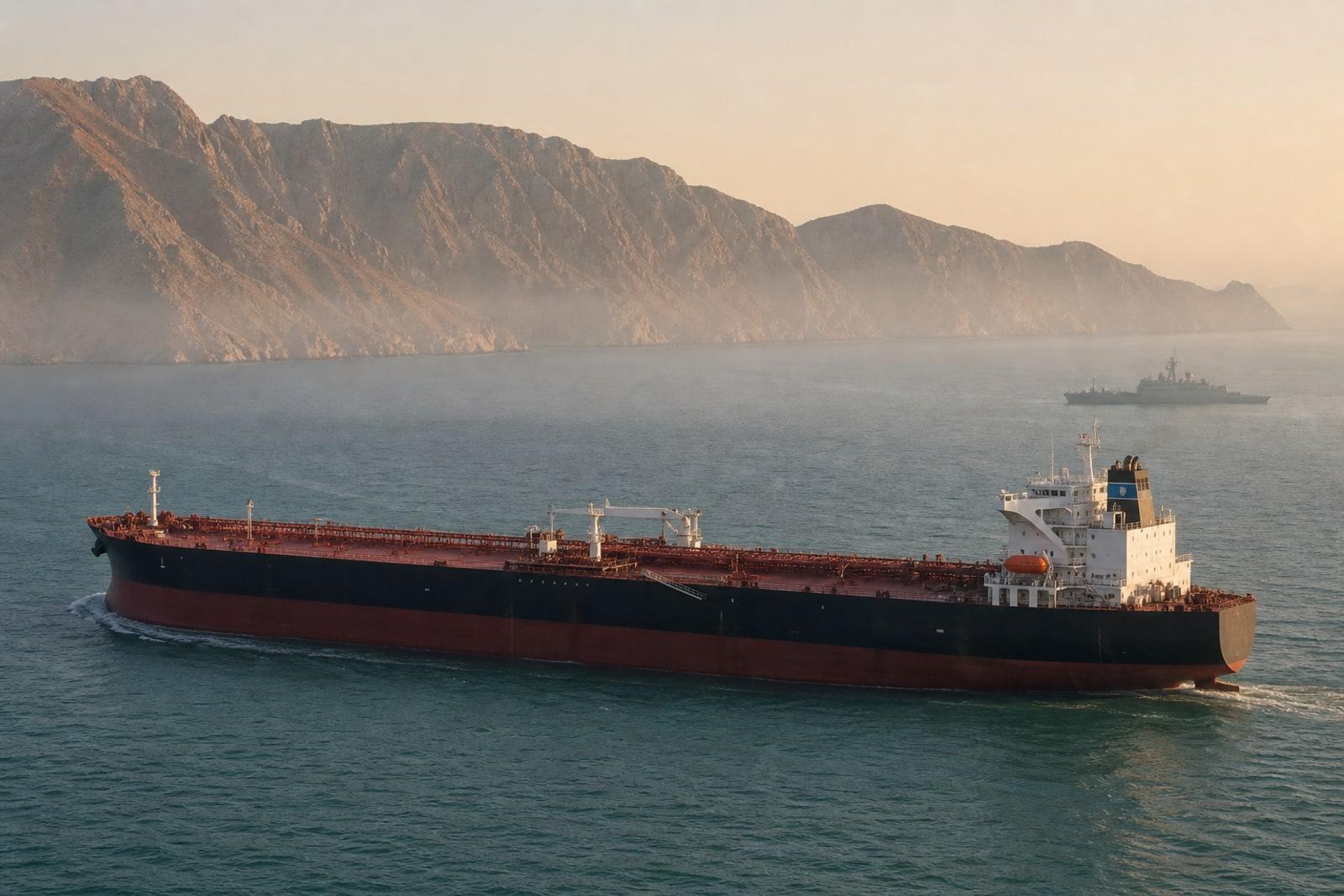
For four months the Strait of Hormuz — the narrow channel between Iran and Oman through which around a fifth of the world's seaborne oil and a comparable share of its liquefied natural gas must pass — was the most dangerous stretch of water on the planet. It has since become the testing ground for one of the most contested ideas in international law: whether the state that sits astride a global chokepoint can charge the world for the right to cross it.
Since 28 February 2026, when the United States and Israel launched air strikes on Iran, Tehran's Islamic Revolutionary Guard Corps (IRGC) all but closed the strait — warning ships away, boarding and attacking merchant vessels and laying sea mines. As a fragile, US-brokered truce now reopens the waterway, the confrontation has shifted from gunboats to invoices.
A tollbooth on the world's oil artery
Rather than simply blocking traffic, the IRGC built what shippers describe as a customs checkpoint at sea. Vessels seeking passage had to submit their IMO number, cargo manifest, crew list, ownership details and destination to approved intermediaries before being cleared — and, in many cases, to pay. Tankers were charged as much as $2 million for a single transit, according to reporting by Bloomberg and NBC News, with at least two payments settled in Chinese yuan, Lloyd's List Intelligence found.
In May, Iran formalised the arrangement, creating a Persian Gulf Strait Authority to vet and license movements. Iranian officials have been unusually candid about the rationale.
Now, because war has costs, naturally we must do this and take transit fees from ships passing through the Strait of Hormuz.
That was Alaeddin Boroujerdi, a member of the Iranian parliament's national security commission, confirming the charges to Iran International. The selective pattern of who pays and who is waved through — exemptions reportedly extended to Chinese, Indian and Russian cargoes — bears, analysts say, the hallmarks of coercion: reward the compliant, squeeze the rest.
'Fees, not tolls': a fight over the law of the sea
Tehran insists it is not levying a toll. "We do not charge tolls," the foreign ministry spokesman, Esmail Baghaei, said, framing the money instead as payment for navigation, security and environmental services delivered under a joint mechanism with Oman.
Maritime lawyers and regulators reject the distinction. The UN Convention on the Law of the Sea (UNCLOS) guarantees ships the right of "transit passage" through international straits and forbids the bordering states from hampering it. Arsenio Dominguez, secretary-general of the International Maritime Organization, said there is "no international agreement where tolls can be introduced for transiting international straits." The often-cited counter-examples do not hold: the Suez and Panama canals are man-made channels through sovereign territory, and Turkey's straits operate under their own treaty regime — none of them an open international strait like Hormuz.
Europe, heavily exposed to Gulf crude and Qatari gas, has treated the principle as seriously as the price. The European Union called on Iran to abandon the fees and rejected a proposed "joint venture" floated in Washington to share the proceeds. On 22 May the EU Council extended its legal framework to sanction those involved in impeding lawful transit and freedom of navigation, while the bloc's foreign policy chief, Kaja Kallas, raised the option of widening the Aspides and Atalanta naval missions to help safeguard the lane.
Markets, freight and a brittle truce
The financial shock was immediate. Brent crude climbed from the mid-$60s before the war to nearly $120 a barrel at its peak, crossing $100 for the first time in four years in early March. Tanker economics buckled: the benchmark rate to move two million barrels from the Middle East to China hit an all-time high of about $423,736 a day, according to LSEG data, while war-risk insurance premiums spiked so sharply that underwriters at times withdrew cover for the crossing altogether.
The diplomatic breakthrough came on 17 June, when President Donald Trump and his Iranian counterpart, Masoud Pezeshkian, signed a memorandum ending the dual blockade. Its text requires Iran to "make arrangements using its best efforts for the safe passage of commercial vessels with no charge for 60 days only" from the Persian Gulf to the Sea of Oman. With tanker traffic resuming and global demand softening, Brent slid back below $73 a barrel by late June — roughly where it stood on 27 February, the eve of the war.
What happens when the 60 days expire is the unresolved core of the dispute. Trump says the strait will be "permanently toll-free" and Vice-President JD Vance has promised it will stay that way "for the long term"; Tehran signals it intends to resume charging. Shipowners, for their part, may not wait to find out. Many are "likely to resist, reroute via the Cape of Good Hope, or reduce volumes rather than comply," said Farzin Nadimi of the Washington Institute for Near East Policy — a flight that would lengthen voyages, lift freight costs and ripple into the price of everything from petrol to plastics.
For an internationally minded reader, the significance runs beyond this quarter's oil price. If a state can convert control of a chokepoint into a revenue stream backed by force, the world's busiest energy corridors acquire a new and destabilising kind of leverage — one that the next confrontation, in Hormuz or elsewhere, could be built to exploit.
Frequently asked
- Can Iran legally charge ships to cross the Strait of Hormuz?
- Most maritime lawyers say no. Under the UN Convention on the Law of the Sea, ships have a right of 'transit passage' through international straits, and bordering states cannot charge for it. The IMO's secretary-general says no international agreement allows tolls for transiting such straits. Iran disputes this, calling its charges 'service fees' rather than tolls.
- How much did Iran charge, and who paid?
- Tankers were charged as much as $2 million for a single transit, according to Bloomberg and NBC News, with at least two payments settled in Chinese yuan, per Lloyd's List Intelligence. Iran reportedly waved through some Chinese, Indian and Russian cargoes, a selectivity analysts describe as coercive.
- What does it mean for oil prices and Europe?
- Around a fifth of the world's seaborne oil moves through Hormuz. Brent crude spiked to nearly $120 a barrel during the crisis before easing below $73 as the strait reopened. For Europe, reliant on Gulf crude and Qatari LNG, a precedent of charging for passage threatens higher freight, insurance and energy costs over the long run.
- Is the dispute over?
- Not yet. A memorandum signed on 17 June 2026 pauses the fees for 60 days. Washington wants the strait 'permanently toll-free,' while Tehran signals it intends to resume charging once the window expires, leaving the underlying question unresolved.
Sources(12)
- 12026 Strait of Hormuz crisisWikipedia · en.wikipedia.org
- 2Charging fees for passage through Strait of Hormuz 'could drive global inflation surge'The National · thenationalnews.com
- 3Iran demands 'service fees' for vessels in Strait of Hormuz ahead of potential US dealThe National · thenationalnews.com
- 4Iran to Charge Fees on Strait of Hormuz Even after DealNewsweek · newsweek.com
- 5Iran's 'Tehran toll booth' forces some tankers to pay millions to leave Strait of HormuzNBC News · nbcnews.com
- 6Iran is already charging a toll, in Yuan, for oil sold through Strait of HormuzFortune · fortune.com
- 7Oil prices continue slide amid hopes for peace, opening of Strait of HormuzAl Jazeera · aljazeera.com
- 8Ships face 4,000-times higher insurance costs to cross Strait of HormuzThe National · thenationalnews.com
- 9EU rejects Trump's 'joint venture' with Iran to charge ships through Strait of HormuzEuronews · euronews.com
- 10Council extends EU legal framework to target those involved in Iran's actions impeding lawful transit passage and freedom of navigationCouncil of the European Union · consilium.europa.eu
- 11Iran wants to charge 'fees' on Hormuz passage. What impacts could that have?Geneva Solutions · genevasolutions.news
- 12A timeline of how the Iran war shook oil prices — and what comes nextCNBC · cnbc.com
Related by topic