Rail disruption
Radio failure halts every train in Germany, exposing the Greater Region's rail dependency
A nationwide GSM-R radio outage froze German rail for about two and a half hours overnight on 23 June — a reminder of how much cross-border travel from Luxembourg leans on Deutsche Bahn.
By Tom Schmit · · 4 min read
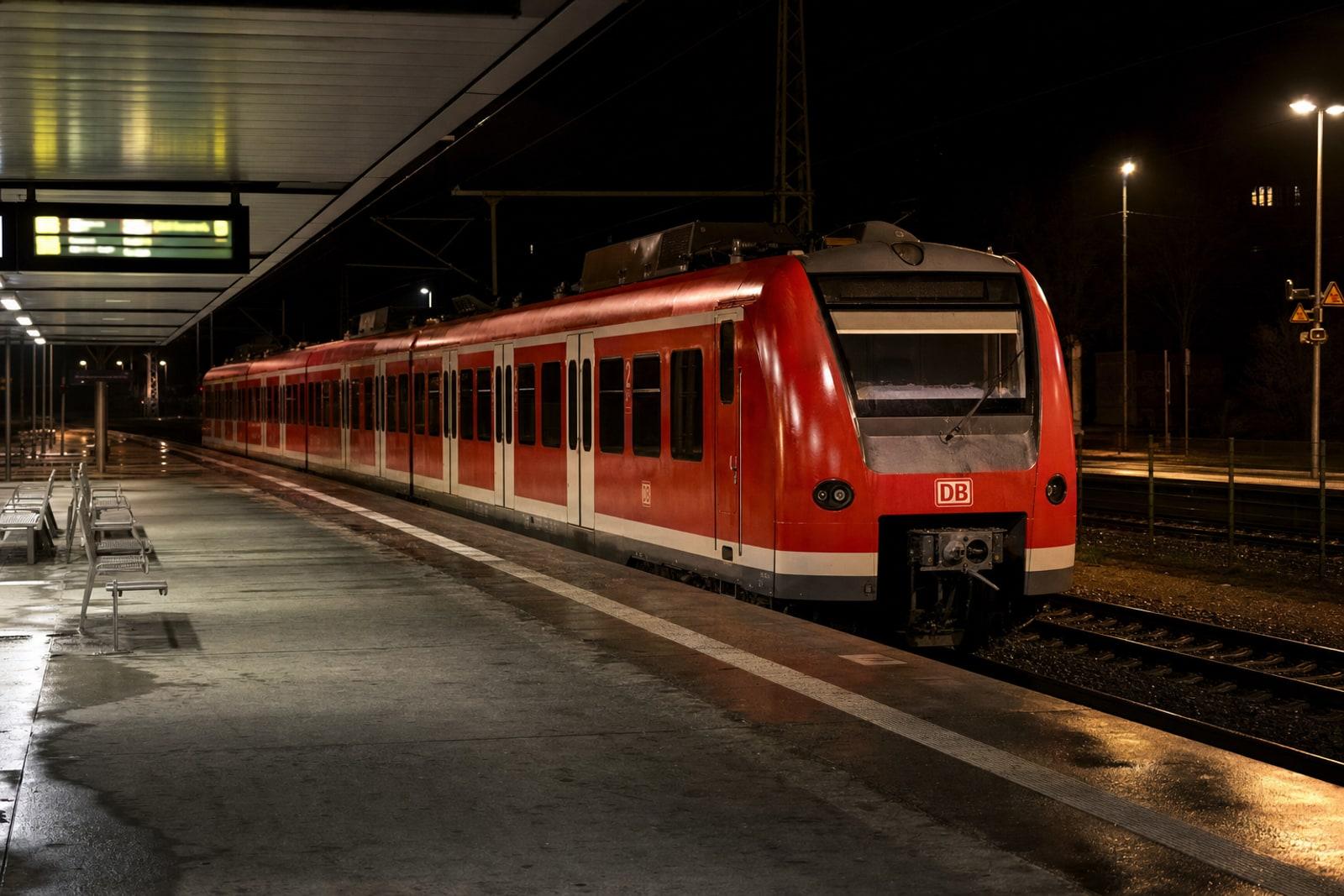
For about two and a half hours on the night of Tuesday 23 June, Germany's railways did something they almost never do: they stopped completely. A nationwide failure of the digital radio system that connects train drivers with control centres forced Deutsche Bahn to hold every train at the platform — from high-speed ICE services to big-city commuter networks — according to the Associated Press and German broadcaster ZDF.
The shutdown began late in the evening and was cleared shortly before 1 a.m. on Wednesday, after engineers switched to a backup system. But the episode — a single technical fault paralysing an entire national network — has revived questions about the resilience of the infrastructure that thousands of cross-border commuters in the Greater Region rely on every day.
What failed, and why everything stopped
The cause was a breakdown of GSM-R, short for Global System for Mobile Communications – Railway, the digital radio standard rolled out across European railways from around 2000. It carries the voice and data links between drivers and dispatchers, and without it trains cannot be run safely. German outlets noted that services were halted for safety reasons: once the radio link drops, a driver has no reliable way to receive instructions or report problems, so the safest response is to stop.
That is why a fault in one system could freeze the whole map at once. The AP reported that Deutsche Bahn said it had identified the cause but did not make it public. The disruption was nationwide and reached well beyond Deutsche Bahn's own trains: ZDF reported that Berlin's entire S-Bahn stood still, Munich's overnight S-Bahn did not run, and in Stuttgart trains were held at platforms across the network, while operators using DB infrastructure such as Metronom and Erixx were also caught up.
Hours of standstill, then a step-by-step restart
The first reports came late on Tuesday; ZDF said services seized up at around 10:30 p.m., and the tech outlet heise logged a nationwide-stop notice just before midnight. Deutsche Bahn announced shortly before 1 a.m. — roughly two and a half hours after the problem was first reported, according to the AP — that the fault had been resolved and trains were moving again. The company said operations were restarting gradually.
Deutsche Bahn chief executive Evelyn Palla told the newspaper Bild that engineers "were able to stabilize the situation with an emergency system," after which trains began running again.
For stranded passengers, the night was less tidy. "We don't know what's going on," Reyna Ghoshal, a traveller at a Berlin station, told the AP, describing unhappy faces and long lines at information desks. Deutsche Bahn said it handed out taxi and hotel vouchers and, where possible, opened up trains at stations so people had somewhere to sit. ZDF reported that holders of the Deutschlandticket were told they could claim taxi or hotel costs of up to 120 euros under passenger-rights rules. The recovery was not instant: t-online reported that residual delays and cancellations were expected the following day as services were rebuilt.
The Greater Region's German dependency
For Luxembourg and the wider Greater Region, the outage lands on a sensitive nerve. The flagship cross-border service is the RE11, operated jointly by DB Regio Südwest and Luxembourg's CFL, which runs roughly hourly between Luxembourg, Trier, Wittlich and Koblenz. According to rail guides and route data, the journey from Luxembourg to Koblenz takes about two hours and 23 minutes on CFL double-deck trains, with connections to IC and ICE services at Koblenz. Between Koblenz and Trier the RE11 is often coupled with the RE1, which continues to Saarbrücken and Mannheim.
The crucial point for travellers is that these trains, once on German soil, run on Deutsche Bahn's network and depend on the very same GSM-R radio that failed. A nationwide German stop therefore severs the cross-border links automatically — there is no separate Luxembourg-side workaround on German track. This time the timing softened the blow: the failure fell overnight, when few cross-border services are running, so the damage was limited compared with what a daytime outage would have inflicted on rush-hour flows through Trier.
- The corridor: Luxembourg–Trier–Wittlich–Koblenz, roughly hourly, jointly run by DB Regio Südwest and CFL.
- The dependency: on German territory the trains use DB infrastructure and GSM-R radio, so a national outage halts them.
- The exposure: tens of thousands of Greater Region commuters and travellers route through this and neighbouring German lines, with onward IC/ICE links at Koblenz.
The wider lesson is about single points of failure. A modern rail network can be brought to a halt not by a storm or a strike but by one communications system, and the effects do not respect borders. For a region whose daily life is stitched together by cross-frontier trains, an overnight scare in Germany is a preview of how quickly a shared backbone can give way — and an argument for the redundancy that keeps it standing.
Frequently asked
- What caused the German rail shutdown on 23 June 2026?
- A nationwide failure of GSM-R, the digital radio system linking train drivers with control centres. Deutsche Bahn said it had found the cause but did not make the technical details public.
- How long did the outage last and how was it fixed?
- The disruption began late on Tuesday evening and was declared resolved shortly before 1 a.m. — about two and a half hours, per the AP. Deutsche Bahn stabilised operations using an emergency backup system and restarted services step by step.
- Why does a radio failure stop every train?
- Without the GSM-R link, drivers cannot reliably communicate with dispatchers, so trains are held at stations for safety. Because the system is national, a single fault can freeze the whole network at once.
- How did it affect Luxembourg and the Greater Region?
- The hourly Luxembourg–Trier–Koblenz RE11 service, run jointly by DB Regio Südwest and CFL, uses Deutsche Bahn's network and GSM-R radio once in Germany, so a national stop severs the link. The overnight timing limited the impact this time.
Sources(8)
- 1Trains across Germany halted for hours by communication system outagePBS NewsHour (Associated Press) · pbs.org
- 2Trains halted across Germany because of communication system problemKSAT (Associated Press) · ksat.com
- 3Nach Ausfällen wegen Funkstörung: Zugverkehr läuft wieder anZDFheute · zdfheute.de
- 4Bahnverkehr wegen Funkstörung deutschlandweit eingestellt; UPDATE: Läuft wiederheise online · heise.de
- 5German Rail Operator Halts Nationwide Trains After Radio System OutageBloomberg · bloomberg.com
- 6Bahn-Störung: Erste Züge fahren wieder – Bahn rechnet weiter mit Ausfällent-online · t-online.de
- 7Trains from Luxembourg to other European cities (RE11 Luxembourg–Trier–Koblenz)Seat61 · seat61.com
- 8Relation: RE11 Koblenz Hbf => Trier => LuxembourgOpenStreetMap · openstreetmap.org
Related by topic