Remembrance
Frieden marks Srebrenica genocide in Luxembourg as Bosnia's EU path stays fragile
The prime minister joins Bosnia's foreign minister and the Mothers of Srebrenica at a Luxembourg commemoration, 31 years after more than 8,000 Bosniaks were murdered.
By Camille Reuter · · 4 min read
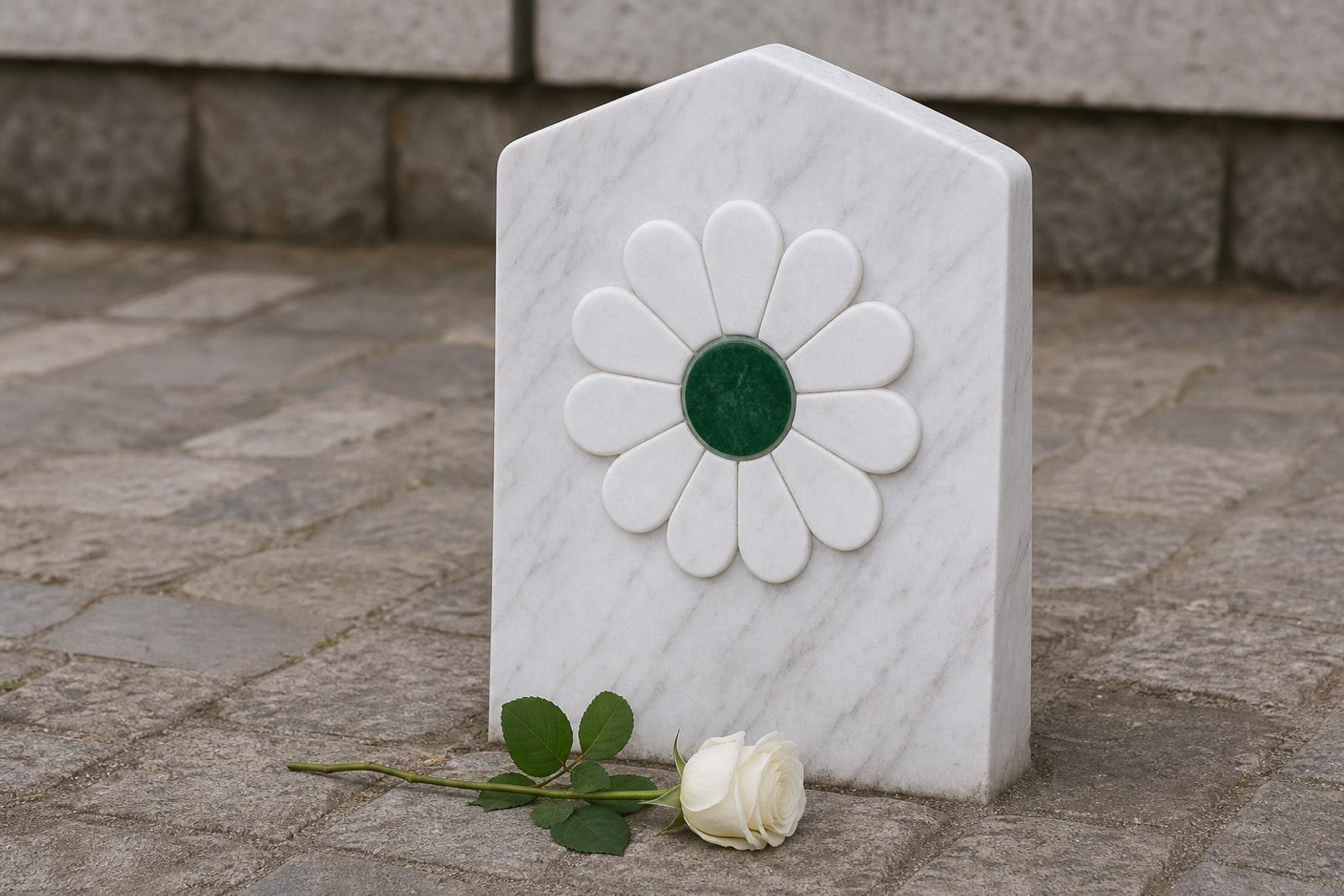
Luxembourg's prime minister, Luc Frieden, marked the Srebrenica genocide on Sunday alongside Bosnia and Herzegovina's foreign minister, Elmedin Konaković, at a commemoration in the Grand Duchy honouring the more than 8,000 Bosniak men and boys murdered in July 1995 — the worst mass killing on European soil since the Second World War.
The ceremony, held on 28 June and organised by the Srebrenica Luxembourg committee, brought together senior officials and representatives of the "Mothers of Srebrenica", the association of survivors and relatives that has spent three decades preserving the victims' memory and pressing for justice, according to the prime minister's office. Frieden was due to receive a handcrafted artwork recognising Luxembourg's role as a co-sponsor of the 2024 United Nations resolution that created an international day of remembrance for the genocide. The gathering came two weeks before 11 July, the date now formally observed worldwide, and 31 years after the killings.
A UN "safe area" that became a killing field
In July 1995, Bosnian Serb forces under General Ratko Mladić overran Srebrenica, an eastern enclave that the UN Security Council had declared a protected "safe area" and where lightly armed Dutch peacekeepers were stationed. Over several days, men and boys were separated from their families, executed and buried in mass graves; the rest of the population was expelled.
Two international courts have since ruled the killings a genocide. The International Criminal Tribunal for the former Yugoslavia (ICTY) and the International Court of Justice both found that genocide was committed at Srebrenica. Mladić was sentenced to life imprisonment in 2017, according to Human Rights Watch, and the wartime Bosnian Serb political leader Radovan Karadžić — convicted of the Srebrenica genocide in 2016 — had his sentence increased to life on appeal in 2019.
Luxembourg's place on the record
Luxembourg co-sponsored UN General Assembly Resolution 78/282, adopted on 23 May 2024, which designated 11 July as the International Day of Reflection and Commemoration of the 1995 Genocide in Srebrenica. The text, put forward by Germany and Rwanda with more than 30 co-sponsors, passed with 84 votes in favour, 19 against and 68 abstentions, and condemned any denial of the genocide as a historical event.
The vote laid bare how contested the memory remains: Serbia and the Bosnian Serb leadership lobbied hard against it, casting the measure as divisive rather than commemorative. The UN High Commissioner for Human Rights, Volker Türk, framed the stakes differently at the time.
The resolution is all the more important given the persistent revisionism, denial of the Srebrenica genocide and hate speech by high-level political leaders in Bosnia and Herzegovina, as well as in neighbouring countries.
For Luxembourg, a small founding member of the European Union, co-sponsorship was a low-cost but pointed signal: a vote on the side of judicially established fact at a moment when those facts are openly contested in parts of Europe. A "Flower of Srebrenica" memorial — the genocide's white-and-green emblem — was established in the country in 2025 in cooperation with city authorities.
Why the memory is still political
Three decades on, Srebrenica remains a live test of the EU's credibility in the Western Balkans rather than a settled chapter of history. Bosnia is an official candidate for membership; EU leaders agreed in March 2024 to open accession negotiations once the country delivers reforms on its institutions, the rule of law and fundamental rights. Brussels has simultaneously warned that political turmoil in Republika Srpska, the Serb-majority entity, is jeopardising that path.
At the centre of the turmoil is Milorad Dodik, the entity's veteran leader, who has repeatedly denied that the killings amounted to genocide and glorified those convicted of war crimes. In February 2025 a Bosnian court convicted him of defying the international High Representative; his one-year prison sentence was commuted to a fine and he was barred from office for six years. He announced in September that he was stepping down. The episode underscored how denial and secessionist pressure continue to shadow Bosnia's European prospects.
The European Commission's president, Ursula von der Leyen, drew the link explicitly when she marked the 30th anniversary in 2025, condemning attempts to rewrite the past and tying remembrance to enlargement:
"We firmly reject and condemn any denial, distortion, or minimisation of the Srebrenica genocide, as well as the glorification of war criminals," she said, before addressing Bosnians directly: "the European Union stands with you. We remain fully committed to supporting your country on its path toward EU membership."
A small state's signal
For a Grand Duchy of fewer than 700,000 people, hosting Bosnia's top diplomat and the Mothers of Srebrenica is a modest act with deliberate weight. By placing a sitting prime minister at the commemoration, Luxembourg lends its name to the proposition that the EU's enlargement promise and its insistence on accountability are inseparable — and that the lessons of 1995 still bear on European security today. The Srebrenica Luxembourg committee's annual gathering, once a diaspora affair, has become a fixture on the official calendar precisely because the questions it raises remain unresolved across the Balkans.
Frequently asked
- What happened at Srebrenica in 1995?
- In July 1995, Bosnian Serb forces overran Srebrenica, a UN-declared 'safe area' in eastern Bosnia, and killed more than 8,000 Bosniak men and boys. The ICTY and the International Court of Justice have both ruled the massacre a genocide.
- Why did Luxembourg's prime minister attend the commemoration?
- Luc Frieden joined the ceremony, organised by the Srebrenica Luxembourg committee, to honour the victims and to mark Luxembourg's co-sponsorship of the 2024 UN resolution establishing an international day of remembrance. He was joined by Bosnia's foreign minister, Elmedin Konaković.
- How does Srebrenica relate to Bosnia's EU membership bid?
- Bosnia is an EU candidate, and the EU agreed in 2024 to open accession talks subject to reforms. Continued genocide denial and political crisis in Republika Srpska are seen by Brussels as obstacles, making remembrance a test of EU credibility in the Balkans.
Sources(10)
- 1Luc Frieden à la commémoration en mémoire des victimes du génocide de SrebrenicaLe gouvernement luxembourgeois (gouvernement.lu) · gouvernement.lu
- 2U Luksemburgu komemorativni skup povodom 31. godišnjice genocida u SrebreniciTimes.ba · times.ba
- 3Statement by President von der Leyen marking 30 years since the Srebrenica genocideEuropean Commission (DG Enlargement) · enlargement.ec.europa.eu
- 4UN establishes International Day of reflection for Srebrenica genocideUN News · news.un.org
- 5General Assembly Adopts Resolution on Srebrenica Genocide, Designating International Day of Reflection, CommemorationUnited Nations Meetings Coverage · press.un.org
- 6United Nations General Assembly Resolution 78/282Wikipedia · en.wikipedia.org
- 7These Countries voted for the Resolution on the Srebrenica genocide in the UN General AssemblySarajevo Times · sarajevotimes.com
- 8ICTY/Bosnia: Karadzic Convicted for Srebrenica GenocideHuman Rights Watch · hrw.org
- 9ICTY/Bosnia: Life Sentence for Ratko MladicHuman Rights Watch · hrw.org
- 10Bosnia and Herzegovina: secessionism in the Republika SrpskaUK House of Commons Library · commonslibrary.parliament.uk
Related by topic