Sanctions enforcement
France jails tanker captain in first criminal case over Russia's 'shadow fleet'
A Brest court handed the captain of the stateless tanker Boracay a one-year sentence — the first criminal penalty in Europe's drive to police Russia's sanctions-dodging fleet.
By Camille Reuter · · 4 min read
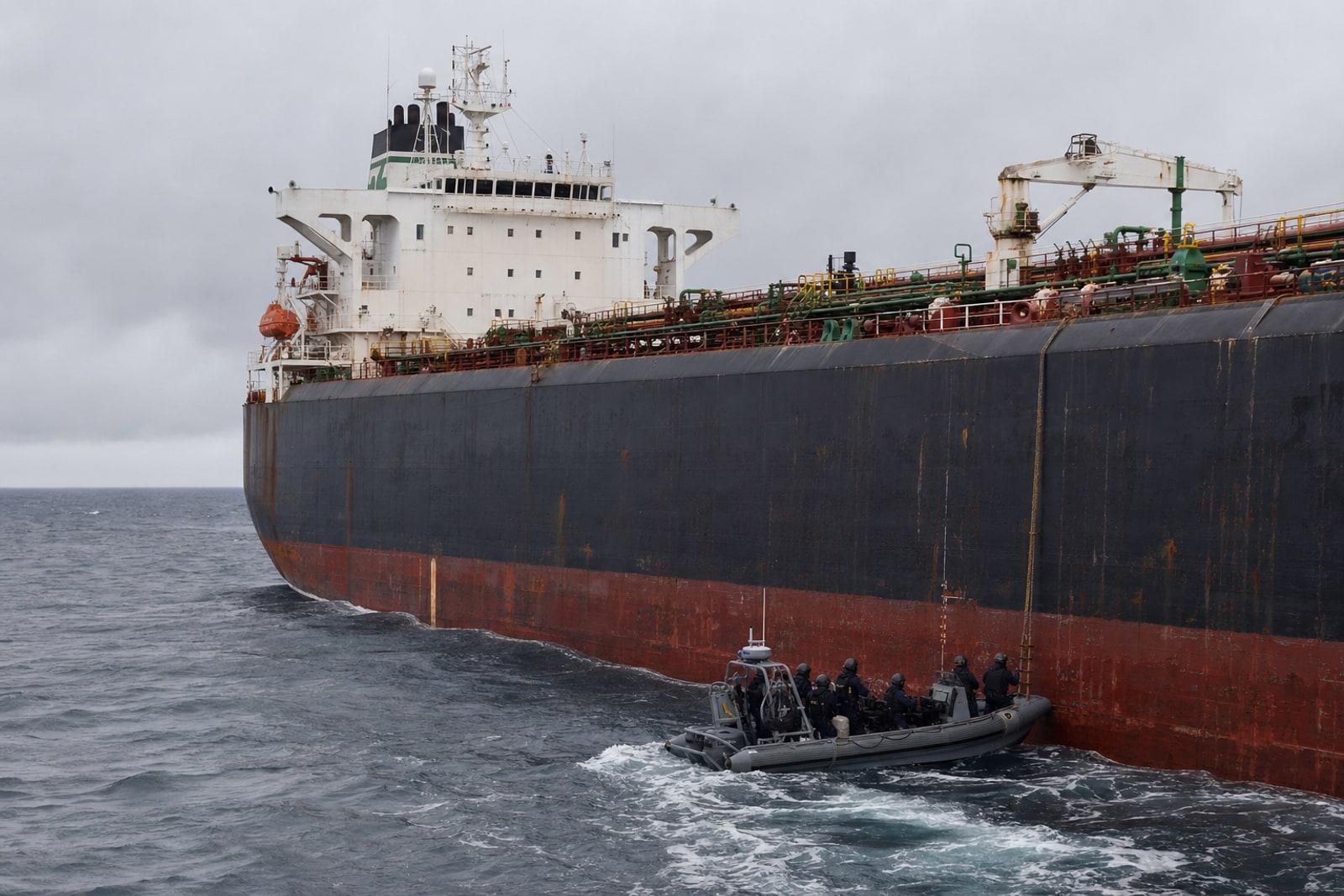
France has secured the first criminal conviction in Europe arising from its effort to police Russia's so-called shadow fleet, after a court in Brittany jailed the captain of an oil tanker that navy commandos boarded off the French coast last autumn. The case has become a test of whether the European Union can turn its sweeping paper sanctions into enforcement that bites at sea.
On 30 March 2026, the correctional court in Brest sentenced Chen Zhangjie, a 39-year-old Chinese national who captained the tanker Boracay, to one year in prison and a €150,000 (about $172,000) fine, and issued a warrant for his arrest. He was tried in absentia, having left France with his ship. His lawyers said they would appeal.
A stateless tanker, boarded off Brittany
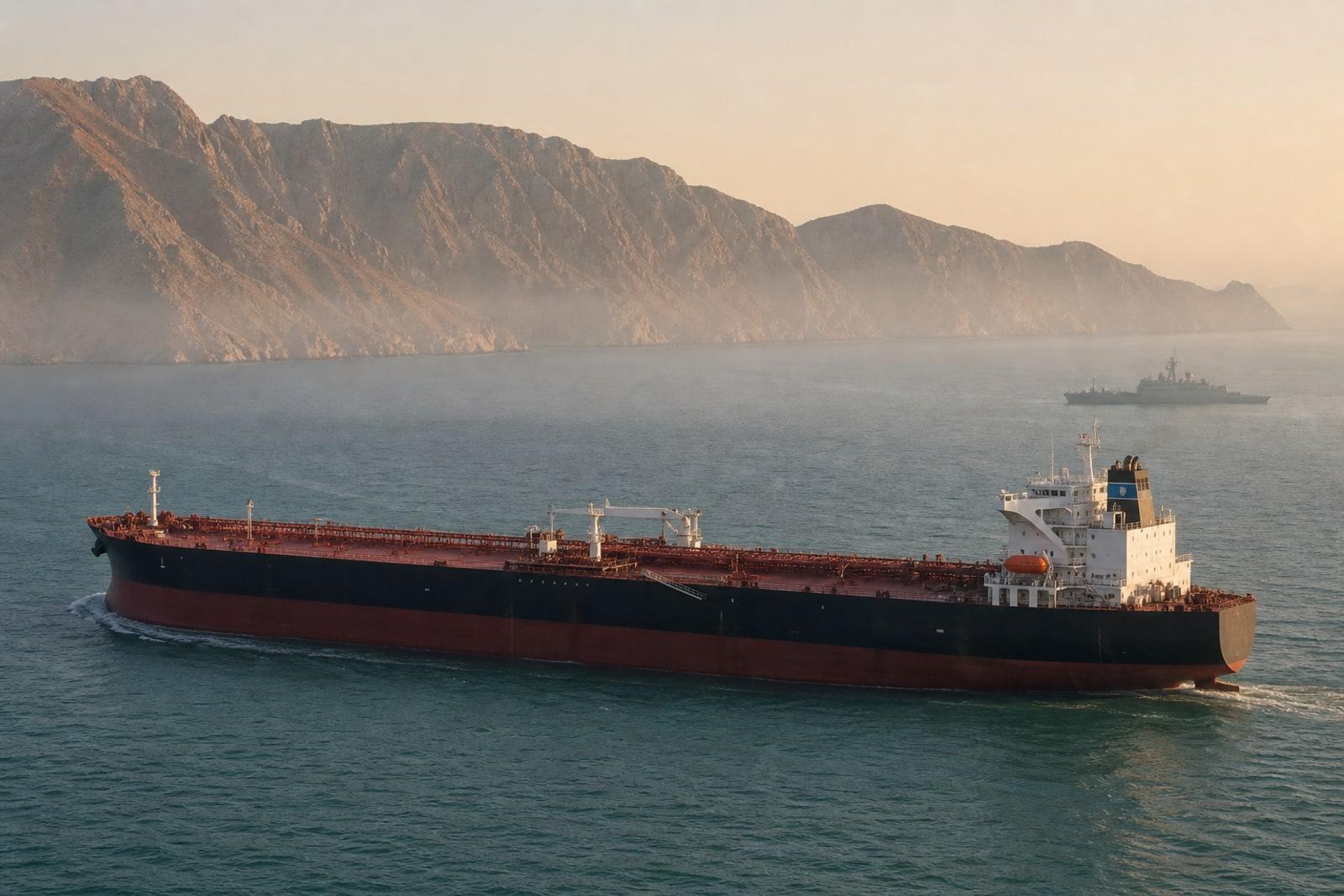
The Boracay — an ageing Aframax-class crude carrier that has also sailed under the names Kiwala and Pushpa, and was at various points reflagged or renamed — had loaded Russian crude at the Baltic port of Primorsk around 20 September 2025, reportedly bound for India. The vessel has been under EU sanctions since October 2024 and UK sanctions since February 2025 for carrying petroleum of Russian origin.
On 27 September, acting on intelligence linking the ship to Russian "hybrid" activity, French Navy commandos boarded it in international waters off Ushant, at the western tip of Brittany. The tanker was flying no flag at the time. France held it at anchor off Saint-Nazaire, detained the captain and first officer, then released the vessel on about 3 October, allowing it to resume its voyage, according to ship trackers.
Prosecutors said the boarding was anything but routine. French personnel "faced particular hostility from the captain", deputy prosecutor Gabriel Rollin told the court, forcing a manoeuvre that he said could have caused an accident. The captain was prosecuted for refusing to comply with the orders of French authorities and for failing to prove the ship's nationality. His defence argued the events occurred in international waters and that France therefore lacked jurisdiction — a claim the court rejected.
The legal hook: a ship without a flag
France leaned on a long-standing principle of the law of the sea: every merchant ship must fly a flag and be able to prove the nationality of its registry. A vessel that cannot — a stateless ship — loses the protection a flag state confers and can be stopped and inspected. By treating the Boracay as flagless, French forces gave themselves a lawful basis to board a vessel that would otherwise sit beyond their reach in international waters.
That distinction matters for the wider campaign. Most shadow-fleet tankers keep sailing precisely because they hop between obscure flags of convenience and opaque insurers, leaving European states little legal handle short of a port call. France's case suggests one workable lever: when a sanctioned ship's paperwork unravels, its flag can too.
A front-line test for EU sanctions
The shadow fleet is the loose armada of older, often uninsured tankers that Russia uses to move oil around the price cap imposed by the Group of Seven and the EU, designed to throttle the Kremlin's energy revenues. Brussels has steadily widened its blacklist: the EU's 19th sanctions package, adopted on 23 October 2025, added 117 vessels and brought the total of EU-designated shadow-fleet ships to 557, each barred from EU ports and from a broad range of maritime services. The bloc sanctioned a further 41 vessels on 18 December.
We want to increase pressure on Russia to convince it to return to the negotiating table.
President Emmanuel Macron, speaking after the Boracay's interception, framed the crackdown in those terms, estimating that the shadow fleet finances "30 to 40 percent" of Russia's war effort — "more than 30 billion euros". European Commissioner Maria Luís Albuquerque cast the latest package the same way, saying the bloc was "deploying a very wide range of additional measures to weaken Russia's faltering economy even further".
The stakes extend beyond Moscow's balance sheet. Many of these tankers are decades old and carry no recognised insurance, raising the risk of a spill in some of Europe's busiest and most crowded waterways. They have also been entangled in security scares: the Boracay was sailing off Denmark around 22 September, when drones disrupted Copenhagen Airport, and was named as a possible launch site. Macron said he could not rule out a link but lacked proof; Moscow denied any involvement.
What comes next
Russia has dismissed Western interdictions as unlawful. President Vladimir Putin branded the French operation "piracy" and said the tanker had been "seized in neutral waters without any justification". Yet a string of European states — France, alongside Baltic and Nordic governments — have grown bolder about inspecting suspect tankers in or near their waters, betting that the legal and reputational costs will deter owners and crews.
The Brest verdict will not, by itself, beach the shadow fleet. The Boracay sailed on, and its captain is unlikely to serve his sentence. But by attaching personal criminal liability to obstruction at sea, France has signalled that the men on the bridge — not just the ships and shell companies — can now be held to account. For an EU that has written its sanctions faster than it can enforce them, that is the more consequential precedent.
Frequently asked
- What is the Boracay?
- The Boracay is an ageing Aframax crude oil tanker, also known at times as Kiwala and Pushpa, that has been under EU sanctions since October 2024 and UK sanctions since February 2025 for carrying Russian oil. France boarded it off Brittany in September 2025.
- Why was the captain convicted?
- Captain Chen Zhangjie was prosecuted for refusing to comply with French authorities' orders during the boarding and for failing to prove the ship's nationality. The Brest court rejected his defence that France lacked jurisdiction and sentenced him to a year in prison and a €150,000 fine.
- What is Russia's 'shadow fleet'?
- It is a network of mostly old, often uninsured tankers using flags of convenience to move Russian oil around the G7/EU price cap, helping Moscow keep earning energy revenue despite sanctions. The EU has designated 557 such vessels.
- Why does this case matter for the EU?
- It is regarded as Europe's first criminal penalty tied to shadow-fleet enforcement, showing the bloc can attach personal liability to obstruction at sea — a test of whether its sanctions can be made to bite amid energy-security and maritime-safety concerns.
Sources(12)
- 1France investigates suspected shadow-fleet oil tanker anchored off its coastFrance 24 · france24.com
- 2France detains Russian 'shadow' tanker to disrupt war in UkraineAl Jazeera · aljazeera.com
- 3Russia-linked 'shadow fleet' oil tanker stopped by France resumes voyageFrance 24 · france24.com
- 4France hands captain of suspected Russian 'shadow fleet' tanker one-year jail sentenceFrance 24 · france24.com
- 5French Court Sentences Shadow Fleet Tanker's Captain to One Year in PrisonThe Maritime Executive · maritime-executive.com
- 6France Starts Trial of Shadow Tanker Captain Charged with Disobeying OrdersThe Maritime Executive · maritime-executive.com
- 7French court convicts Chinese captain of oil tanker linked to Russian shadow fleetSouth China Morning Post · scmp.com
- 8France detains sanctioned Russian 'shadow fleet' tanker BoracayMilitarnyi · militarnyi.com
- 9EU adopts 19th package of sanctions against RussiaEuropean Commission · finance.ec.europa.eu
- 1019th package of sanctions against Russia: EU targets Russian energy, third-country banks and crypto providersCouncil of the EU · consilium.europa.eu
- 11Council sanctions 41 vessels of the Russian shadow fleetCouncil of the EU · consilium.europa.eu
- 12France sentences tanker captain as EU cracks down on Russian shadow fleetE&E News / POLITICO · eenews.net
Related by topic