EU & Ukraine
EU moves to bar newly arriving military-age Ukrainian men from refuge
The European Commission proposes extending Ukrainians' protection to 2028 while shutting out newly arriving men aged 23-60, at Kyiv's request — a measure that reaches Luxembourg's protection regime.
By Léa Hoffmann · · 5 min read
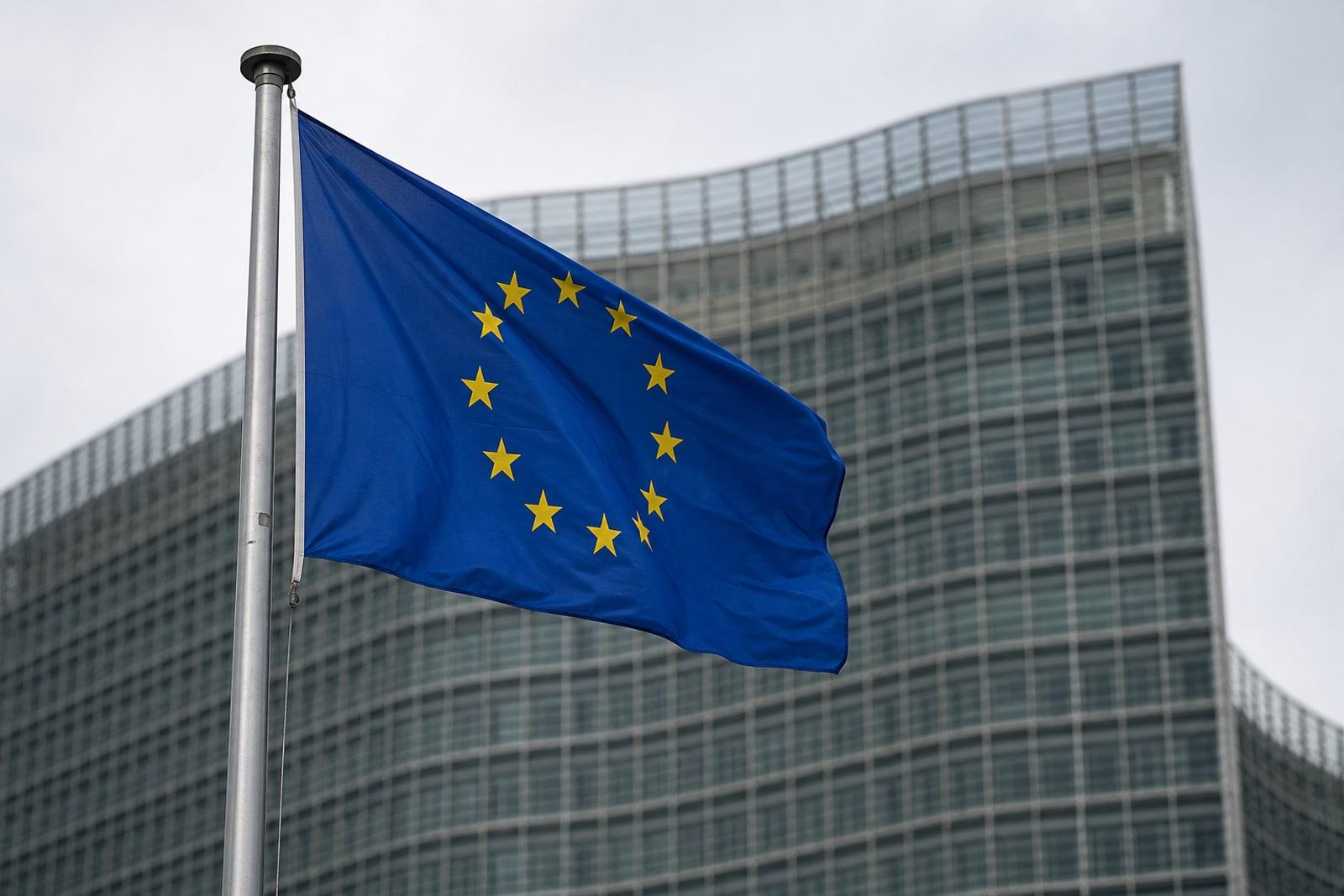
The European Commission on Friday proposed prolonging the European Union's wartime shelter for people fleeing Ukraine until March 2028, while for the first time moving to shut out a specific group: newly arriving men of military age who are not legally allowed to leave their country. The plan, requested by Kyiv to relieve its army's manpower shortage, recasts the bloc's flagship gesture of solidarity as the war grinds into a fifth year — and sets a test of European asylum policy that reaches down to Luxembourg.
Under the proposal, temporary protection would be extended by a year to 4 March 2028 for the roughly 4.4 million Ukrainians who already hold it. But it would not, in the Commission's words, be granted as a rule to newly arriving people who are not authorised by Ukrainian authorities to leave the country because of their military obligations — in practice, men aged 23 to 60, who are barred from crossing the border under Ukraine's martial law.
What Brussels is proposing
The mechanism runs through the Temporary Protection Directive, the 2001 instrument activated for the first time on 4 March 2022 to grant Ukrainians collective protection without individual asylum claims. The Commission's text reshapes who qualifies; the change must still be adopted by member states in the Council by qualified majority — at least 15 of the 27 governments representing 65% of the EU population.
Several carve-outs would remain. According to reporting on the proposal, men with disabilities or deemed unfit for service, fathers of three or more children under 18, and full-time carers for sick relatives would still be eligible. Men shut out of the scheme could also still lodge an individual asylum application. Crucially, no one already granted protection would lose it on account of their age.
The Commission paired the restriction with a softer instrument: a Voluntary Return and Recovery Programme Pilot to help Ukrainians who choose to go home with jobs, housing and education. Internal Affairs Commissioner Magnus Brunner was blunt about the origin of the exclusion.
This is something the Ukrainians asked us to do.
The surge that prompted it
The trigger lies in a decision taken in Kyiv, not Brussels. From 28 August 2025, Ukraine let men aged 18 to 22 leave the country freely under martial law — an initiative of President Volodymyr Zelensky framed as a way for young Ukrainians to study abroad and return to rebuild. The effect on EU borders was immediate.
- EU grants of temporary protection jumped to 79,205 in September 2025, a 49% rise on the month and the highest figure since August 2023, according to figures cited by The Irish Times.
- Poland's Border Guard recorded about 53,000 checks of Ukrainian men aged 18-22 between 28 August and 19 September 2025 — nearly 40,000 on entry and more than 13,000 on exit — while stressing these were border checks, not counts of unique individuals.
- The guard said departures of that age group rose more than tenfold in the first week after the rules changed.
The numbers landed in the middle of an awkward debate: Ukraine's army is heavily outnumbered and short of troops, even as its government widened the door for its youngest men to leave. Capitals took notice. German Chancellor Friedrich Merz said he had raised it directly with Kyiv.
"I asked the Ukrainian president to ensure that young men from Ukraine in particular do not come to Germany in ever-increasing numbers, but rather serve in their own country," Merz said, in remarks reported by The Irish Times.
Solidarity against manpower
The proposal exposes a fault line that has run through European policy since 2022: the bloc's instinct to shelter Ukrainians versus member states' migration politics and Kyiv's need to keep men in uniform. Human-rights monitors warned against narrowing the welcome. The Council of Europe's Commissioner for Human Rights, Michael O'Flaherty, has argued that conditions for safe return do not exist.
"There are no safe areas in Ukraine. We must not forget the most vulnerable people, and human dignity must remain at the center of every decision," O'Flaherty said.
Eurostat's snapshot underlines what is at stake. At the end of February 2026, 4.40 million people held temporary protection across the EU — 43.5% adult women, 30.2% minors and 26.3% adult men. Germany hosted the most (about 1.27 million, 28.8% of the EU total), followed by Poland (966,595) and Czechia (399,630). Ukrainians made up 98.4% of all beneficiaries.
What it means for Luxembourg and the Greater Region
Luxembourg is a small but settled part of that map. Eurostat recorded a net decline of just five beneficiaries (-0.1%) in the Grand Duchy in February 2026 — one of only three member states where numbers fell that month — pointing to a community of roughly 5,000 people living under temporary protection. Because the regime is common to the whole bloc, the rules written in Brussels set who may register in Luxembourg, who may register across the border in the German Länder, Belgian Wallonia and French Lorraine that make up the Greater Region, and who is instead routed into the slower individual asylum system.
For the Grand Duchy, the practical change is narrow but real: a newly arriving Ukrainian man aged 23 to 60 who reached Luxembourg without authorisation to leave Ukraine would, if the Council adopts the text, no longer be waved into temporary protection at the immigration desk, but would have to seek asylum case by case. Those already protected — the large majority of Luxembourg's Ukrainian arrivals, who came as women, children and older men — would be unaffected, and the extension to 2028 gives them another year of legal certainty over residence, work and schooling.
The proposal now passes to the 27 governments. With a qualified majority required and human-rights bodies already pushing back, the coming weeks will show whether the EU's wartime promise bends to Kyiv's battlefield arithmetic — and how far Luxembourg's own protection regime moves with it.
Frequently asked
- Who would be excluded from EU temporary protection under the proposal?
- Newly arriving Ukrainian men of military age — broadly those aged 23 to 60 who are not authorised to leave Ukraine under martial law. Exemptions are foreseen for men with disabilities or unfit for service, fathers of three or more children under 18, and full-time carers. Those already granted protection keep it, and excluded men can still apply for asylum individually.
- Why is Kyiv asking the EU to restrict protection for its own citizens?
- Ukraine's army is short of troops as the war enters its fifth year. After Kyiv eased exit rules for men aged 18-22 in August 2025 and arrivals across the EU rose sharply, the government asked Brussels to stop offering automatic protection to military-age men so more of them remain available for national defence.
- How would this affect Luxembourg and the Greater Region?
- Temporary protection is an EU-wide regime, so the rule set in Brussels applies in Luxembourg and across the Greater Region. Roughly 5,000 people hold the status in the Grand Duchy. Already-protected residents are unaffected and gain a year's extension to 2028, but newly arriving men aged 23-60 would have to seek asylum case by case rather than register for protection.
- Is the change already in force?
- No. The European Commission tabled the proposal on 26 June 2026. It must be adopted by member states in the Council by qualified majority — at least 15 of 27 governments representing 65% of the EU population — and human-rights bodies including the Council of Europe have criticised scaling back protection.
Sources(10)
- 1Commission proposes to extend temporary protection of people fleeing Ukraine for an additional yearEuropean Commission – Migration and Home Affairs · home-affairs.ec.europa.eu
- 2EU to refuse refuge to military-age Ukrainian menRTÉ · rte.ie
- 3Brussels to exclude military-age Ukrainian men from temporary protection schemeEuronews · euronews.com
- 4Ukraine asks the EU to stop refuge for men aged 23-60 to ease manpower shortageTheJournal.ie · thejournal.ie
- 5Ukraine's decision to let young men leave sparks alarm in EuropeThe Irish Times · irishtimes.com
- 6Temporary protection for 4.40 million in February 2026Eurostat · ec.europa.eu
- 7Travel abroad for men aged 18-22: new rules from August 28, 2025Visit Ukraine · visitukraine.today
- 8Young Ukrainians are crossing the Polish border en masse: statistics from border guardsPRM.ua · prm.ua
- 9Council of Europe Commissioner: Ukrainians still need temporary protectionUkrainian World Congress · ukrainianworldcongress.org
- 10EU member states agree to extend temporary protection for refugees from UkraineCouncil of the European Union · consilium.europa.eu
Related by topic