Europe
EU moves to extend Ukrainians' protected status to 2028
The European Commission has proposed prolonging temporary protection until 4 March 2028, preserving residence, work and welfare rights for some 4.4 million Ukrainians, several thousand in Luxembourg.
By Léa Hoffmann · · 4 min read
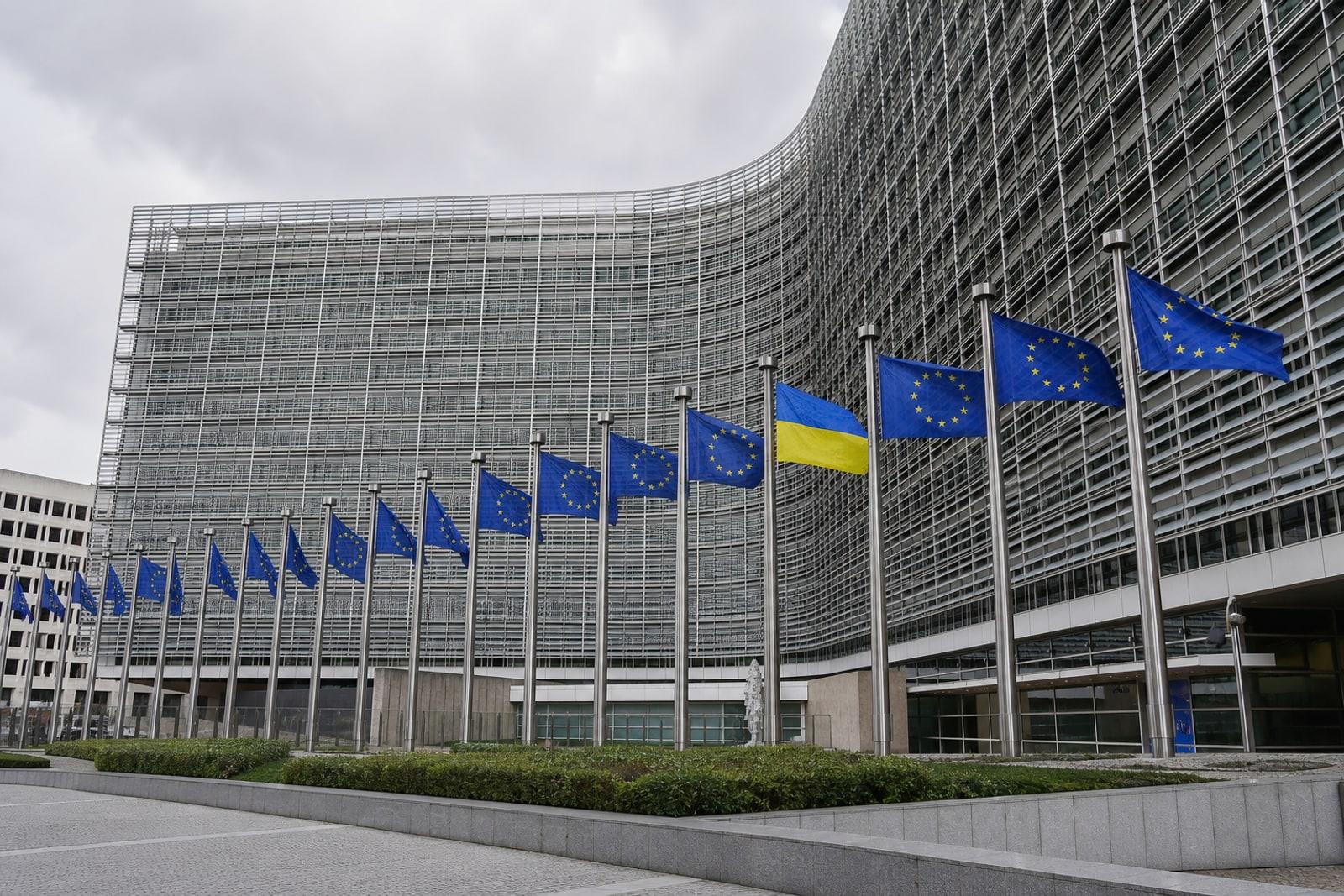
The European Commission moved on 26 June to extend the legal status that has sheltered millions of Ukrainians across the European Union since 2022, proposing to keep the bloc's temporary protection scheme in place for a further year — until 4 March 2028. The plan would preserve immediate access to residence, work, schooling, healthcare and welfare for some 4.4 million people, several thousand of them living in Luxembourg.
The proposal, presented in Brussels by Magnus Brunner, the European commissioner for internal affairs and migration, would push back a deadline currently set at 4 March 2027. Without an extension, the protection — and the rights attached to it — would lapse next spring.
A one-year extension, with a new caveat
Temporary protection rests on the EU's Temporary Protection Directive, a 2001 law conceived after the Balkan wars but never used until the bloc triggered it for the first time on 4 March 2022, days after Russia's full-scale invasion. It grants displaced people an immediate, collective right to stay without each having to file an individual asylum claim, and it has been renewed year by year ever since.
This year's proposal carries a significant change. As a rule, the Commission says, protection would no longer be granted to people who leave Ukraine after the decision takes effect if they are not authorised by Kyiv to do so under the country's military-mobilisation rules. The restriction targets only new arrivals; it would not touch the millions already registered, whose status would roll over regardless of age.
Our proposal provides that temporary protection should not be granted to newly arriving persons who are not allowed to leave Ukraine because of their military obligations.
Brunner framed the carve-out as a request from Kyiv, telling reporters the plan "takes into account Ukraine's evolving defence needs." The Commission cast the wider extension as a matter of legal certainty, arguing that the need for protection remains clear.
The numbers underline the scale. According to Eurostat, 4.37 million people held temporary protection in the EU at the end of April 2026. Germany hosted by far the most, with about 1.28 million, followed by Poland with 971,255 and Czechia with 384,435.
The proposal is not yet law. It must be adopted by the Council of the European Union, where it requires a qualified majority — at least 15 of the 27 member states representing 65% of the EU population. Ministers are expected to take it up in July, though a final decision could slip to September.
What it means in Luxembourg
For the Grand Duchy, the stakes are concrete. Luxembourg had already extended its own scheme to 4 March 2027: on 13 February 2026 the Ministry of Home Affairs and the Directorate-General for Immigration confirmed the renewal and began reissuing the biometric residence cards that secure beneficiaries' right to remain, to work and to material assistance. A Brussels extension to 2028 would set the next horizon.
Luxembourg has absorbed a steady caseload since 2022. Figures cited by Chronicle.lu show:
- 4,123 people granted temporary protection since the war began;
- 1,480 housed across 12 reception structures run by the National Reception Office (ONA);
- 1,296 pupils taught in Luxembourg schools, with €29 million allocated to their schooling.
The flow has since shifted from arrivals to renewals. In the first five months of 2026, Luxembourg issued 3,953 temporary-protection decisions — only 334 of them new grants, against 3,583 renewals — a sign that the population the EU is now legislating for is largely settled, in homes, classrooms and jobs.
Still no post-war framework
What the extension does not provide is a durable settlement. More than four years after the directive was first invoked, the EU is still renewing protection in annual increments rather than offering displaced Ukrainians a permanent legal route. Brussels has begun to sketch the exit: the Commission paired its proposal with a coordinated "transition" approach and a Voluntary Return and Recovery Programme pilot, offering practical help with jobs, housing and education for those who choose to go home. The Council adopted a recommendation on transitioning out of temporary protection in September 2025.
For now, that future remains conditional on a war that has not ended. The Commission has signalled it could suspend protection earlier if conditions on the ground change, but it has equally left the door open to renewing again. Until a peace settlement and a permanent status materialise, the legal lives of millions of Ukrainians — including those who have built new ones in Luxembourg — continue to be measured one year at a time.
Frequently asked
- Until when would Ukrainians' temporary protection be extended?
- The European Commission has proposed extending it to 4 March 2028, one year beyond the current expiry of 4 March 2027. The plan still needs to be adopted by the Council of the EU.
- What is the new restriction in the proposal?
- As a rule, protection would no longer be granted to people who leave Ukraine after the decision takes effect if Kyiv has not authorised their departure under military-mobilisation rules. It applies only to new arrivals; people already registered keep their status.
- How many Ukrainians does this affect in Luxembourg?
- Luxembourg hosts several thousand beneficiaries. Chronicle.lu reported 4,123 people granted temporary protection since 2022, and the country processed 3,583 renewals in the first five months of 2026. Its national scheme already runs to 4 March 2027.
- What legal basis underpins the scheme?
- The EU Temporary Protection Directive of 2001, triggered for the first time on 4 March 2022 after Russia's full-scale invasion. It grants displaced people immediate residence, work, schooling, healthcare and welfare without individual asylum claims.
Sources(14)
- 1Commission proposes to extend temporary protection of people fleeing Ukraine for an additional yearEuropean Commission - Migration and Home Affairs · home-affairs.ec.europa.eu
- 2Commission proposes to extend temporary protection of people fleeing Ukraine for an additional year (press release IP/26/1462)European Commission · ec.europa.eu
- 3Proposal for a Council Implementing Decision extending temporary protection until 4 March 2028, COM(2026) 345 finalEuropean Commission · home-affairs.ec.europa.eu
- 44.37 million under temporary protection in April 2026Eurostat · ec.europa.eu
- 5Temporary protection for 4.40 million in February 2026Eurostat · ec.europa.eu
- 6EU member states agree to extend temporary protection for refugees from UkraineCouncil of the EU (Consilium) · consilium.europa.eu
- 7European Commission seeks to extend temporary protection for Ukrainians, but not newly arrived military-age menEuropean Pravda · eurointegration.com.ua
- 8EU Proposes Extending Protection for Ukrainians Until 2028, With Limits for Military-Age MenOutlook India (Reuters) · outlookindia.com
- 9EU Proposes Extending Protection for Ukrainians Until 2028 – But Not for Draft EvadersKyiv Post · kyivpost.com
- 10EU proposes to extend temporary protection for Ukrainian refugees until 2028Eunews · eunews.it
- 11Luxembourg Extends Temporary Protection Scheme for Ukrainian RefugeesChronicle.lu · chronicle.lu
- 12Luxembourg's Aid to Ukraine ExplainedChronicle.lu · chronicle.lu
- 13Luxembourg Receives 110 Asylum, 74 Temporary Protection Applications in MayChronicle.lu · chronicle.lu
- 14Requesting temporary protectionGuichet.lu (Luxembourg Government) · guichet.public.lu
Related by topic