Aviation safety
EASA orders urgent A380 wing checks, grounding five Emirates jets
An emergency EU directive requires inspections of 16 superjumbos after cracks were found in the wing mid-spar of the world's largest passenger jet.
By Marc Weber · · 4 min read
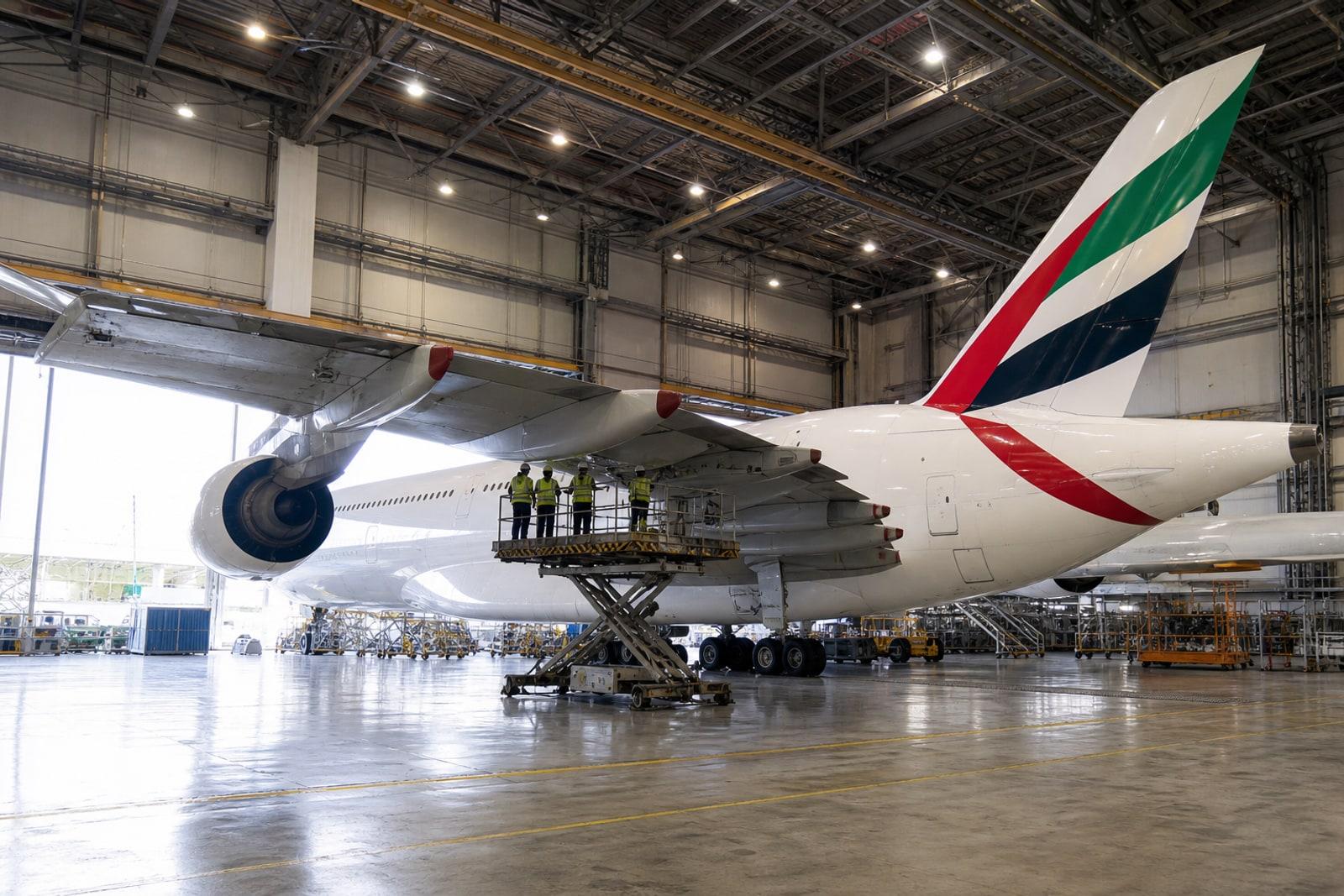
Europe's aviation regulator has ordered emergency inspections of 16 Airbus A380 superjumbos after cracks were found in a load-bearing part of the wing, forcing the world's biggest operator of the double-deck jet to pull aircraft from service for checks.
The European Union Aviation Safety Agency (EASA) issued Emergency Airworthiness Directive 2026-0119-E on 22 June, with effect from 24 June, after cracks were discovered during routine maintenance in the wing mid-spar — a structural beam inside the wing box that helps carry the aerodynamic loads generated in flight. Fifteen of the 16 affected aircraft are operated by Dubai-based Emirates and one by Australia's Qantas, according to Airbus.
Five of the jets, all Emirates aircraft, must be inspected before their next passenger flight, effectively grounding them until the checks are done. The remaining 11 may keep flying but must be inspected within 25 flight cycles. Operators have been told to obtain inspection procedures directly from Airbus and to report their findings within seven days, whether or not cracks are found.
It has been determined that the cracks found on certain aeroplanes could reduce the structural integrity of the wing.
The directive does not ground the global A380 fleet, and regulators have given no indication of an immediate risk across all aircraft. But emergency airworthiness directives from EASA are unusual, reserved for issues that could threaten an aircraft's airworthiness if left unchecked. The move places fresh scrutiny on a flagship product of Airbus, Europe's largest aerospace manufacturer, and on the safety of a fleet that flies long-haul routes used by travellers across the region.
What the inspections involve
The mid-spar runs lengthwise inside the wing and is one of the structures that distributes the stresses an aircraft endures in flight. EASA concluded that the cracks identified on some aircraft could weaken the wing, prompting the order for additional detailed inspections. Any aircraft found with cracks must remain on the ground until repairs directed by Airbus are completed.
Emirates said it would comply and move quickly, while seeking to limit the impact on its schedule.
"Emirates will comply and carry out the inspections required in accordance with the airworthiness directive," the airline said in a statement. "Inspections will commence within the next 48 hours, and any work required will be carried out before releasing aircraft to service. We remain in close contact with Airbus and the relevant authorities to minimise any disruption to the operating schedule."
Airbus said that, depending on the inspection results, it would assess with EASA whether repairs are necessary or whether the aircraft can return to service. Qantas said the directive would not affect its operations: its single affected aircraft, registered VH-OQI, was already undergoing heavy maintenance in Dresden, Germany, and was not in passenger service.
Why it matters for Emirates and Airbus
The stakes are highest for Emirates, which has built its global network around the A380. The carrier operates 116 of the jets — the world's largest A380 fleet and more than half of all the superjumbos still flying. Even a limited round of inspections concentrated on its aircraft carries the risk of schedule disruption on some of the busiest intercontinental routes.
For Airbus, the directive is an awkward reminder of the engineering challenges of the programme it once billed as the future of long-haul travel. The A380 entered service in 2007 as the largest passenger aircraft ever built, but slow sales led Airbus to halt production in 2021. With no more aircraft being made, the focus has shifted to keeping the existing fleet airworthy as it ages — and structural questions feed directly into the cost and practicality of doing so.
- Component: wing mid-spar, an internal structural beam in the wing box
- Aircraft affected: 16 — 15 Emirates, 1 Qantas
- Immediate checks: 5 Emirates jets before their next flight
- Deferred checks: 11 aircraft within 25 flight cycles
- Reporting: results to be filed within seven days
Not the first crack in the wing
Structural issues have shadowed the A380's wings before. In 2012, EASA ordered fleet-wide inspections after cracks were found in the wing rib feet — small brackets that connect the wing ribs to the wing skin — in a problem that ultimately required repairs across the global fleet. Later inspection rounds addressed cracking in outer wing spars, initially on early-production aircraft.
The latest directive narrows the focus to the mid-spar and to a sub-population of A380s with particular service histories rather than the entire fleet. Whether it remains a contained maintenance exercise or widens will depend on what the inspections over the coming weeks reveal — data that operators must now feed back to Airbus and EASA on a tight timetable.
Frequently asked
- What part of the A380 wing is cracked?
- The cracks were found in the wing mid-spar, a structural beam inside the wing box that helps distribute the aerodynamic loads an aircraft experiences in flight. EASA says the cracks could reduce the wing's structural integrity.
- How many aircraft are affected and who operates them?
- Sixteen A380s are covered by the EASA directive: 15 flown by Dubai-based Emirates and one by Qantas. Five Emirates jets must be inspected before their next flight; the other 11 within 25 flight cycles.
- Is the entire A380 fleet grounded?
- No. EASA did not ground the global fleet and has indicated no immediate risk across all aircraft. The directive targets specific aircraft, requiring checks and, where cracks are found, repairs directed by Airbus before the jets return to service.
- Has the A380 had wing problems before?
- Yes. In 2012, EASA ordered fleet-wide inspections after cracks were found in the wing rib feet, and later rounds addressed cracking in outer wing spars on early-production aircraft. The new directive focuses on the mid-spar.
Sources(7)
- 1Airbus under fresh scrutiny as EASA orders A380 inspections over wing cracksEuronews · euronews.com
- 2Emirates to urgently inspect A380 fleet after cracks found in wingsThe National · thenationalnews.com
- 3Emirates to Inspect Airbus A380 Fleet After Wing Crack Alert Triggers Urgent EASA Safety ChecksGulf News · gulfnews.com
- 4Airbus to inspect 16 A380s after cracks found on plane wingsThe Japan Times · japantimes.co.jp
- 5EASA orders urgent checks on 16 Airbus A380s over wing spar cracksAerospace Global News · aerospaceglobalnews.com
- 6EASA Orders Urgent Inspections on 16 Airbus A380s After Wing Spar Cracks FoundAviation Source News · aviationsourcenews.com
- 716 Airbus A380s Need Emergency Inspections After Cracks Discovered In Wing SparsSimple Flying · simpleflying.com
Related by topic