United Kingdom
Andy Burnham, Britain's likely next prime minister, sets out his stall as Starmer steps aside
Keir Starmer's resignation clears the path for the Greater Manchester mayor, freshly returned to Parliament, whose agenda of devolution, public control and steady EU ties now comes into view.
By Camille Reuter · · 4 min read
Britain is on course for its seventh prime minister in a decade. Sir Keir Starmer announced on 22 June that he would resign as Labour leader and prime minister, ending a months-long revolt inside his party and clearing the path for Andy Burnham, the Greater Manchester mayor who had returned to the House of Commons four days earlier. Burnham, the runaway favourite to succeed him, has wasted little time setting out the priorities of a government he does not yet lead.
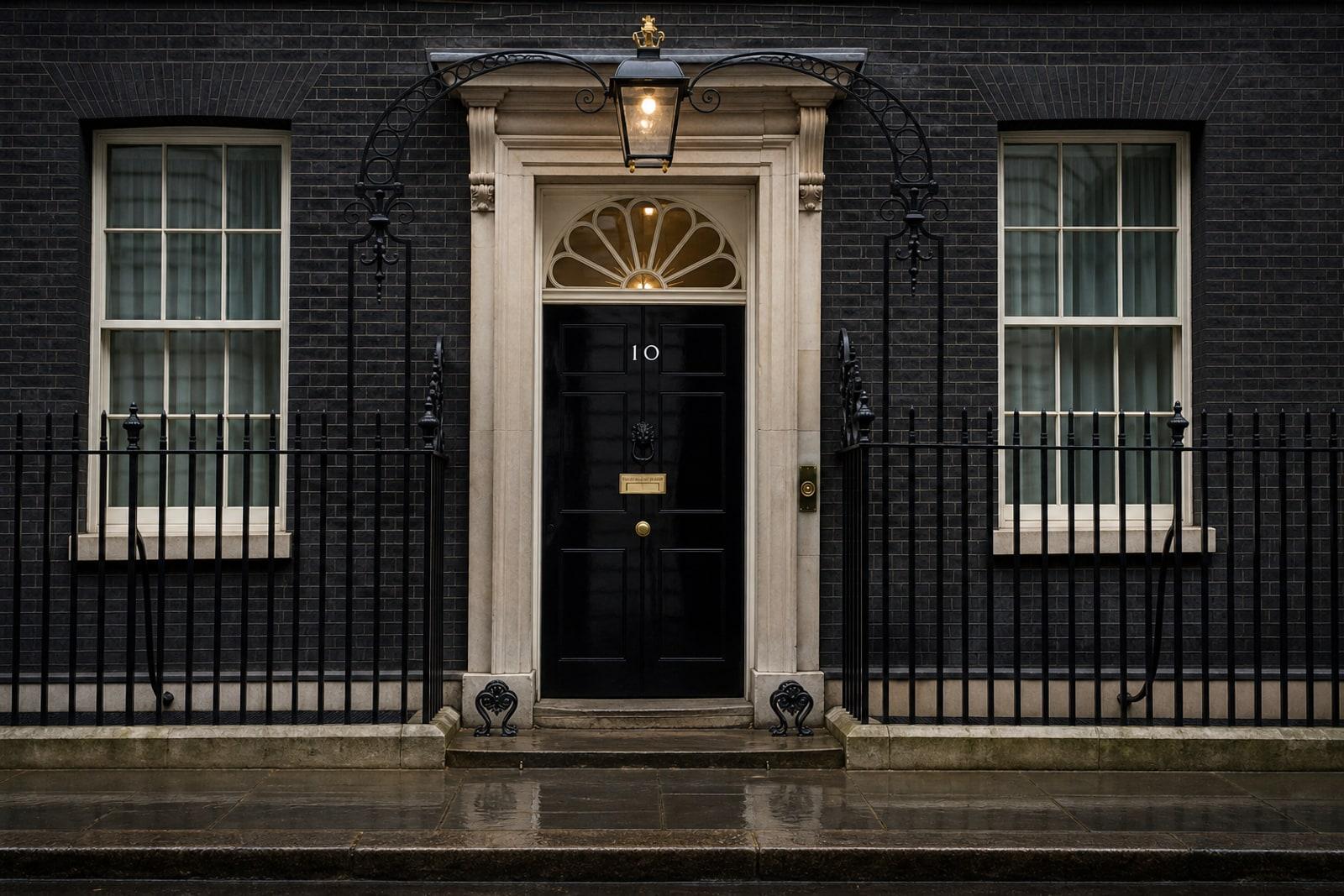
Starmer made the announcement outside 10 Downing Street, bowing to pressure that had built since Labour's heavy losses in the May local elections and the surge of Nigel Farage's Reform UK. He will remain in office until the party chooses a successor.
I have heard the answer of my parliamentary party to that question, and I accept that answer with good grace.
How the handover unfolded
The trigger was a by-election. On 18 June, Burnham won the seat of Makerfield in Greater Manchester with 54.8% of the vote and a majority of more than 9,200 over Reform UK, a stronger result than polls had predicted, on a turnout of 58.8% — the highest at a parliamentary by-election since 2019. The contest had been engineered for him: the sitting Labour MP, Josh Simons, stood down so that Burnham, who held no seat in Parliament, could re-enter the Commons and become eligible to lead the party.
Under a timetable set by Labour's National Executive Committee, nominations open on 9 July and close on 16 July, with a new leader expected to be in place before Parliament returns in September. Burnham is so far the only declared candidate; his most prominent potential rival, the former health secretary Wes Streeting, has said he will not stand. If no challenger emerges, Burnham could take office within weeks. “I will put myself forward as part of this process,” he told Sky News.
What a Burnham government would do
Burnham, 56, is a familiar figure in British politics. He was MP for Leigh from 2001 to 2017, served as health secretary under Gordon Brown, and has run Greater Manchester since 2017, winning three mayoral elections. He twice sought the Labour leadership, in 2010 and 2015, and lost both times.
His pitch is built on what he calls “Manchesterism” — the argument that the devolved, place-based model he has used in Greater Manchester should be scaled up to the country as a whole. Commentators and his own writing describe an agenda that pairs pro-business growth with greater public control over essential services. His stated priorities include:
- economic renewal and rebuilding public trust in politics;
- deeper devolution of powers and money from Whitehall to England's regions;
- a greater public stake in housing, energy, water and transport;
- constitutional reform, including replacing the House of Lords with an elected chamber of the nations and regions.
He has also tried to frame the moment in stark terms, warning that a failure to rebuild trust risks a more polarised politics. “Politics is getting more polarized,” he has said, cautioning that Britain risks drifting “towards the politics of the United States of America.” Farage, whose party finished second in Makerfield, has dismissed the manner of Burnham's likely ascent, arguing that a single by-election gives him no mandate to govern the country.
What it means for Europe — and Luxembourg
For the European Union, and for the Luxembourg communities with a stake in Britain, the most important signal is continuity. Burnham has stepped back from earlier remarks favouring EU membership; in May he said he was not proposing that the UK rejoin, aligning himself with Starmer's position that Britain will not re-enter the single market or the customs union. Analysts expect him to continue the incremental rapprochement already under way — a veterinary and agri-food agreement, closer cooperation on electricity and carbon markets, and regular attendance at European Political Community summits — rather than reopen the Brexit settlement.
That cautious course matters in Luxembourg, home to a financial sector closely tied to the City of London and to a long-established British community. Official statistics recorded 3,924 British nationals living in the Grand Duchy at the start of 2023, a figure held down by the many who took Luxembourg citizenship after Brexit. A government that keeps negotiating, but does not lurch in either direction, offers a measure of predictability to expatriates and to firms managing cross-Channel business — even as the larger question of Britain's long-term place in Europe stays unresolved.
For now, the formalities come first. Until Labour completes its contest, Starmer remains prime minister and Burnham an MP of a few days' standing — a leader-in-waiting setting out a programme he must still be handed the power to deliver.
Frequently asked
- Is Andy Burnham already the UK prime minister?
- No. As of late June 2026 Keir Starmer remains prime minister until Labour completes its leadership contest. Burnham is the frontrunner and only declared candidate, but the contest's nominations open on 9 July, and he could take office only after that.
- How did Andy Burnham return to Parliament?
- He won the Makerfield by-election in Greater Manchester on 18 June 2026 with 54.8% of the vote and a majority of more than 9,200 over Reform UK. The sitting Labour MP, Josh Simons, had resigned so Burnham could stand and become eligible to lead the party.
- Would a Burnham government change UK–EU relations?
- He signals continuity rather than rupture. Burnham has stepped back from earlier support for rejoining the EU and aligns with Starmer's line against re-entering the single market or customs union, while analysts expect him to keep pursuing incremental deals on areas such as agri-food and energy.
- Why does this matter for Luxembourg?
- Luxembourg's large financial centre is closely tied to the City of London, and official figures recorded 3,924 British nationals resident in the Grand Duchy at the start of 2023. A steady, predictable UK posture toward the EU affects both expatriates and cross-border business.
Sources(12)
- 1Why has Keir Starmer resigned as UK prime minister, and who will take over?Al Jazeera · aljazeera.com
- 2Keir Starmer resignation, UK to get seventh PM in a decade, as Andy Burnham likely to replace him (live)CNN · cnn.com
- 3Keir Starmer resigns as prime minister; Andy Burnham expected to be next U.K. leaderNBC News · nbcnews.com
- 4Who is Andy Burnham, the man likely to replace British PM Keir Starmer after his resignation?CBS News · cbsnews.com
- 5How Will the New Prime Minister Be Chosen—and How Soon Could They Be in Downing Street?TIME · time.com
- 62026 Labour Party leadership crisisWikipedia · en.wikipedia.org
- 72026 Makerfield by-electionWikipedia · en.wikipedia.org
- 8Andy BurnhamWikipedia · en.wikipedia.org
- 9Britain poised for 'Manchesterism' under presumptive next PM Andy BurnhamFortune · fortune.com
- 10More integration? What an Andy Burnham premiership might do to EU–UK relationsEU Perspectives · euperspectives.eu
- 11Andy Burnham's Brexit gambleNew Statesman · newstatesman.com
- 12Demographics of Luxembourg (UK nationals resident, 1 Jan 2023)Wikipedia / STATEC · en.wikipedia.org
Related by topic